


ETHIOPIA - THE SOUTH
A travel report - Part 11
06/10/2019 – Turmi - Konso - Arba Minch
(10/03/2011 according to the Ethiopian calendar)
 |
Today
we're supposed to be heading back a long way. The plan is to arrive in
Arba Minch and its beautiful Paradise Lodge in the early afternoon.
That should give us some time to enjoy the lodge or explore the town a
bit. However, the sounds of the night suggest that this plan might not
quite work out. |
| It's been raining
and raining all night long on our thatched roof. It would be a lovely
lullaby, if it weren't for the fact that another musical instrument
gradually joins in and eventually drowns out all the others. At one
point, the roar is so loud you'd think the sea was right outside the
hut. Marion can't sleep anymore, she's afraid. I'm not bothered,
though, because I've spent the last two days carefully observing the
riverbed and have seen just how high the tide can rise. We're still
lying several meters above the debris in the branches of the riverside
trees, left behind by the floods of the last rainy season. As long as
the hotel staff doesn't ring the bell, everything's fine. ;-)
As soon as it's light enough, I'll go down to the former dry riverbed and watch the spectacle. 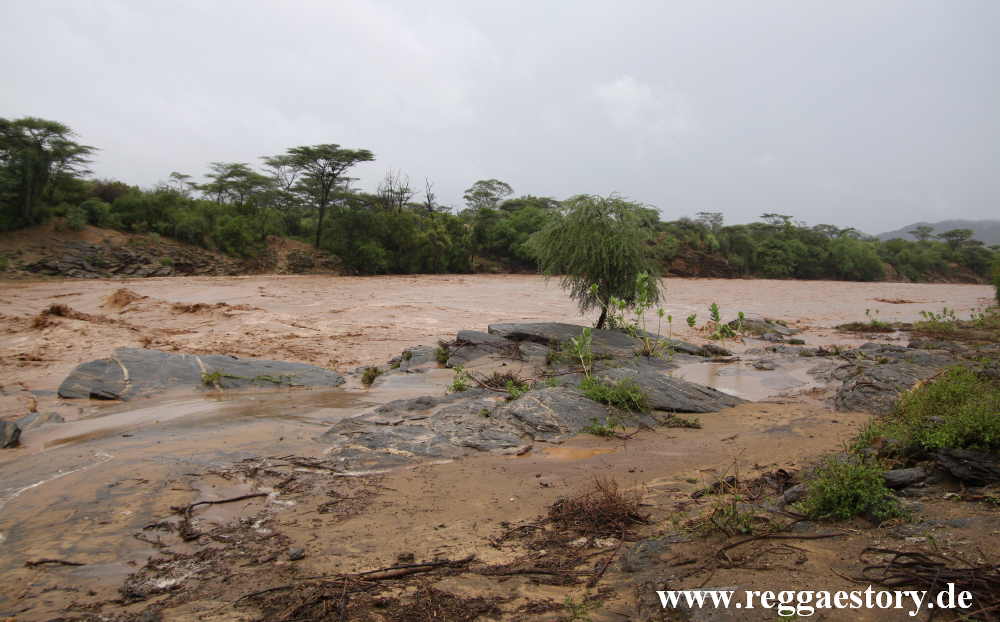 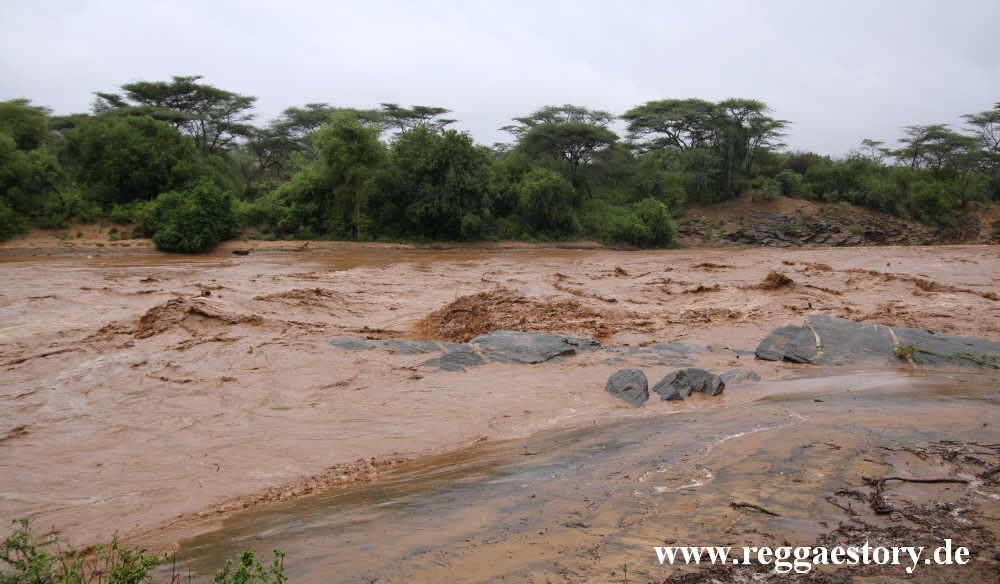 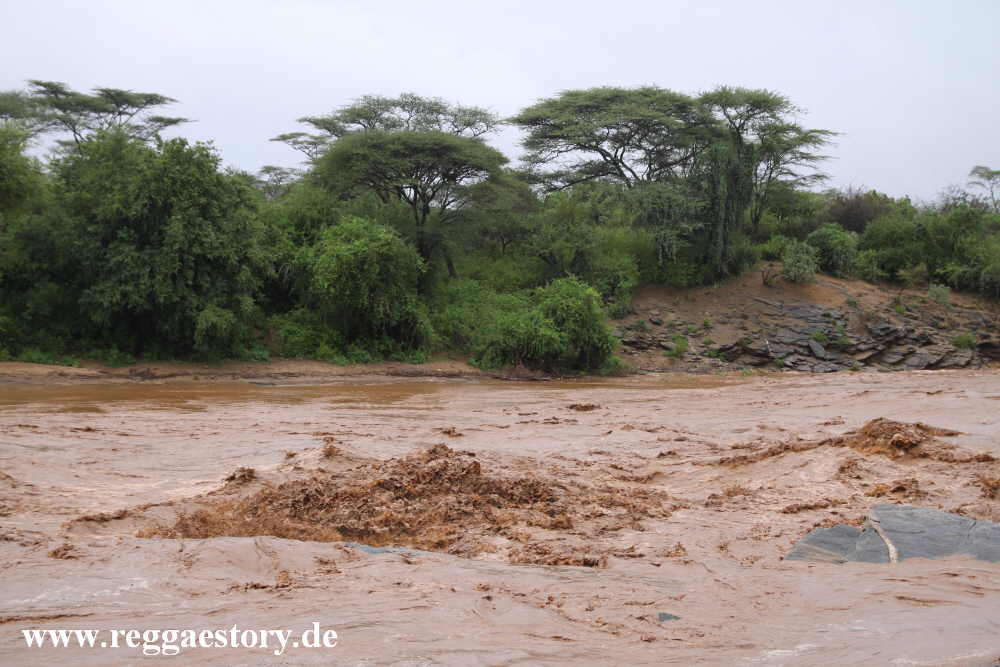 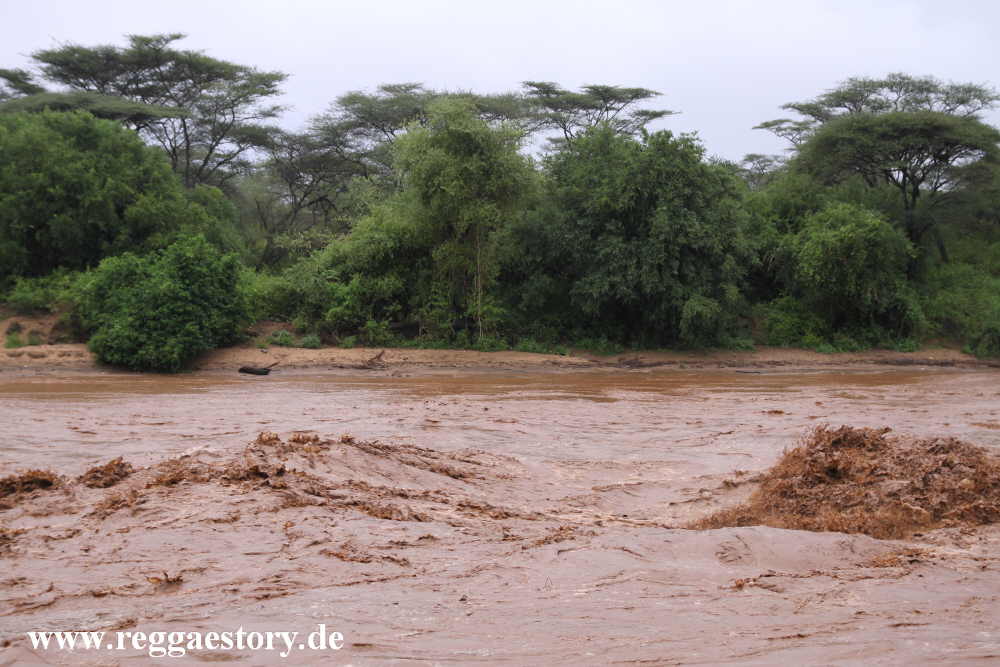 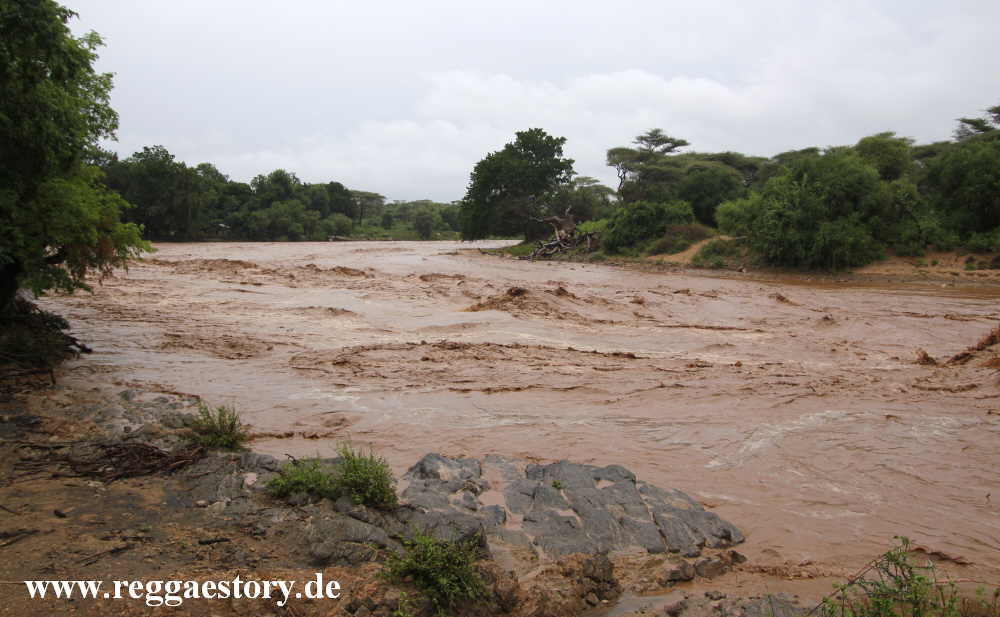 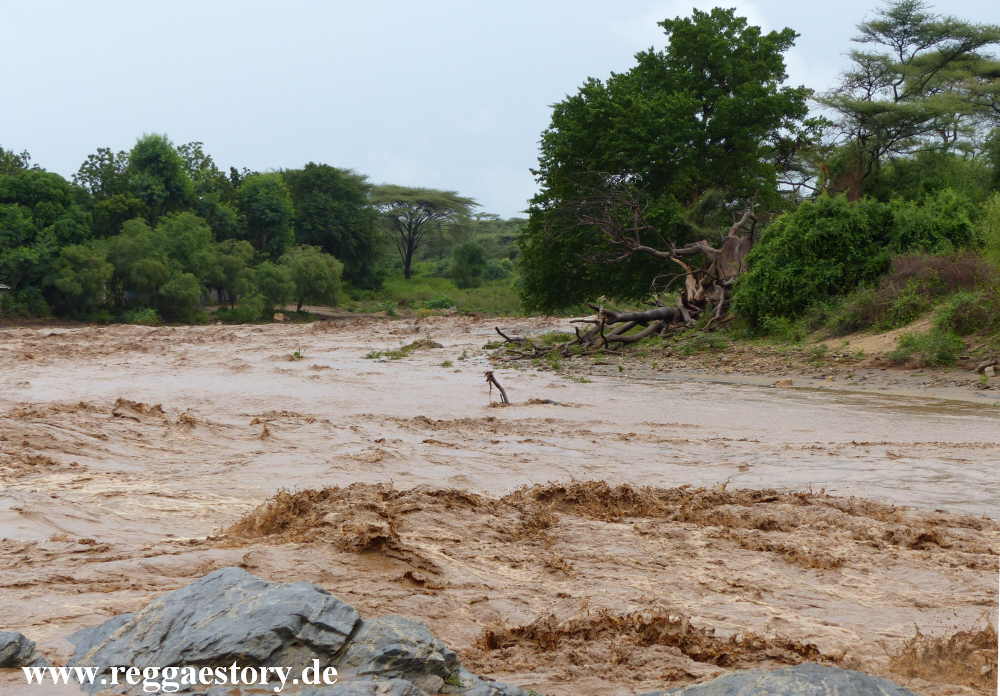 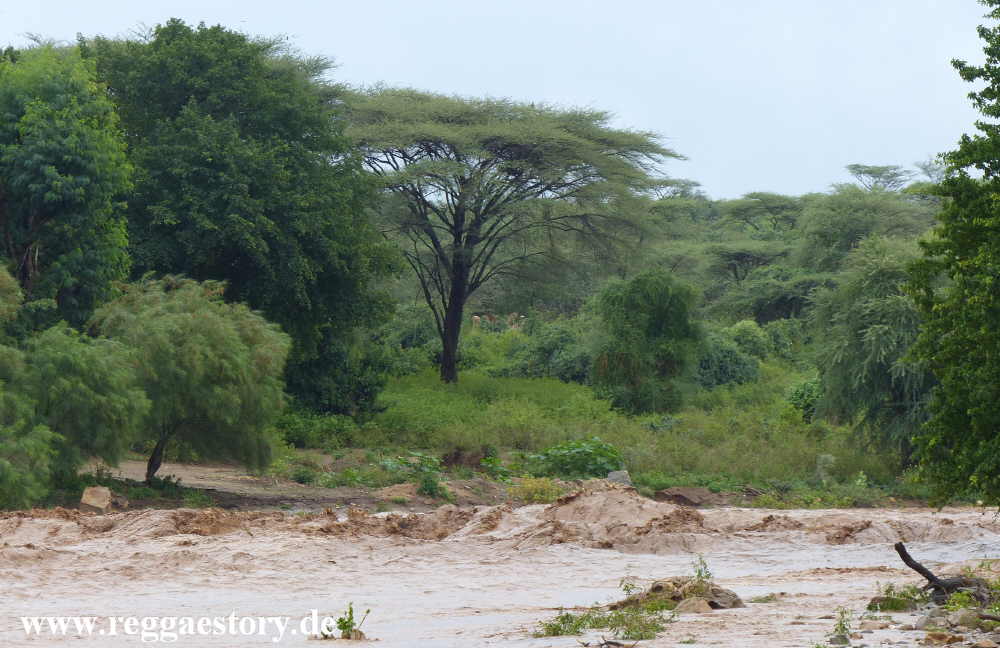
Image 1.059 - 1.065: The dry riverbed at Buska Lodge after the rain The small trickle has become a wide, roaring torrent of brown sludge. Huge waves repeatedly surge up, sweeping away everything in their path. Luckily, we don't have to cross to the other side of the river. That would likely have to be postponed for many hours. However, we don't know what the situation is like in the other direction, or what our little stream in Turmi looks like. It, too, has already caused us problems twice. Nevertheless, we'll prepare for our 8:30 a.m. departure and first enjoy our last breakfast at Buska Lodge. 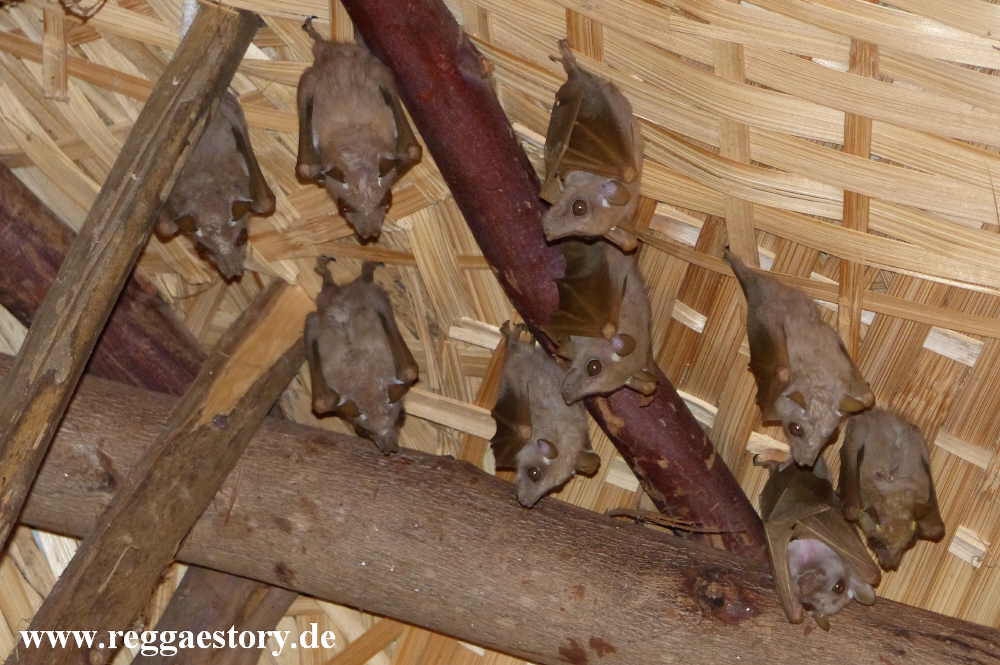 Image 1.066: Bats in the Buska Lodge restaurant – Don't worry, nothing will fall onto your plates; suitable umbrellas have been installed beneath the bats. ;-) While the bats watched us eat from the restaurant roof, Mastu arrived and informed us that our departure would be delayed indefinitely. The village stream before Turmi had also swelled into a river, making it impossible for any of our vehicles to cross. Naturally, we wondered how Mastu had managed to reach us without getting wet, since he had been sleeping on the other side of the river. He had hired a porter and been carried piggyback through the water, he told us. We wouldn't have had a problem with that either, but Mastu wanted to wait until the water receded. Zwei wertvolle Stunden gehen uns bis 10:30 Uhr verloren, bis We lost two valuable hours until 10:30 a.m., when Mastu finally sounded the call to leave. Arriving in Turmi, we were greeted by a harmless little stream, its water barely reaching halfway up our calves. 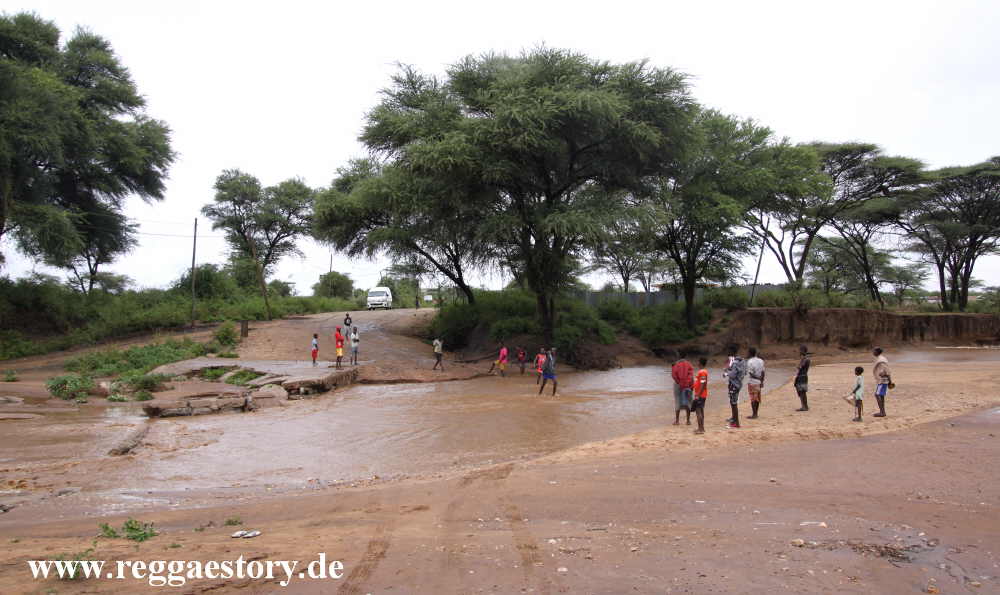 Image 1.067: The "dangerous" little stream just before Turmi Nevertheless, the locals are having a great time trying to help us across the stream and are arguing heatedly over us. Of course, not entirely selflessly. It's difficult to shake off the many "helpers." While Mastu is still arguing with the somewhat tipsy river pirates about how to proceed and having our luggage brought to the car, I've thankfully already slipped away unnoticed to the other side. This, of course, reduces the funds of those present, and Rainer has to "take the heat," being pulled from both sides until it looks like he really needs help. ;-) Mastu isn't quite up to the task and is handing out banknotes again to everyone who asks for them. It's unbearable to watch. He's even spoiling the most sensible member of the group. But he must know how long his travel funds will last. Video: After the rain at Buska Lodge and in Turmi Let's hope that no major obstacles stand in the way of our onward journey. It's only about 240 kilometers, but we've already lost a lot of time that we could have used for exploring. 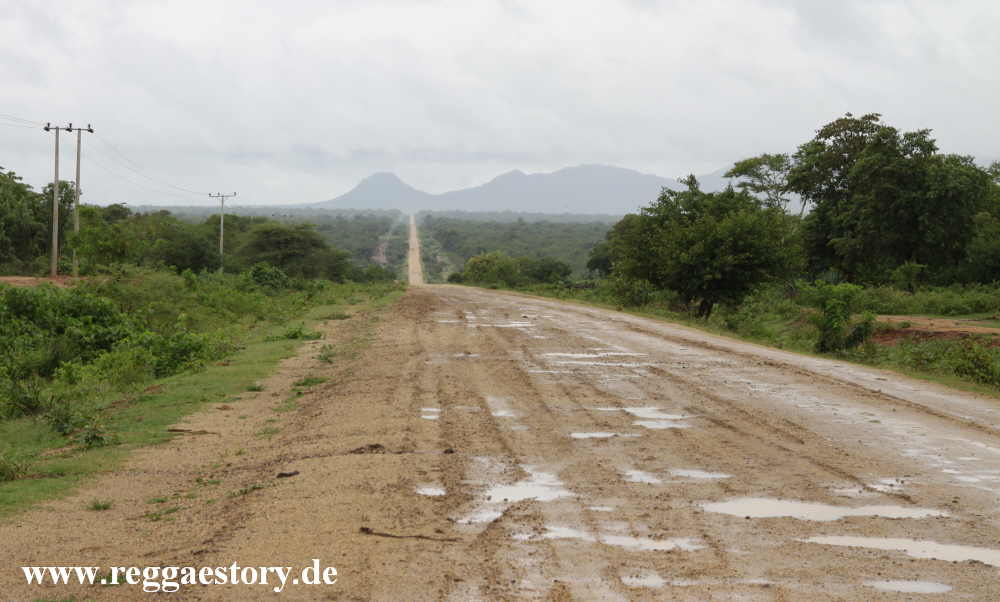 Image 1.068: On the way to Konso - about an hour past Turmi 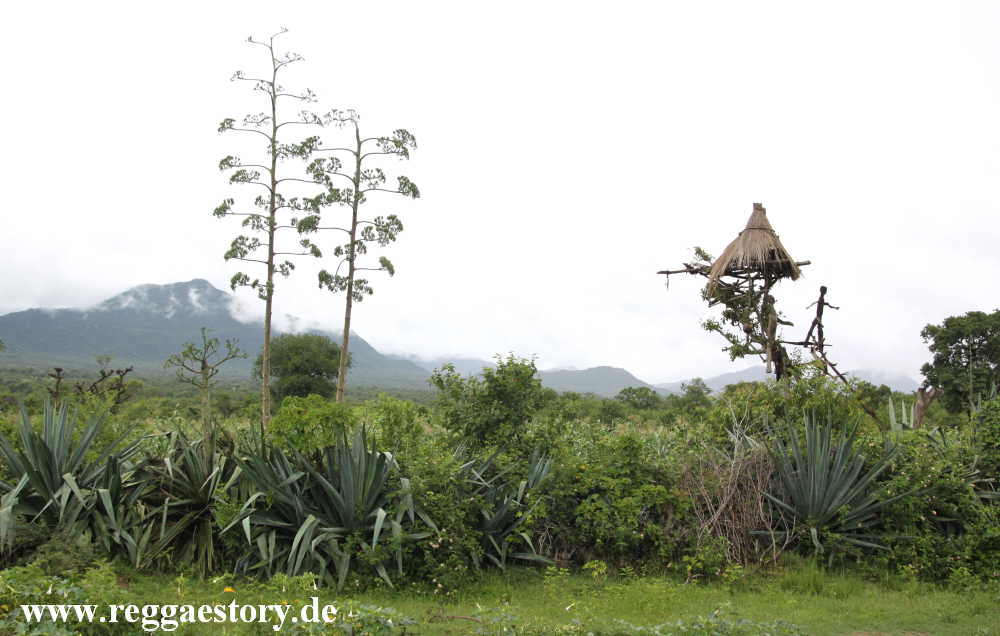 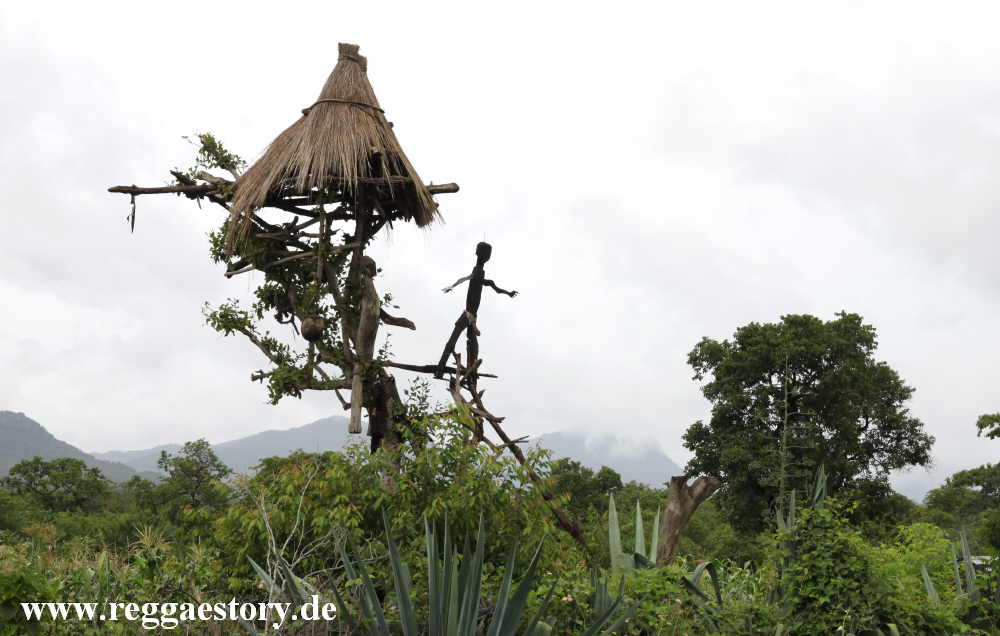 Image 1.069 + 1.070: 10 minutes later. What looks like a work of art by the roadside is a watchtower from which the harvest is monitored. This is usually done by children, and since they can't always be there, wooden figures are installed as scarecrows. We drive for hours through rainy and overcast landscapes. The tracks are muddy, and you have to be careful of potholes. You never know how deep they are. Even on the main roads connecting the larger towns, you can't necessarily expect a paved surface. When we finally reach the road again and Alex can better understand the sounds of the car, we have to make another forced stop. We have another flat tire. Somehow, it's become standard practice. No trip to Ethiopia is complete without changing a tire. 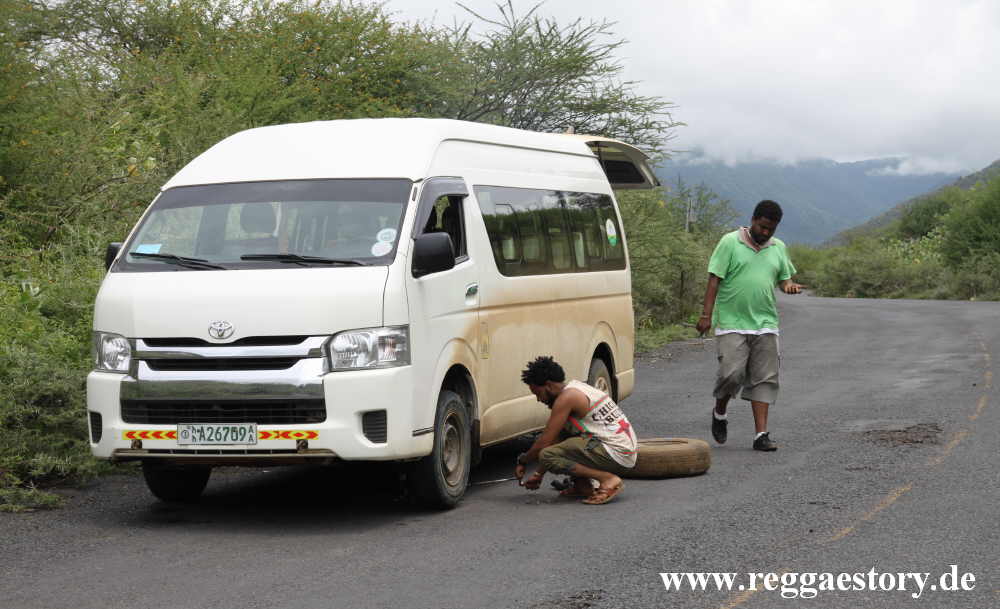 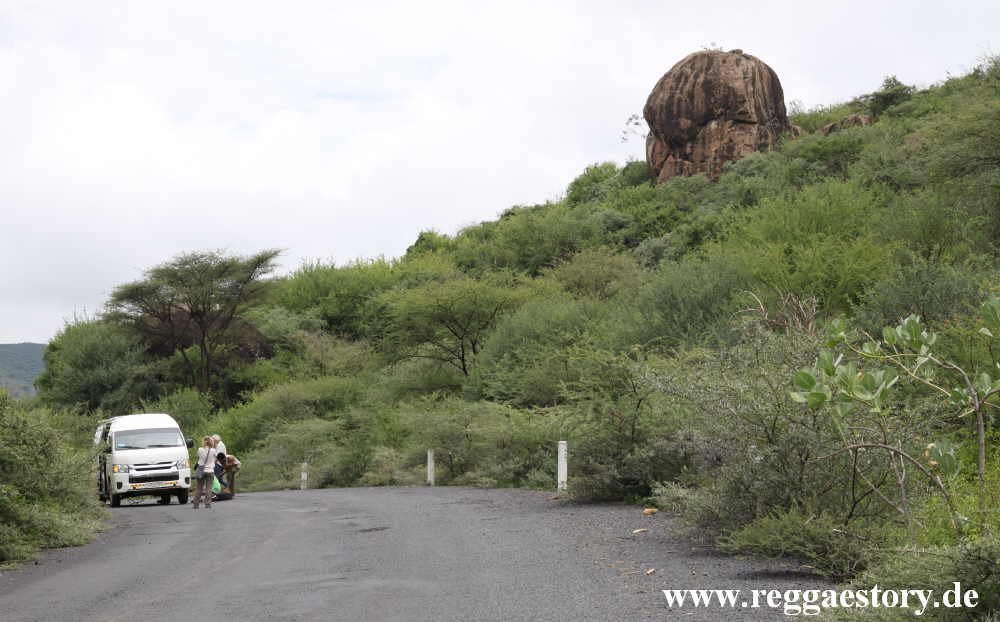 Image 1.071 + 1.072: 45 minutes later - tire change We always say, "Every cloud has a silver lining," so we use this involuntary break to look around. There's always something interesting to discover. 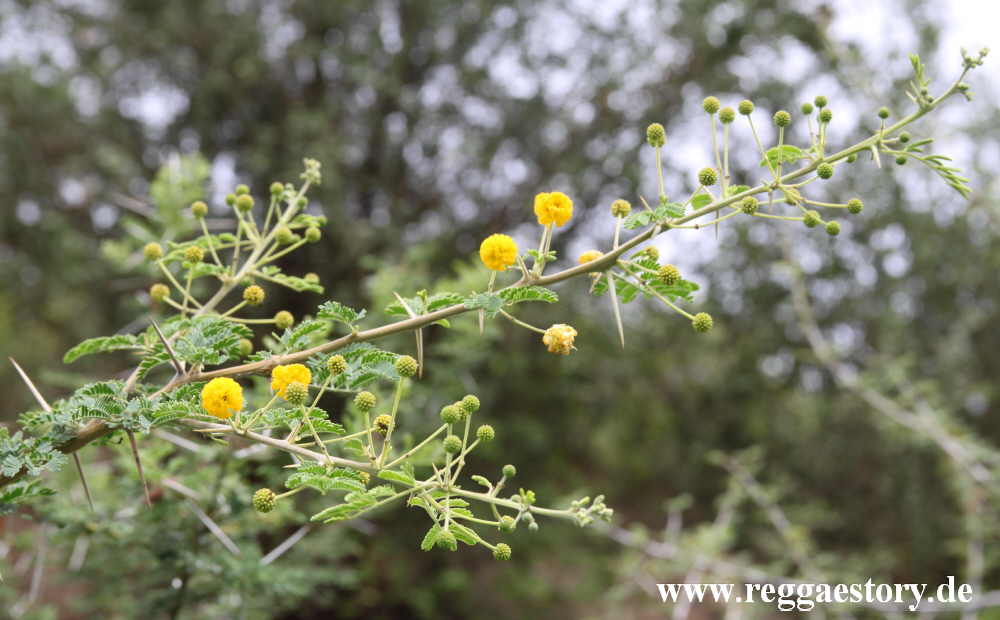 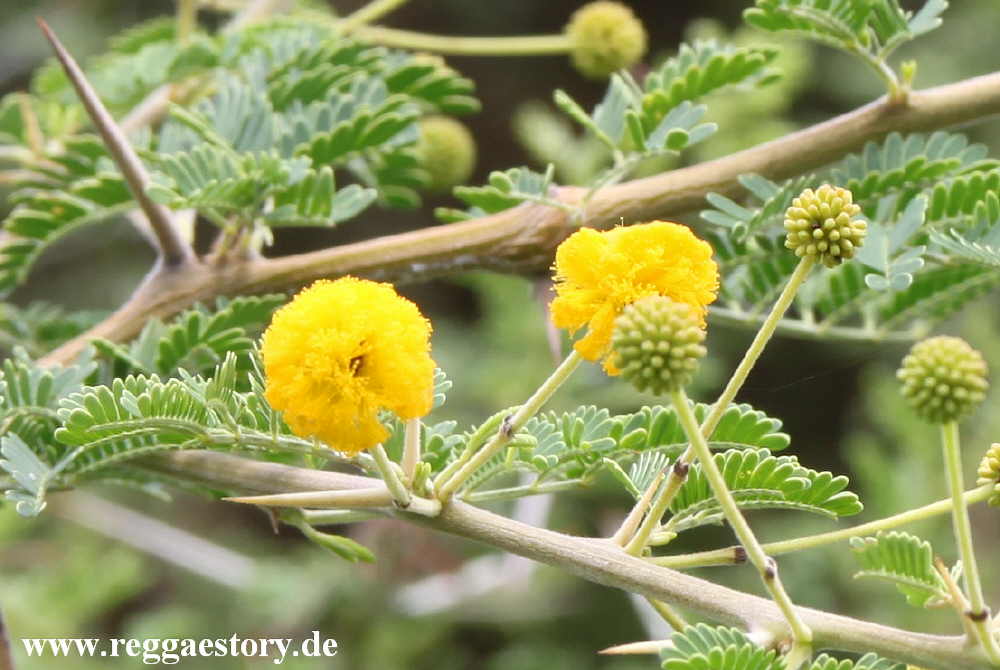 Image 1.073 + 1.074: Acacia nilotica or Vachellia nilotica - beware of the thorns, they can pierce many shoe soles. But the plant has many uses. It's worth clicking the link. 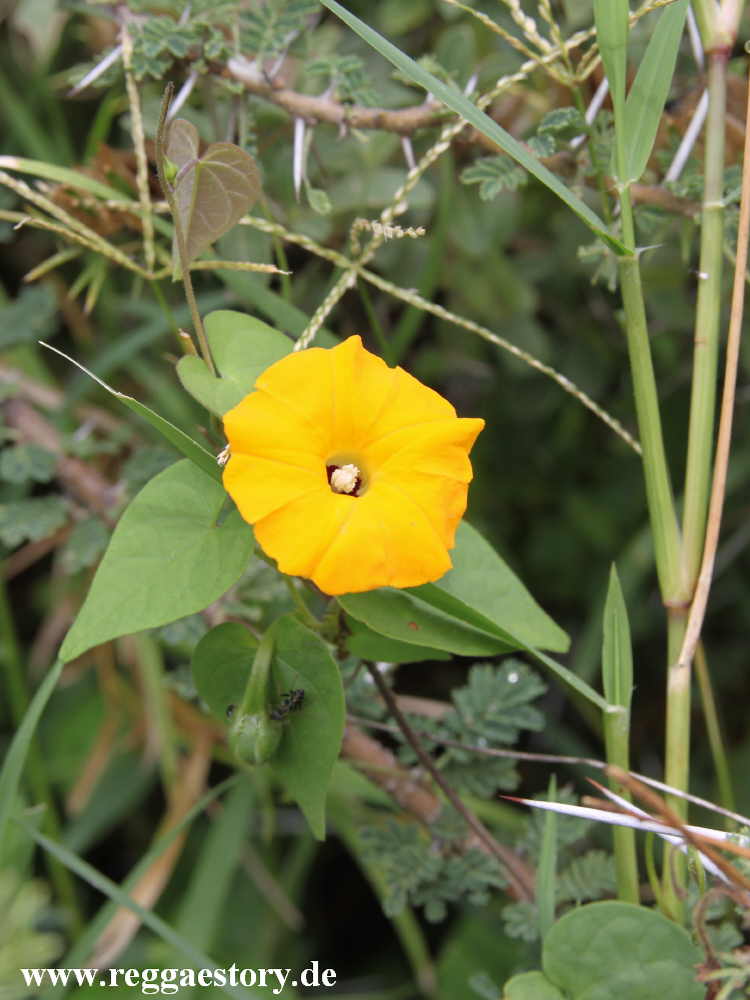
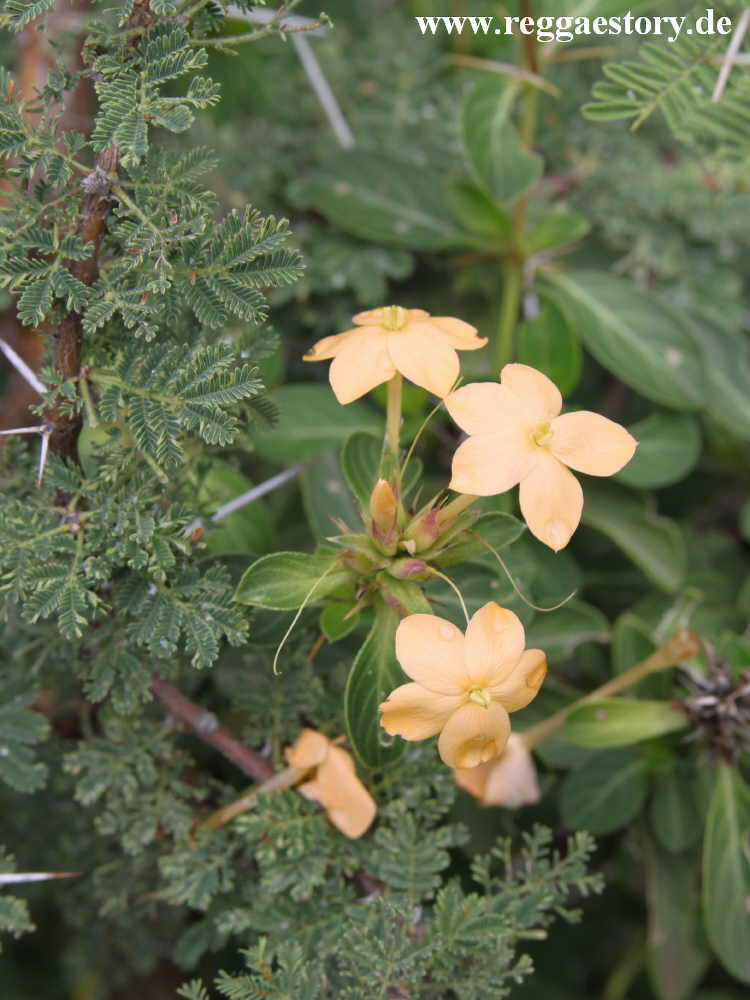 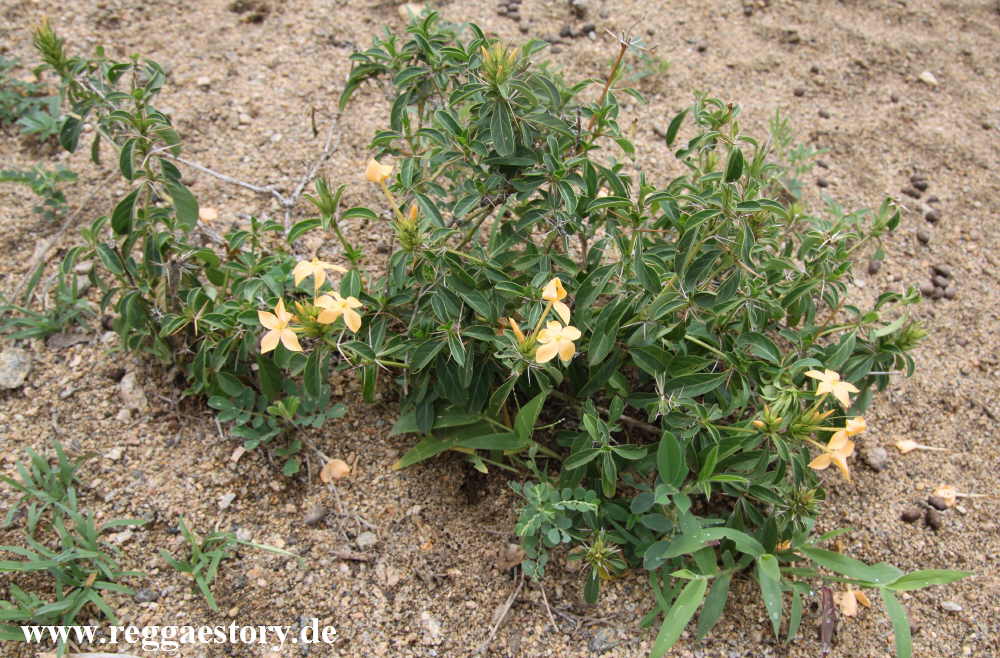 Image 1.075: Ipomoea - Morning Glory - A genus of plants with approximately 650 species. Here, the yellow-flowering Ethiopian variety, Morning Glory (Ipomoea obscura "Ethiopia"). Image 1.076 + 1.077: If anyone knows, please let me know. One would think that you can photograph nature however you like and don't have to ask anyone for permission. But when I was photographing some interesting rock formations, a local man suddenly appeared out of nowhere, made a huge fuss, and brandished his walking stick. Had I desecrated a sacred rock? 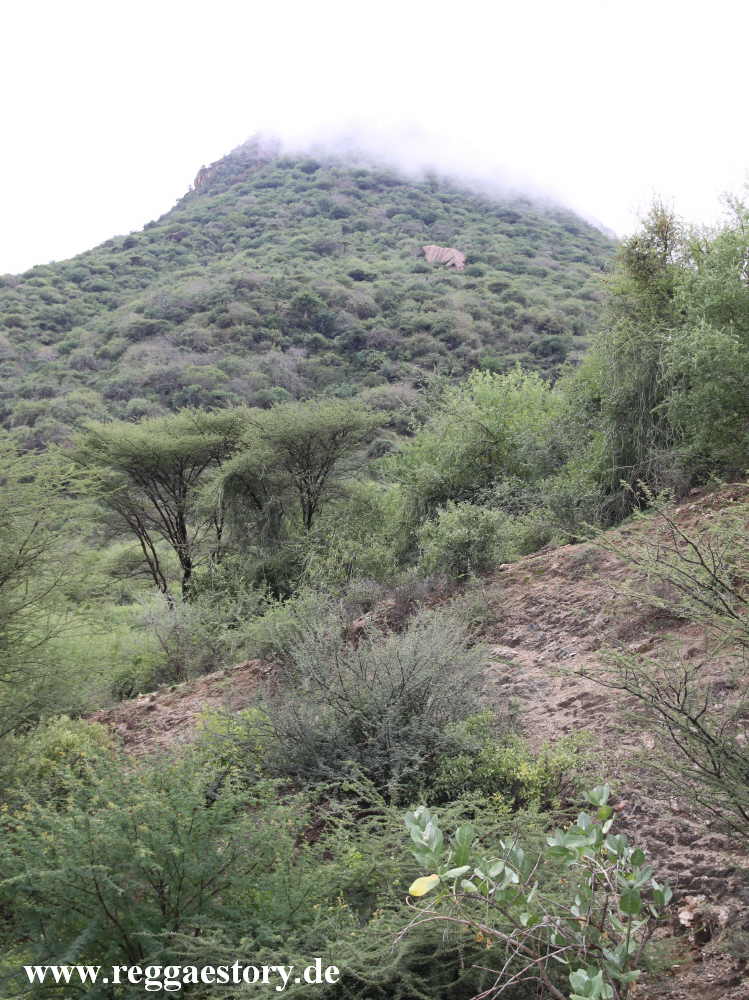
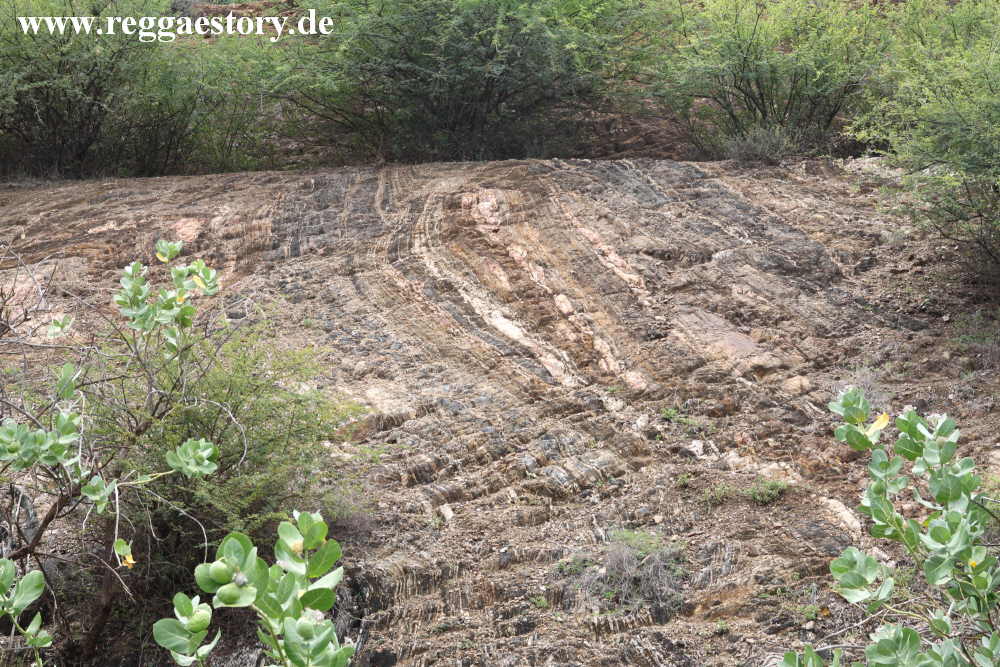 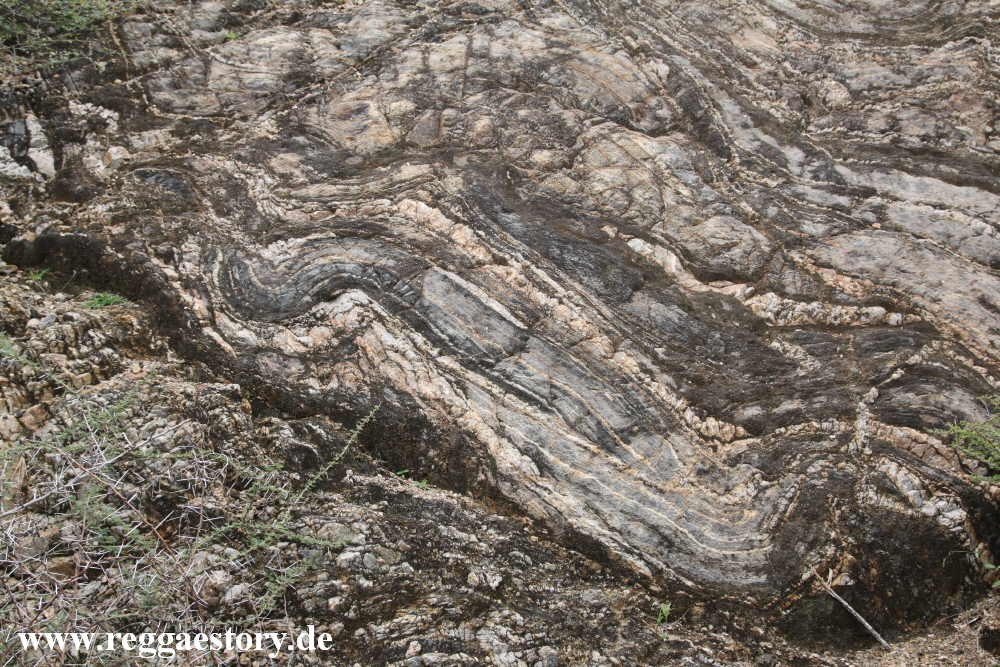 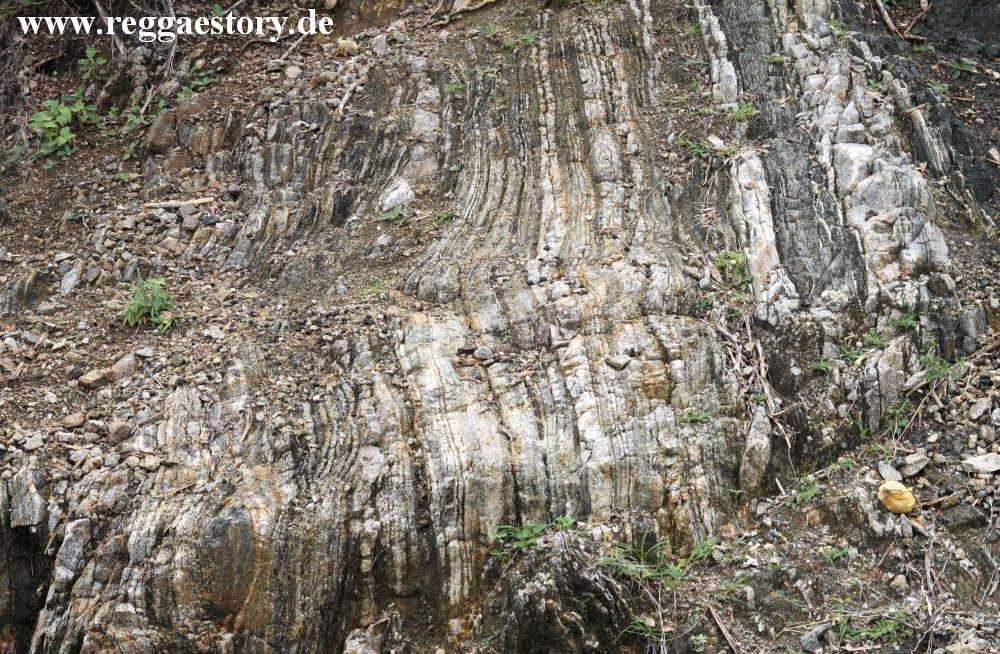 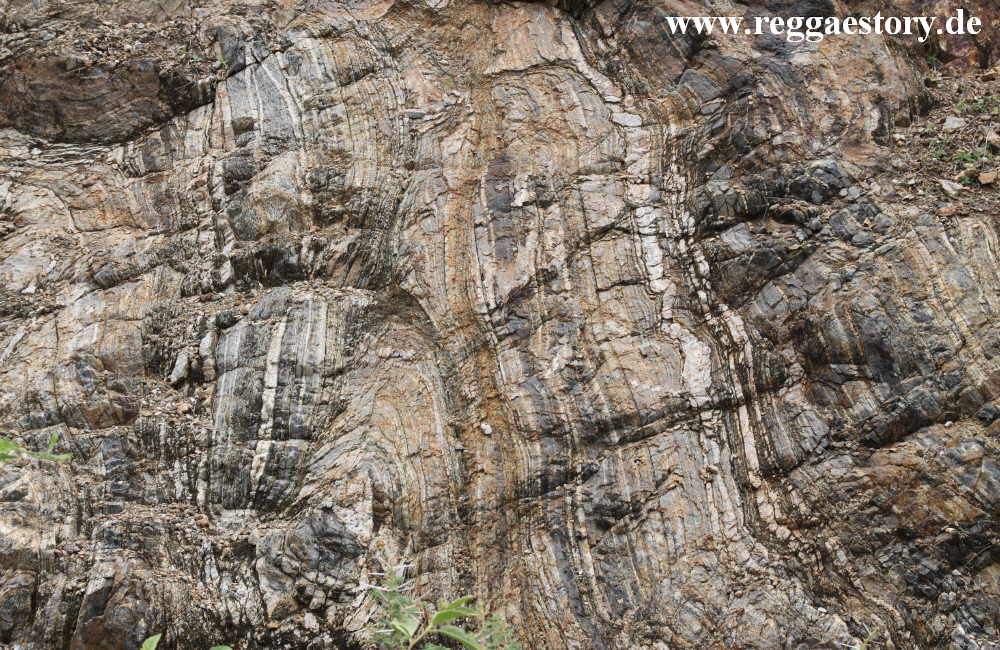 Image 1.078 - 1.082: Interesting rock formation We don't want to linger too long, so we put a few more meters between us. The tire change should probably be almost finished by now. No sooner had we thought about it than Alex arrives with his freshly repaired minibus. 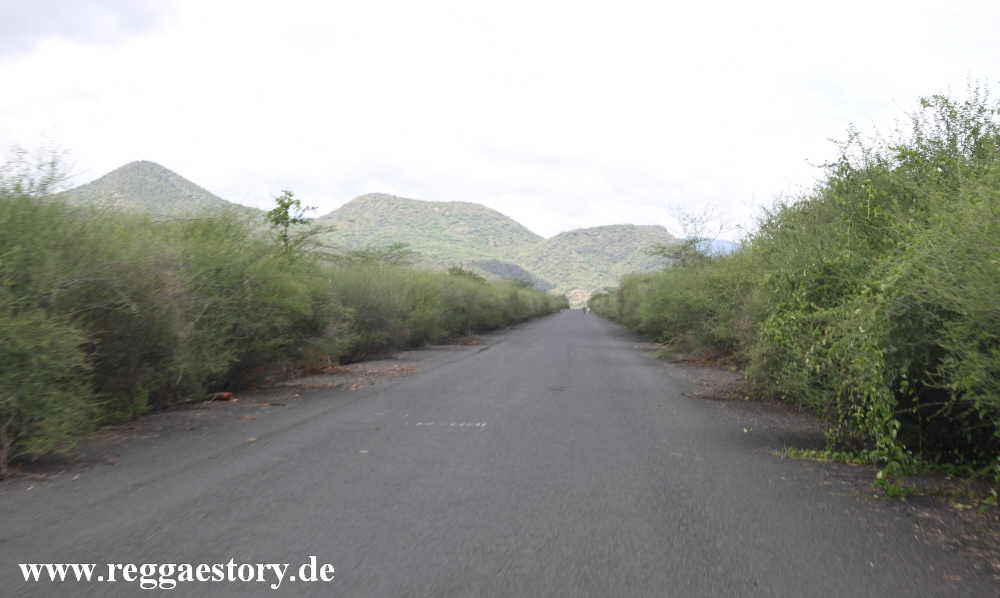 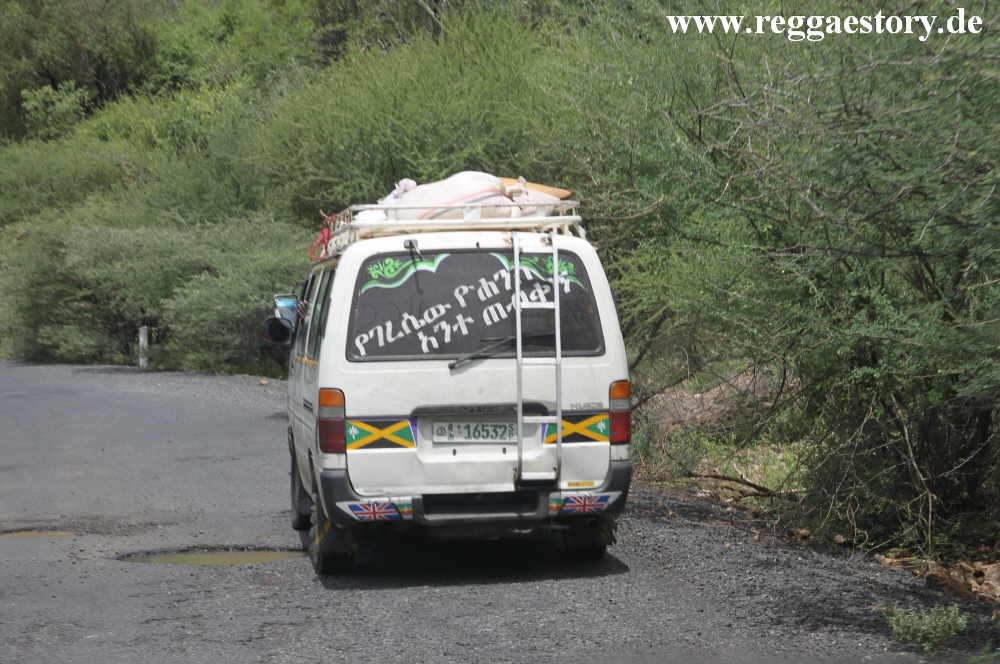 Image 1.083 + 1.084: About 20 minutes later, we descend again into a valley. Image 1.084: Greetings to Jamaica! - Unfortunately, the colors of the flag are reversed. ;-) The weather seems to be improving. As we enter the next valley, the sun even comes out. 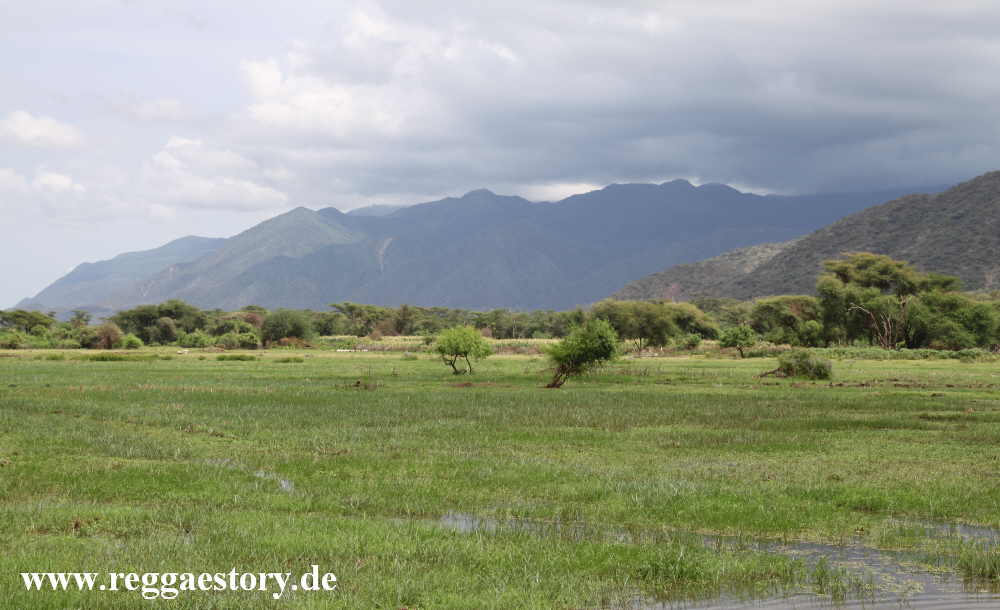 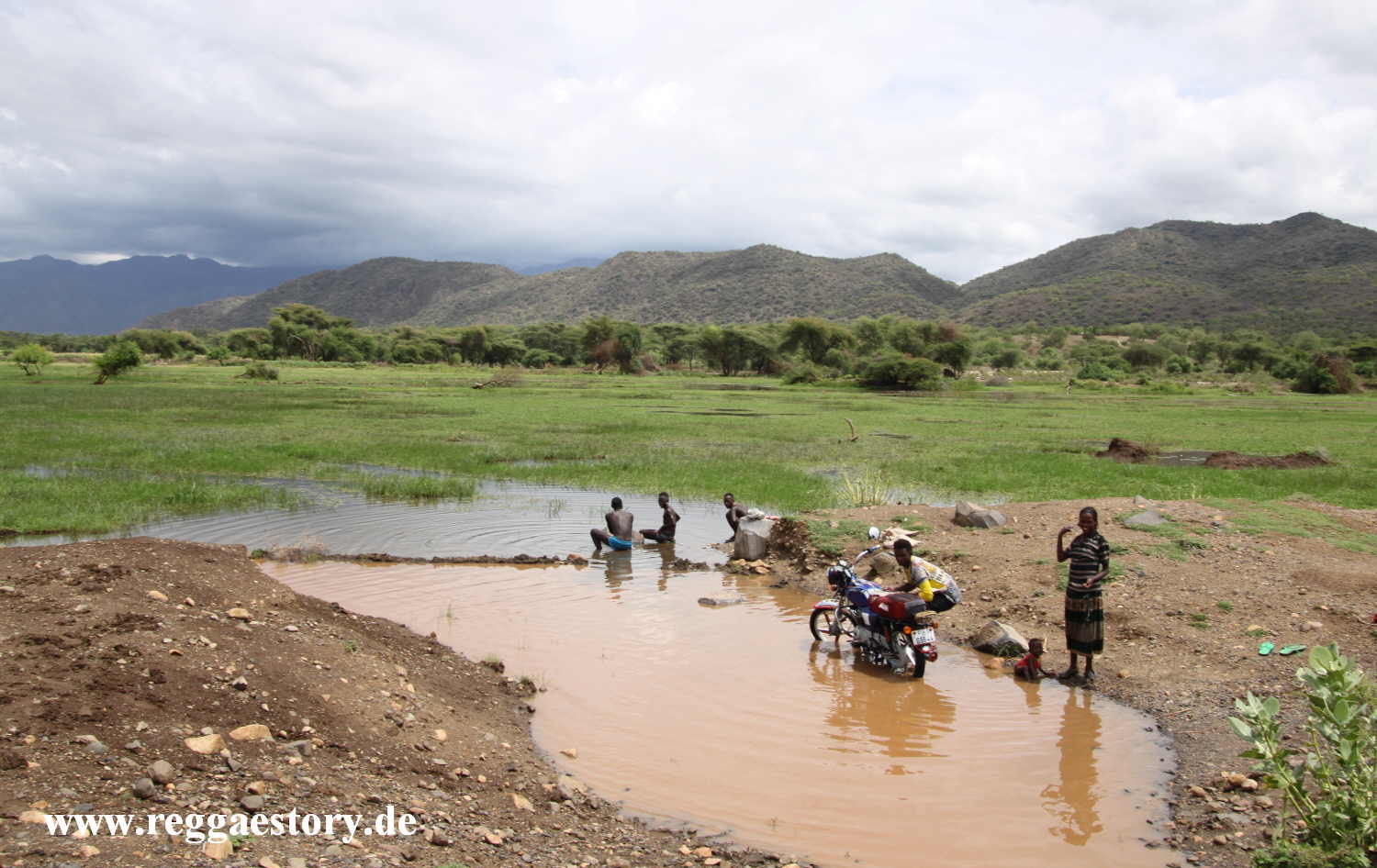 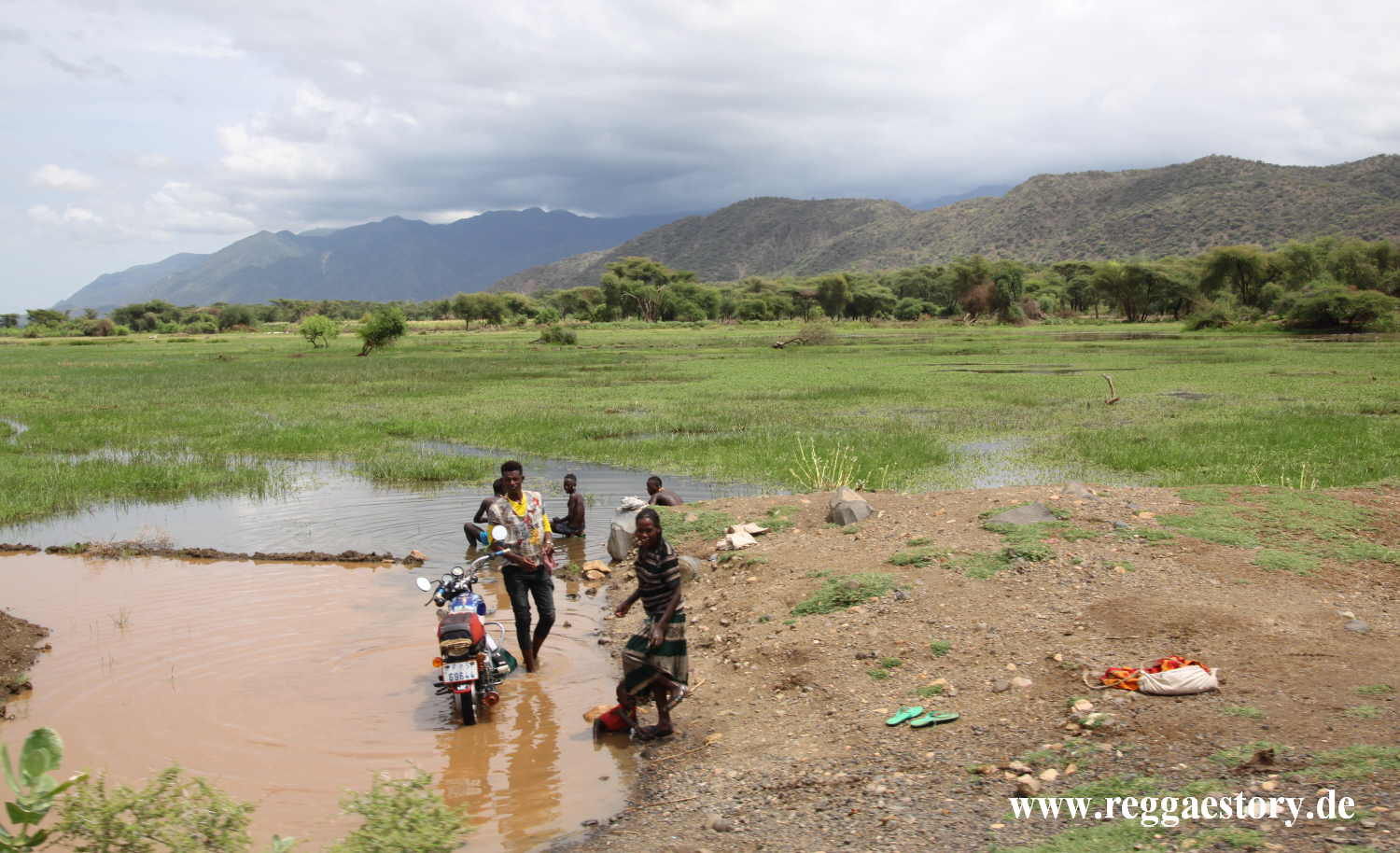 Image 1.085 - 1.087: Two-chamber car wash. ;-) The dam is doing its job as a filter.
After our coffee and shopping break, we'll continue towards Konso. It will take us about another hour and a half to get there. 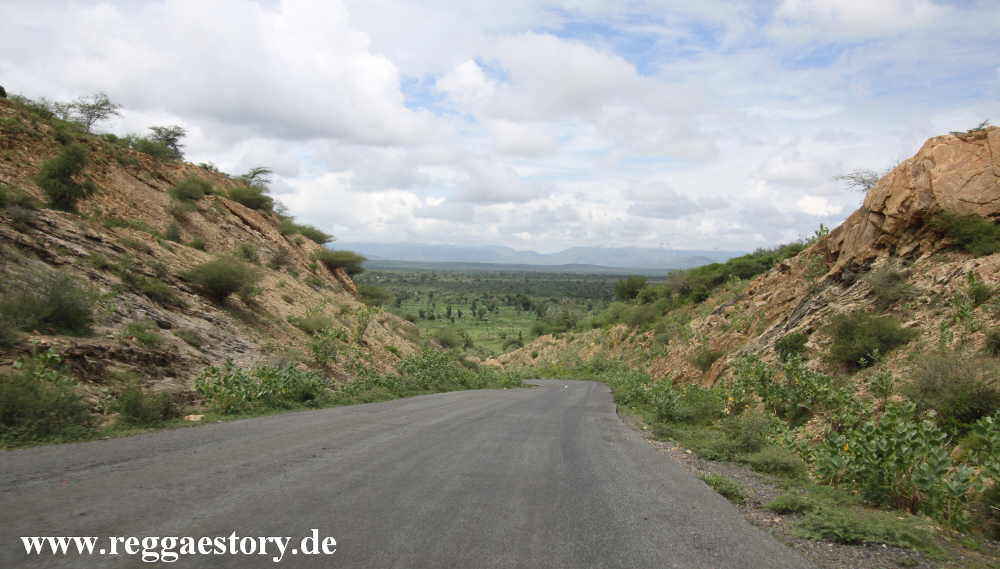 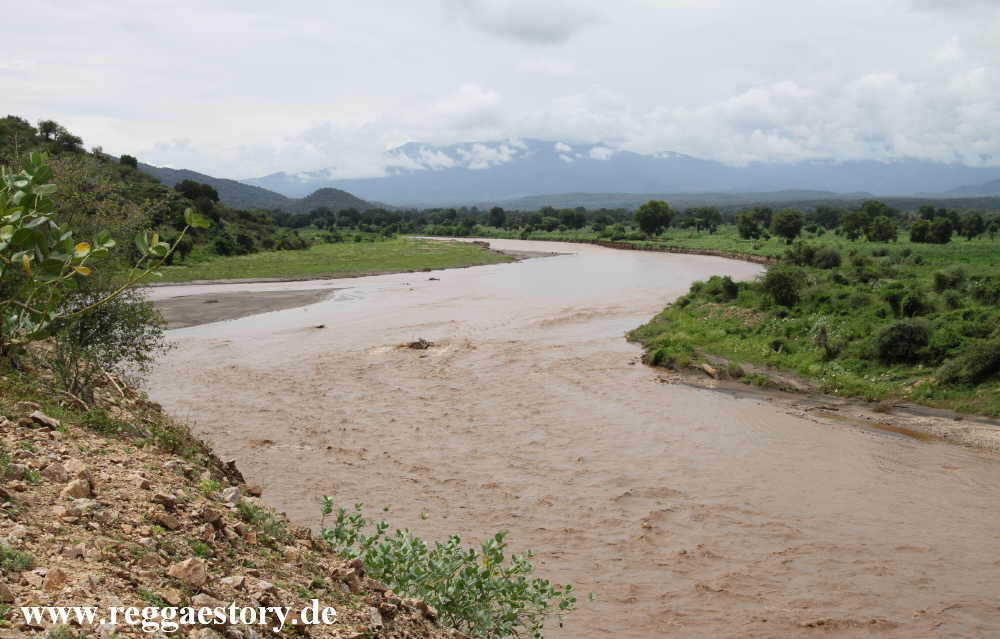 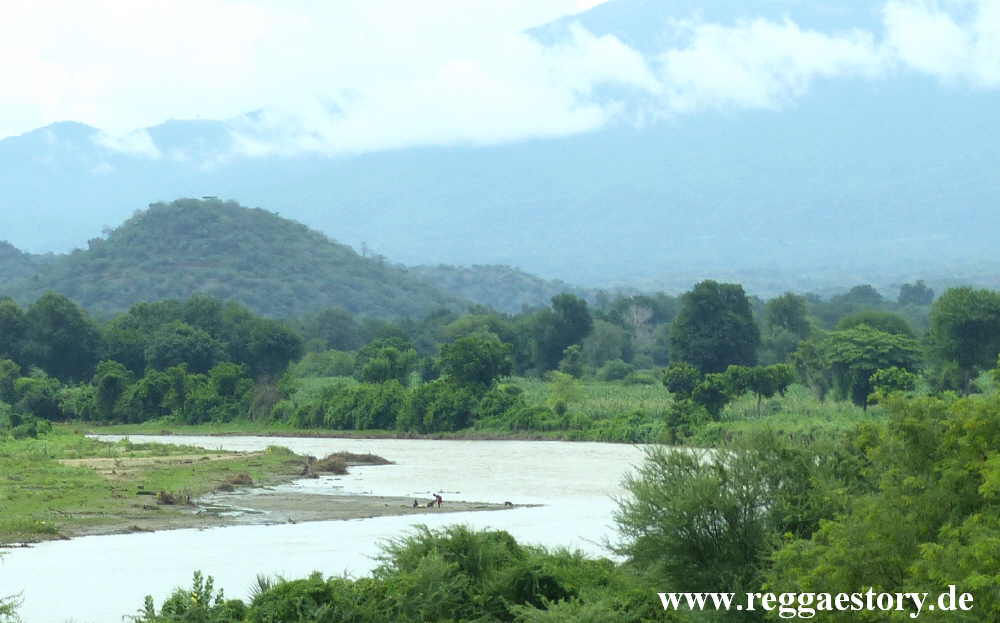 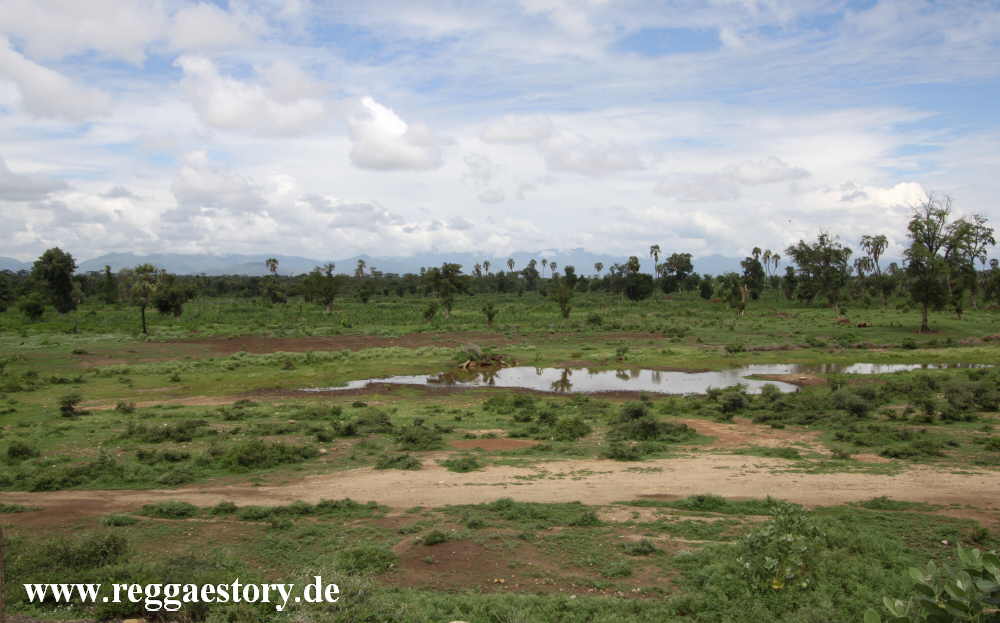 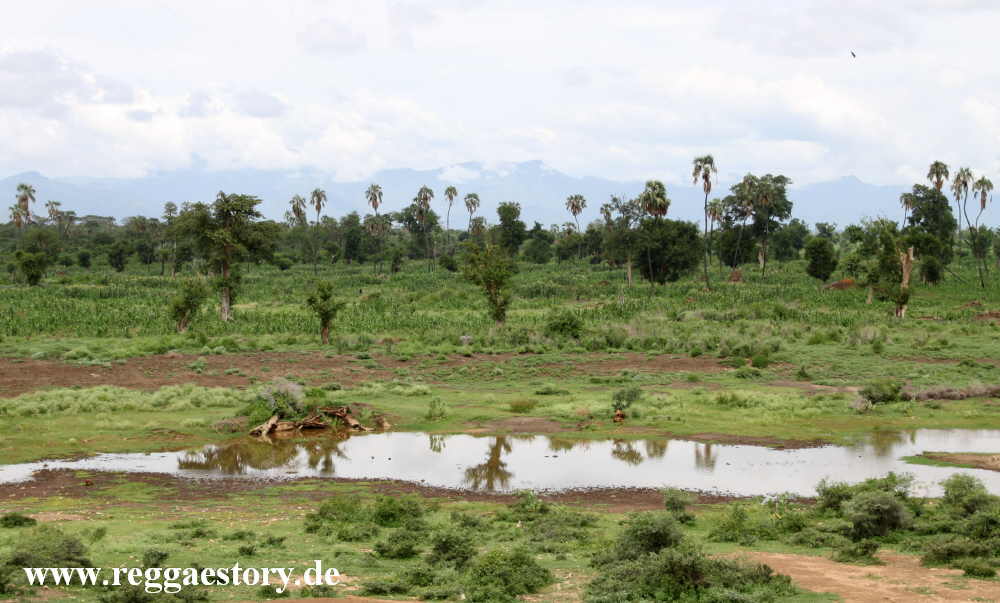 Image 1.089 - 1.093: Landscapes between Weyto and Konso The scenery changes every few minutes. Sometimes we're in the mountains with fantastic views, and then other times we're in the plains or valleys with various rivers. You can't get enough of these sights. Anyone who falls asleep in the car right now is really missing out. It happens, after all. ;-) 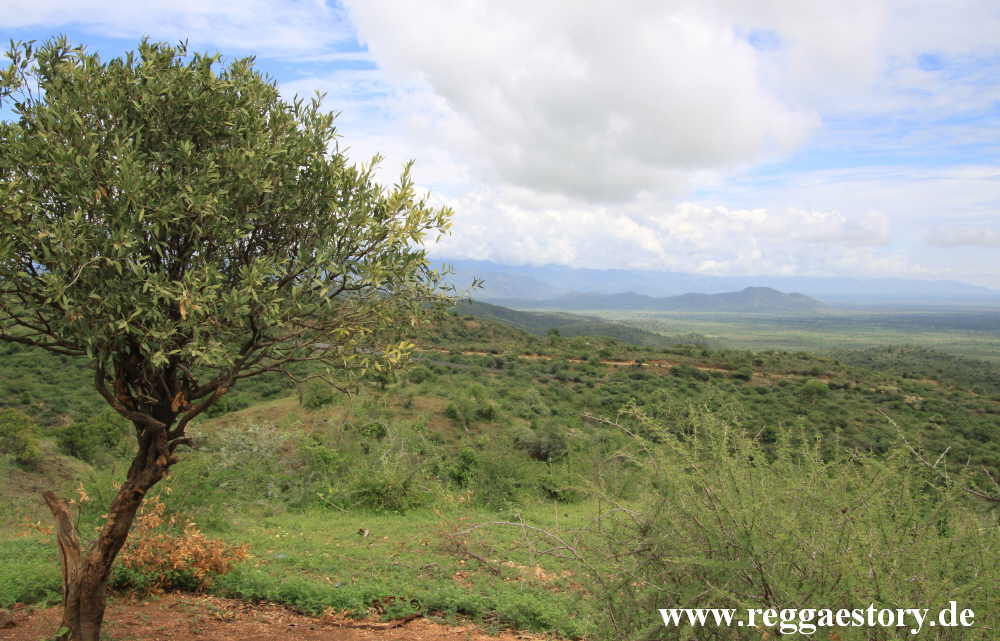 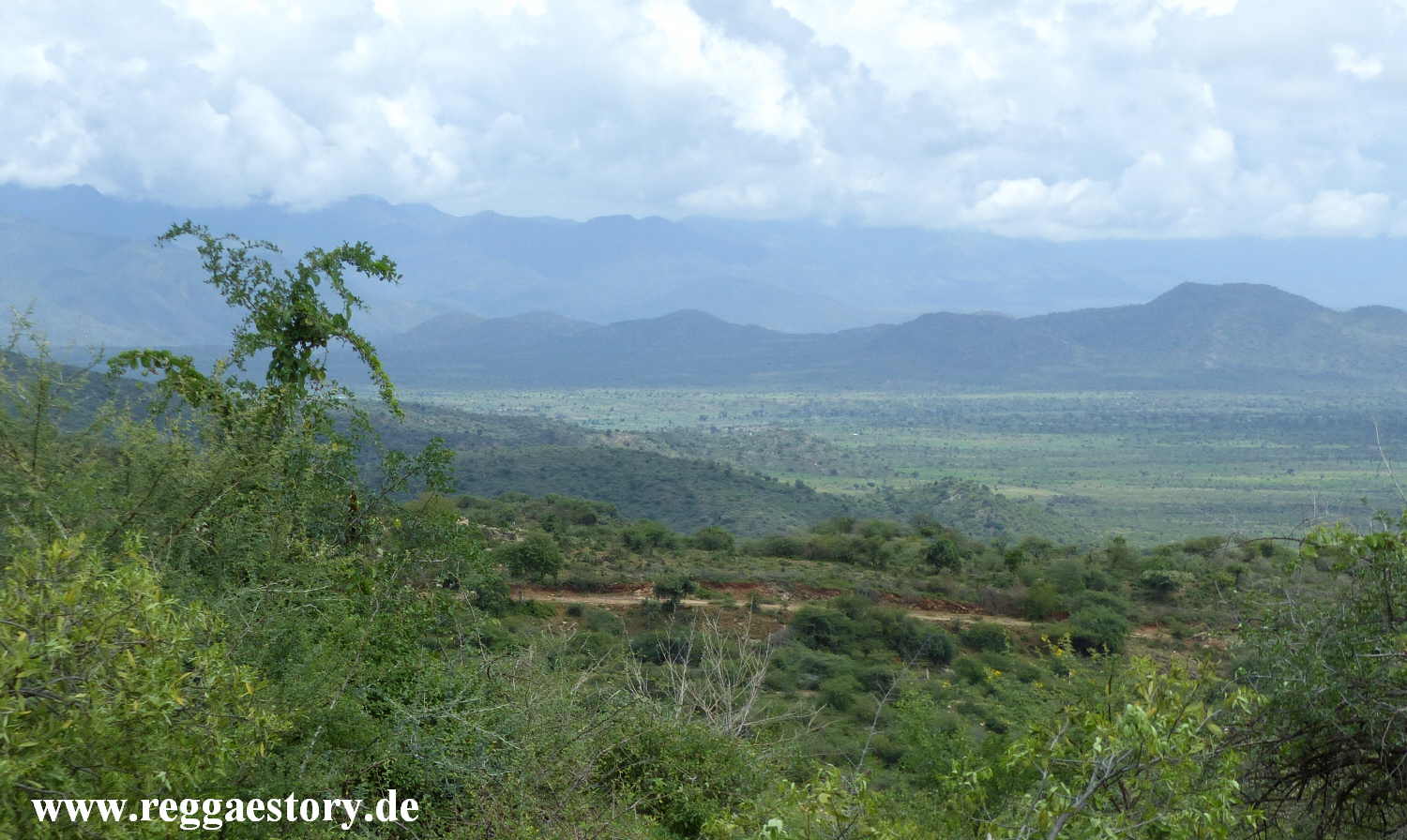 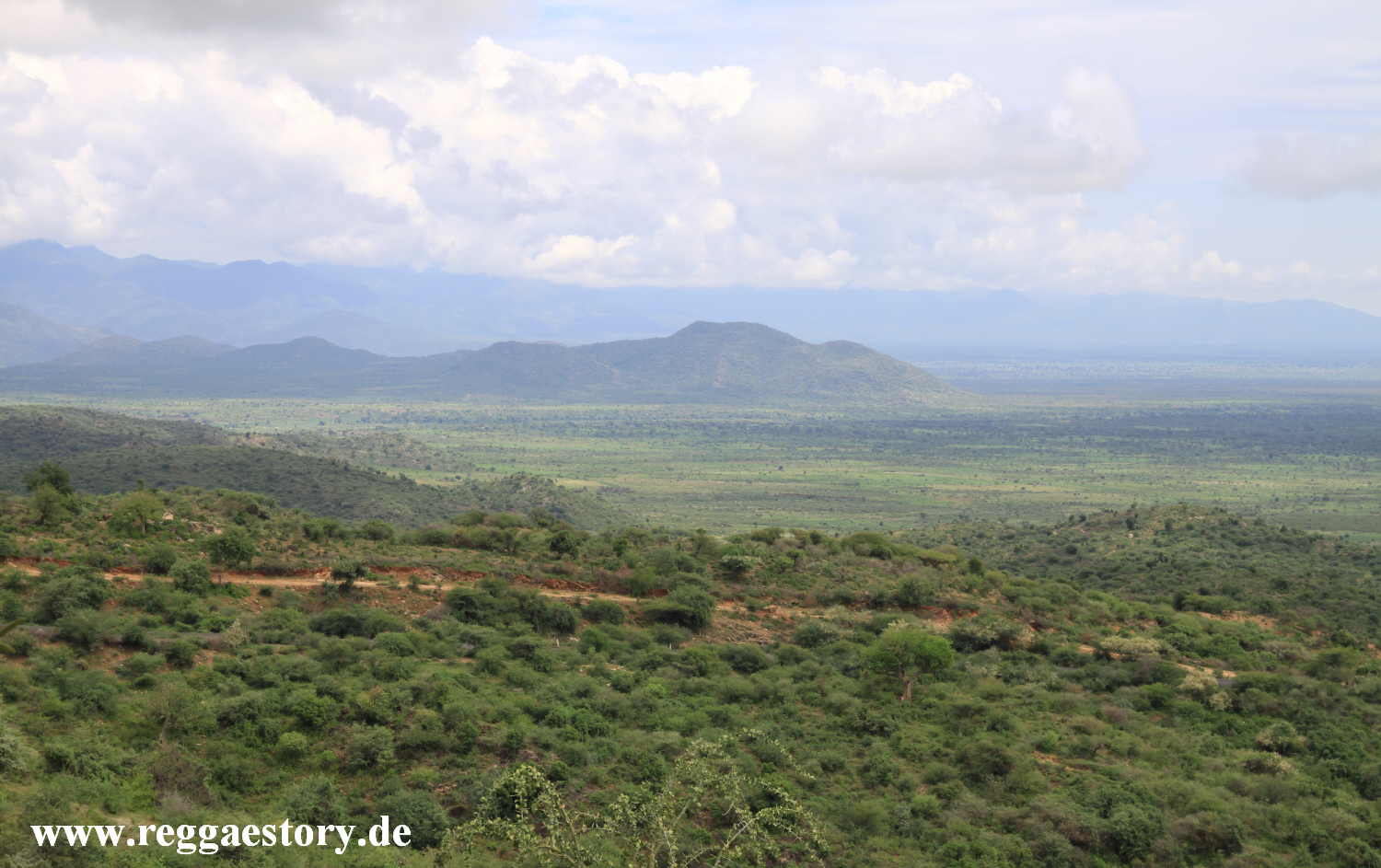 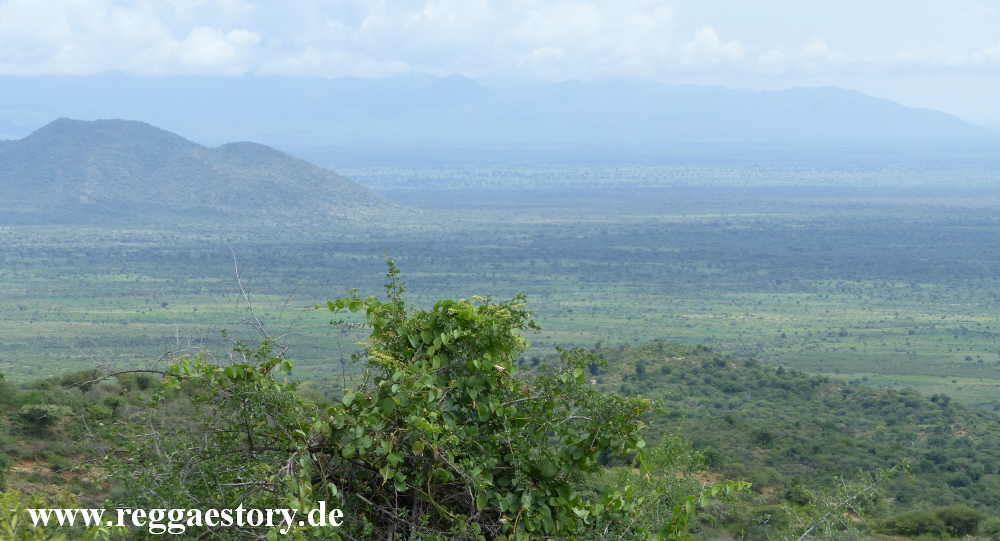 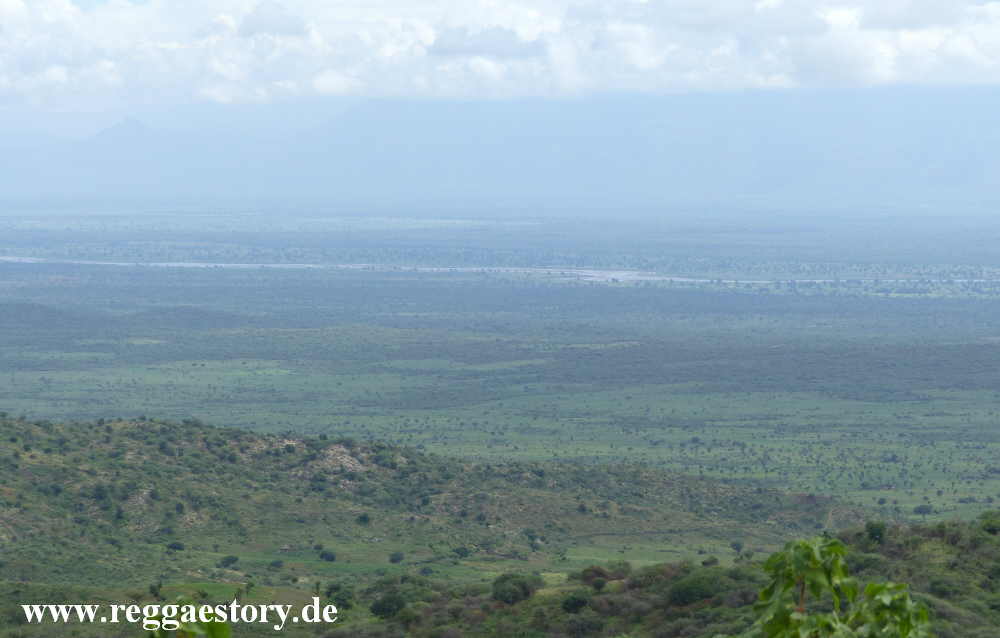 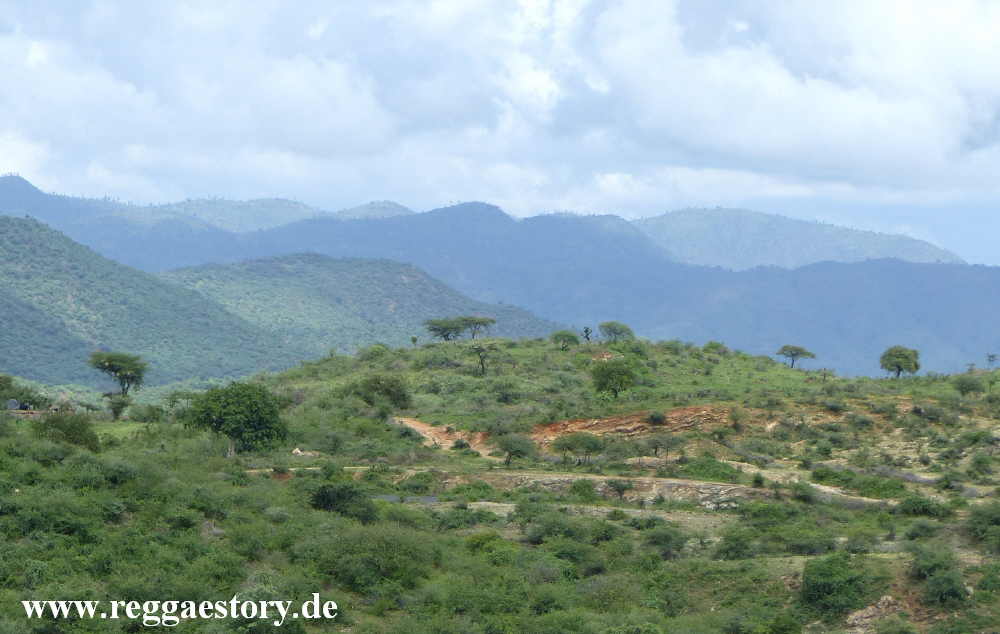 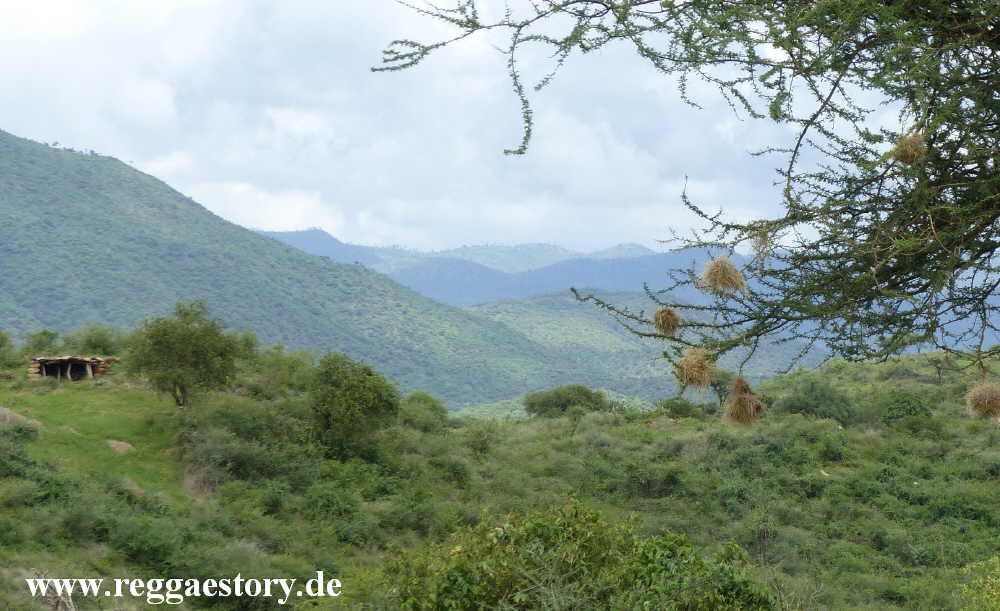 Image 1.094 - 1.100: Approximately 55 minutes before Konso - Magnificent views And once again, we descend from the next mountain ridge into a wide valley, where, of course, there are more rivers. During our trip, we're blessed with plenty of water, which probably isn't always the case. A few days more or less rain can make a huge difference. We experienced this firsthand at the Buska Lodge in Turmi, seeing how rivers can be empty or full within just a few hours. 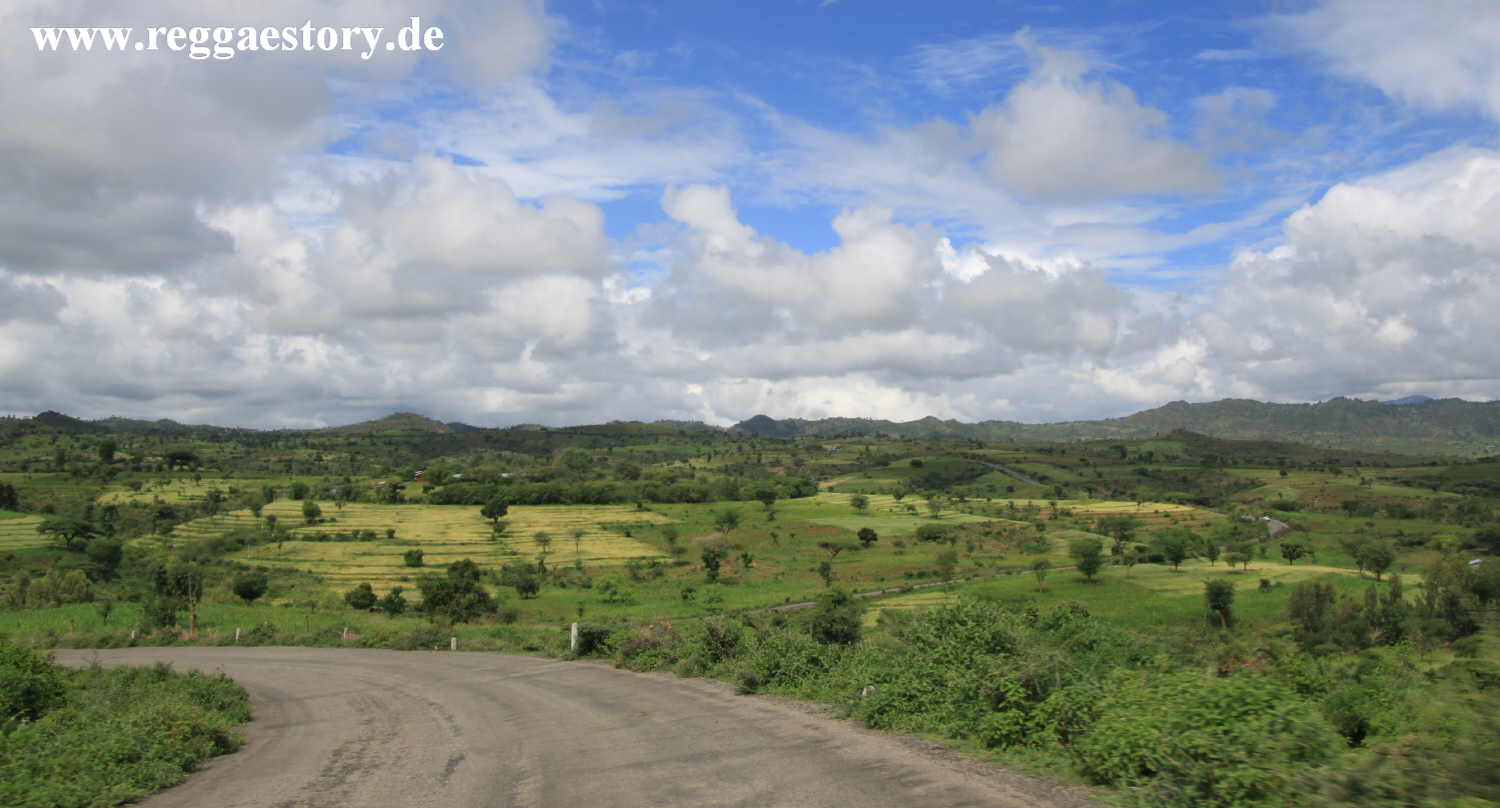 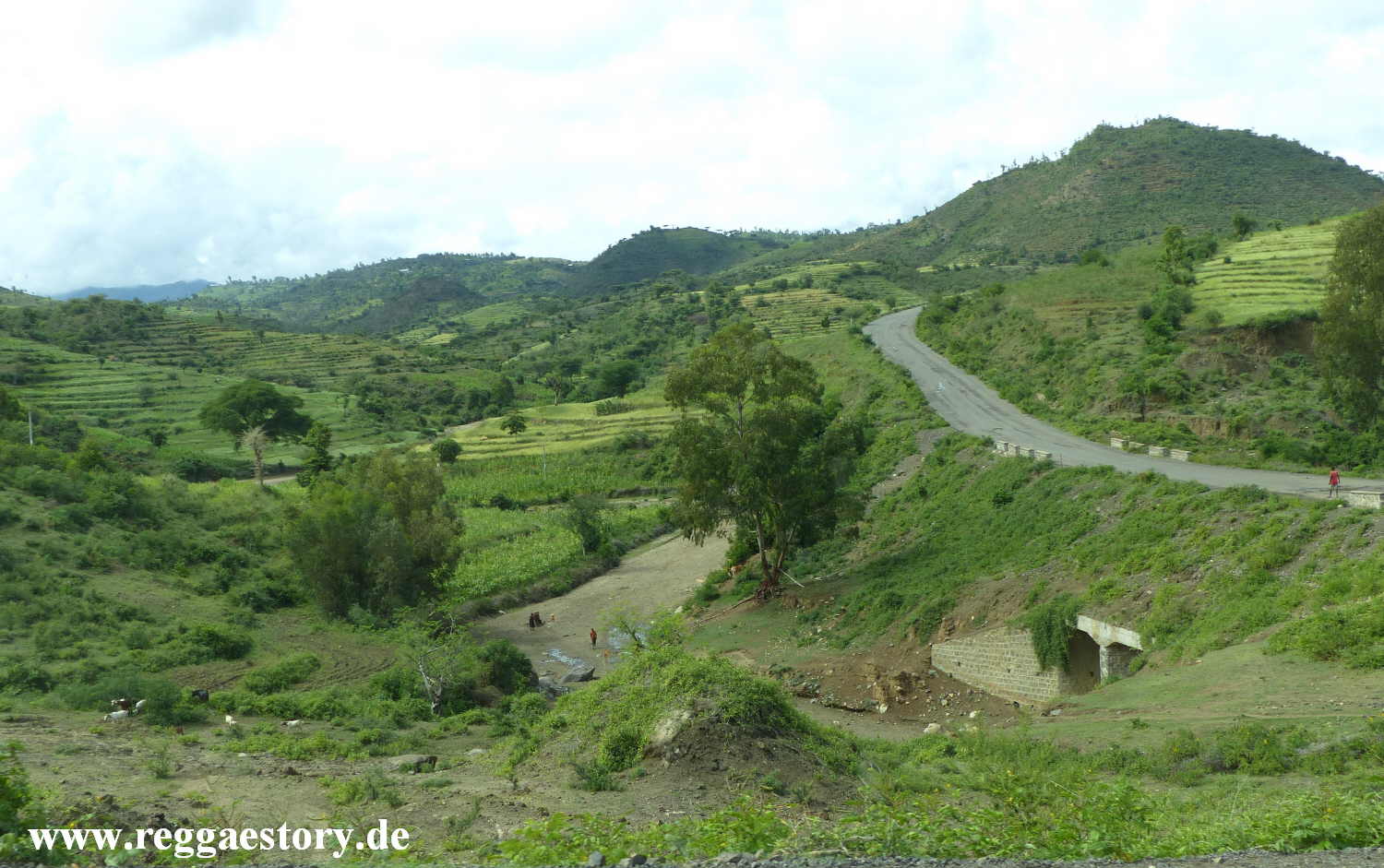 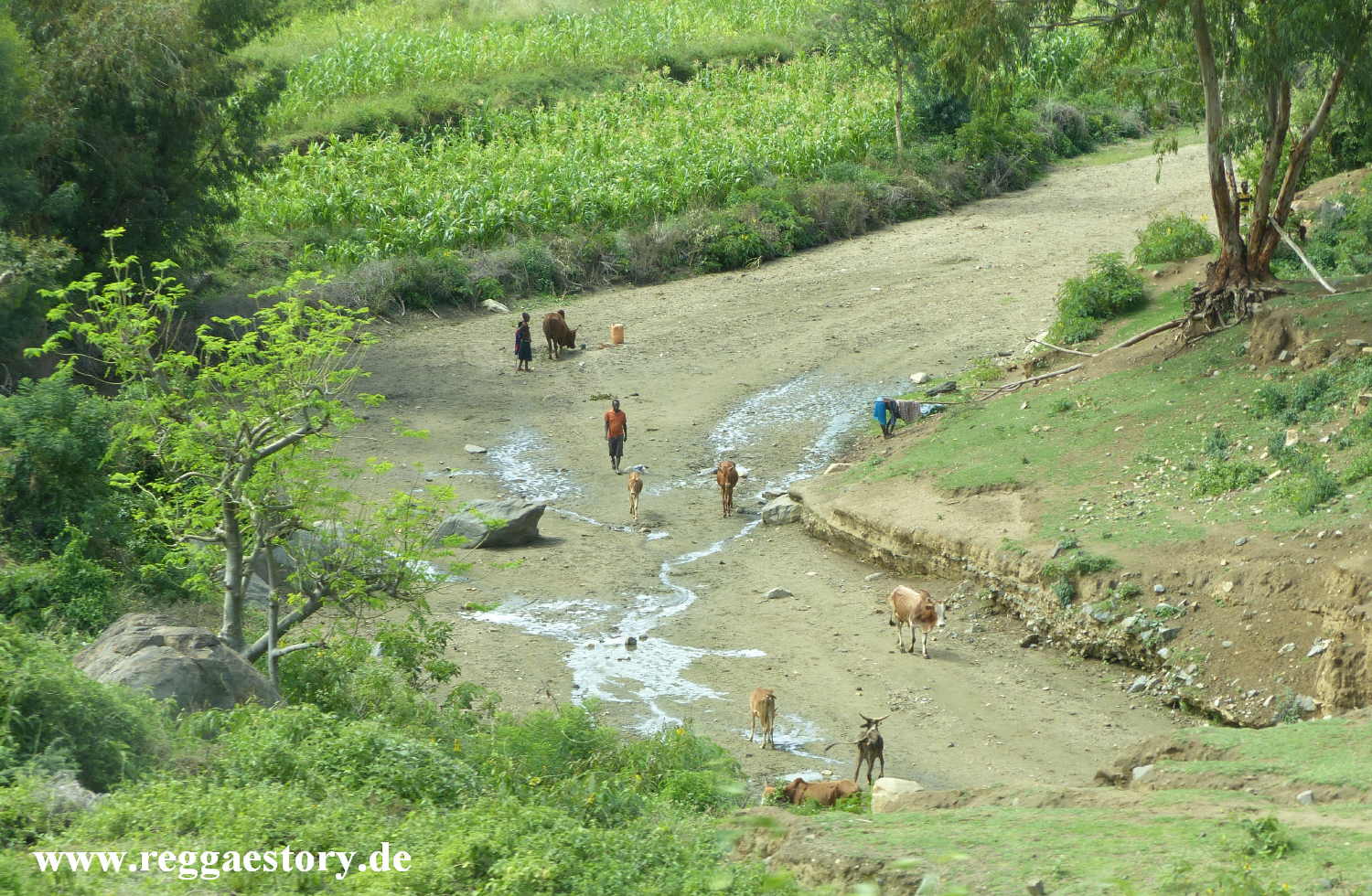 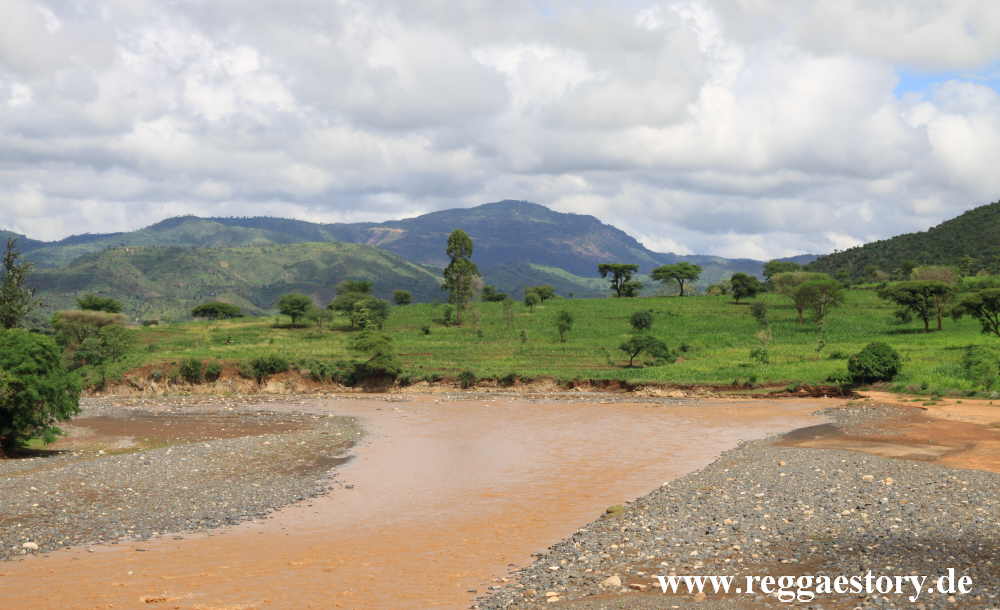 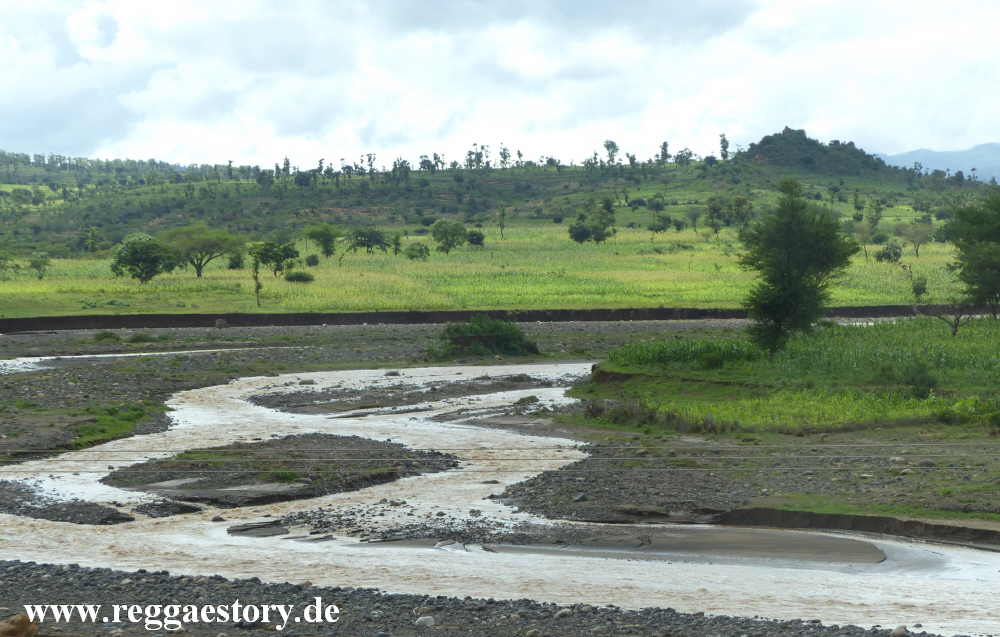 Image 1.101 - 1.105: Landscapes approximately 40-45 minutes before Konso As we reach the outskirts of Konso, a vibrant market is in full swing. We already know this place from Part 5 (photos 427-429), but it wasn't as busy as it is now. Unfortunately, we've already lost too much time today to take a walk around. So Alex drives past very slowly so we can at least snap a few shaky photos from the car. 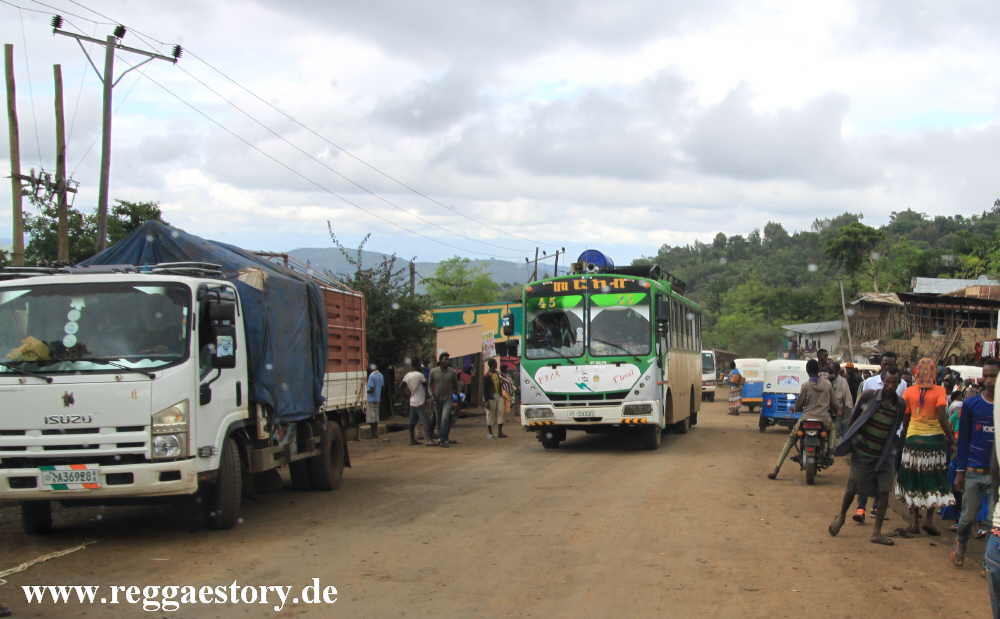 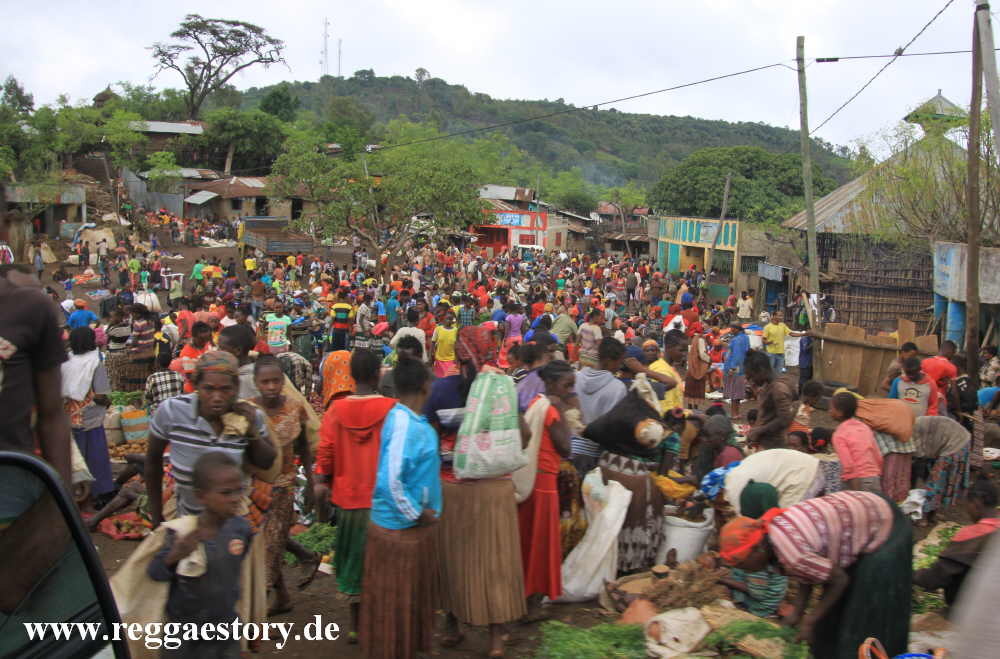 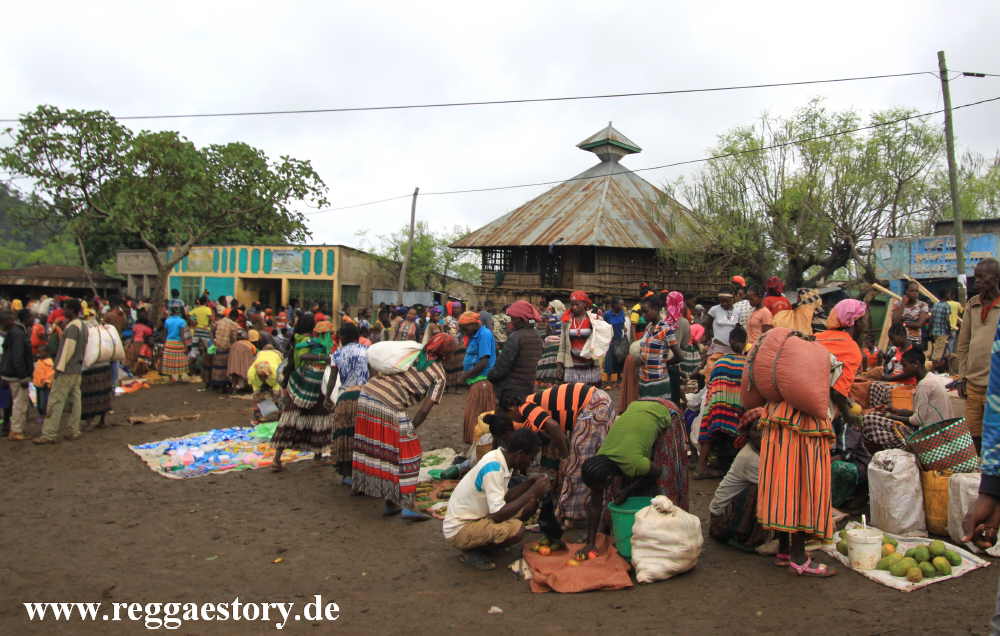 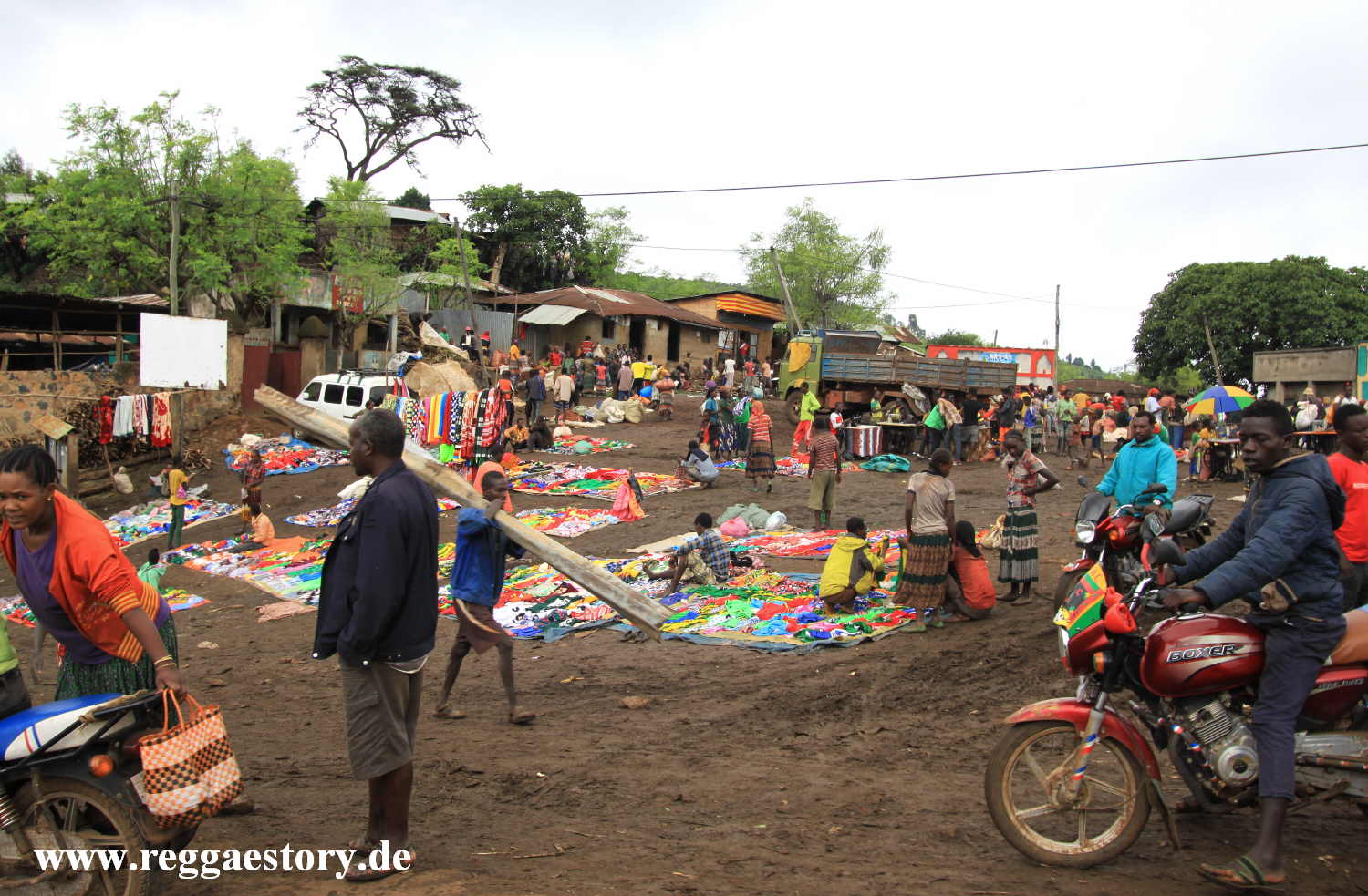 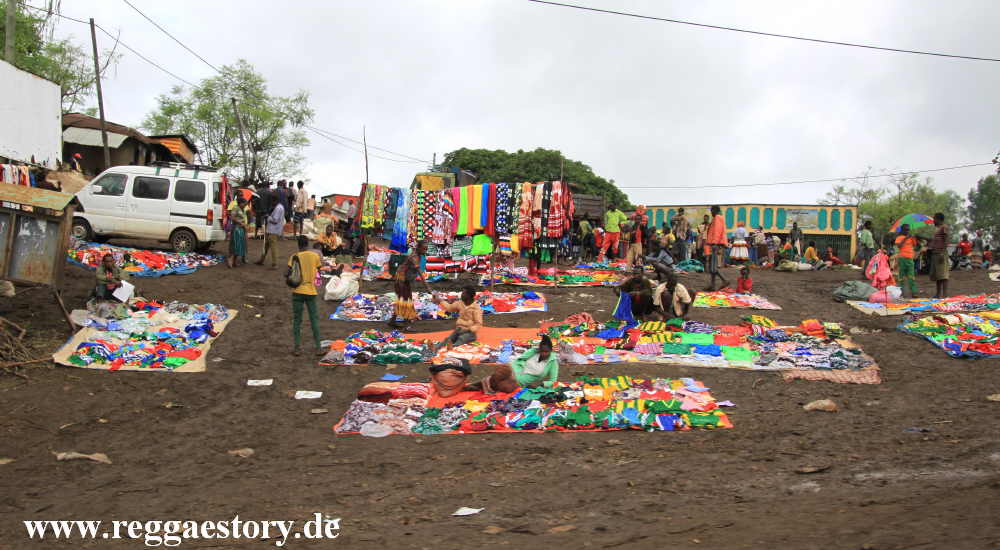 Image 1.106 - 1.110: Market activity in a suburb of Konso Shortly afterward, we arrive at the Kanta Lodge in Konso, which we already know (see Part 5, starting with photo 366), where we treat ourselves to a belated lunch break that lasts about an hour. Meanwhile, Alex and Mastu drive into town for a snack and to get our worn-out spare tire repaired or replaced. 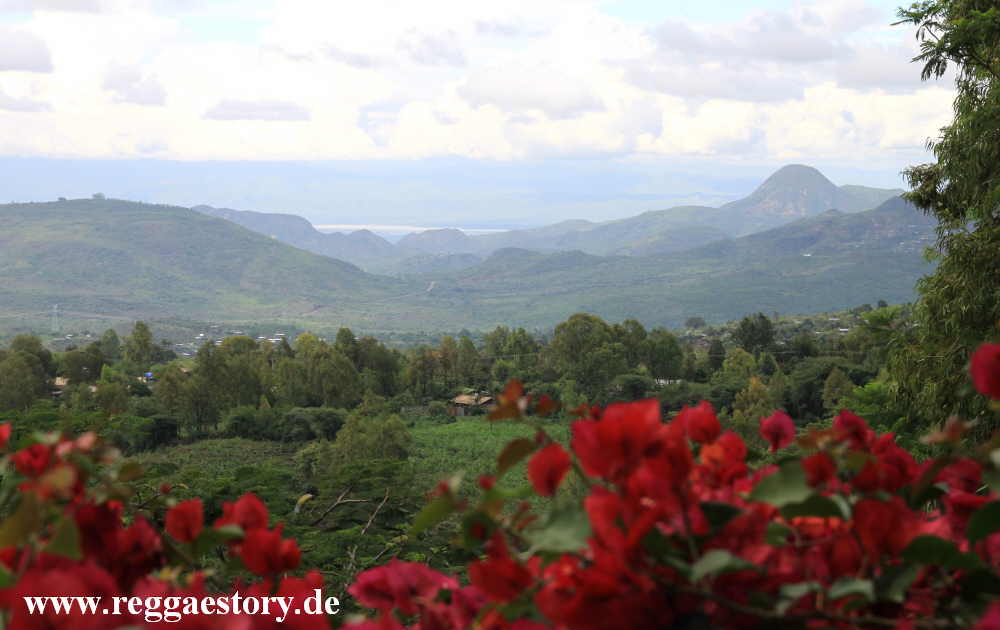 Image 1.111: View across the Kanta Lodge looking north When Alex and Mastu pick us up again, it's now 4:00 PM. Considering the drive from Arba Minch to Konso, which took almost four hours including breaks, not much can go wrong now if we want to reach our lodge in Arba Minch before nightfall. That sounds like a lot for such a short distance, but unfortunately, the local conditions don't allow for much leeway. 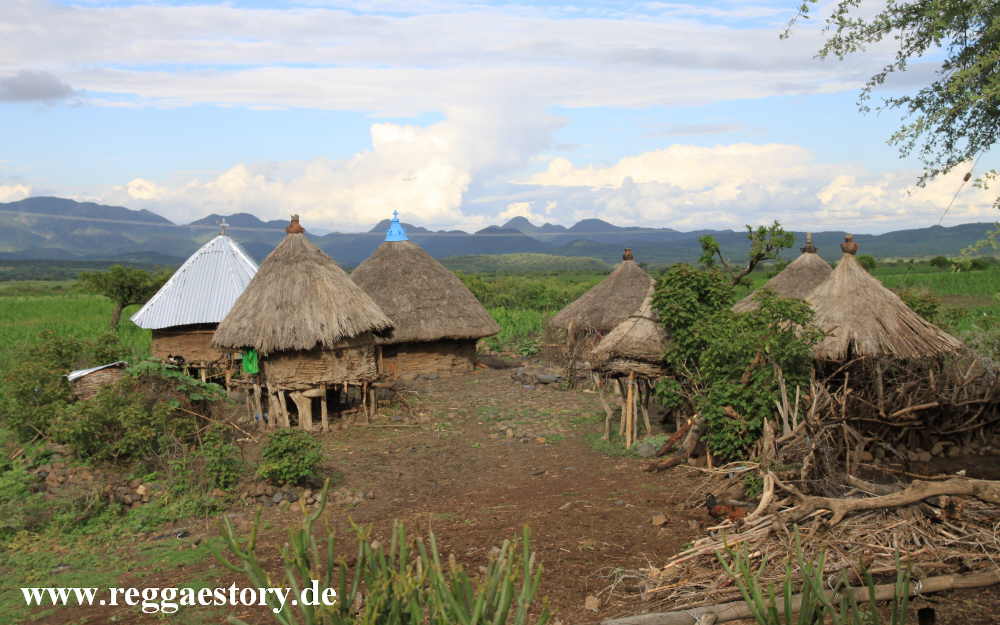 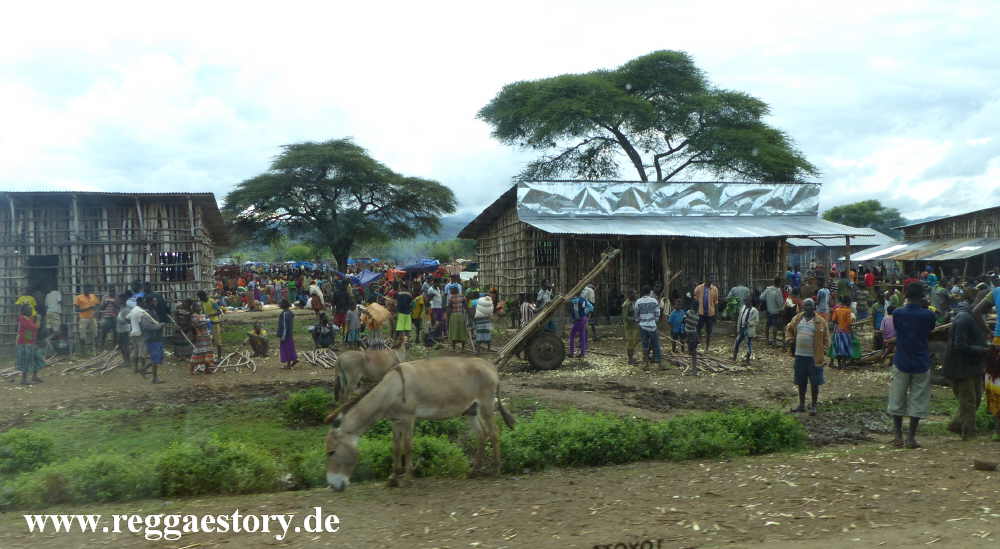 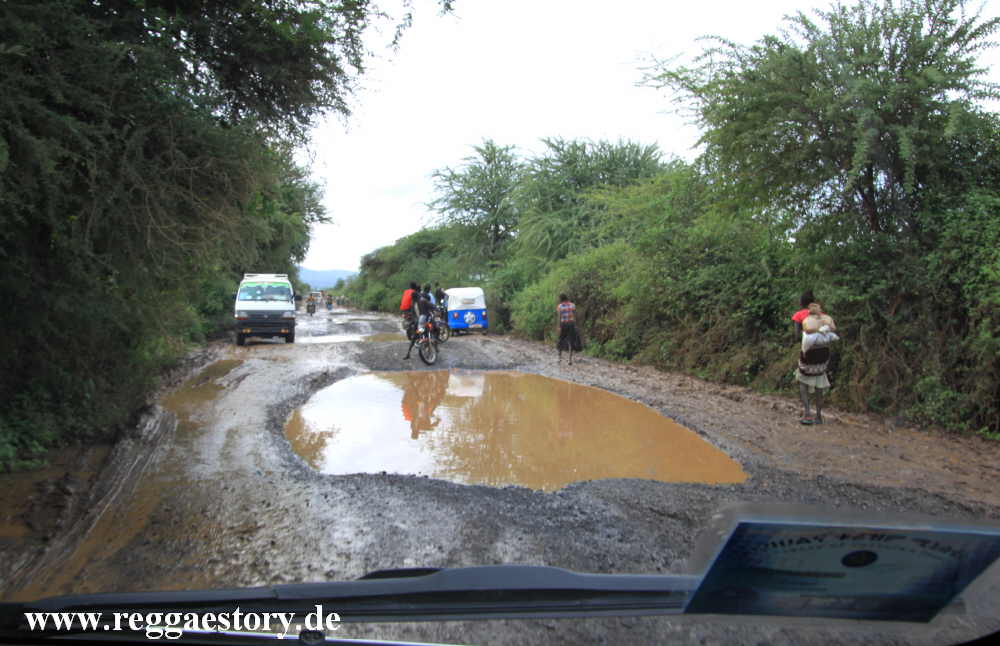 Image 1.112 - 1.114: Onward towards Arba Minch - Approximately 40-50 minutes past Konso Image 1.114: Watch out for the unfathomable potholes! Another 10 minutes later, we cross a large bridge over a river, where a small village is located. You could visit the market here if you had enough time. But it's already too late, as most of the stalls have already been packed up. A crowd of people has gathered on the riverbank, carrying numerous water canisters. Anyone who thinks they're not actually drawing this brown sludge is sorely mistaken. We've already seen how well the local soil filters the water. Just a meter away from the flowing water, you can scoop crystal-clear water from dug holes. 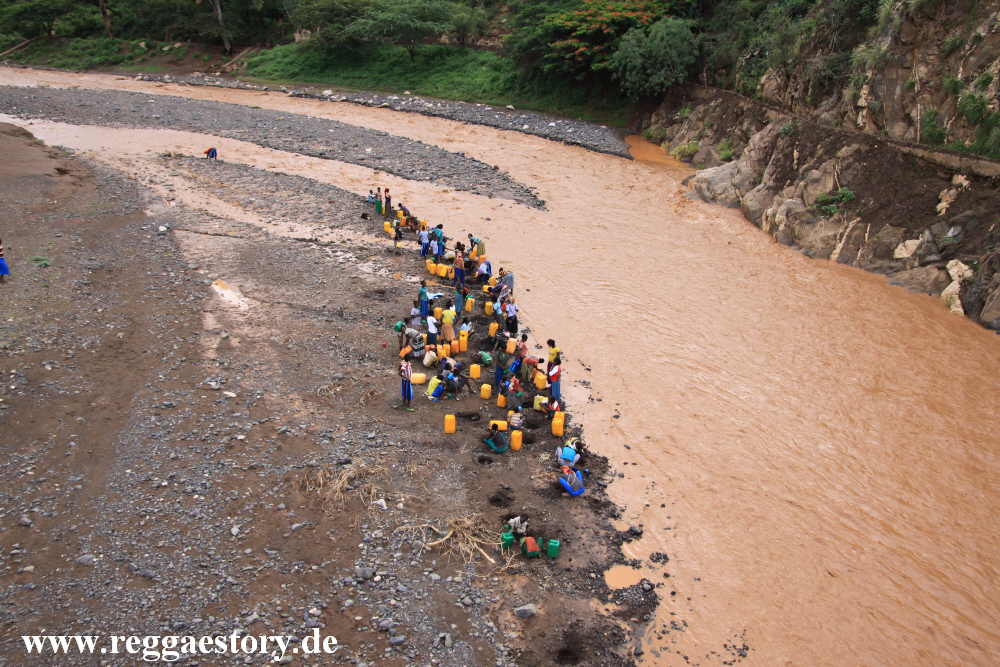 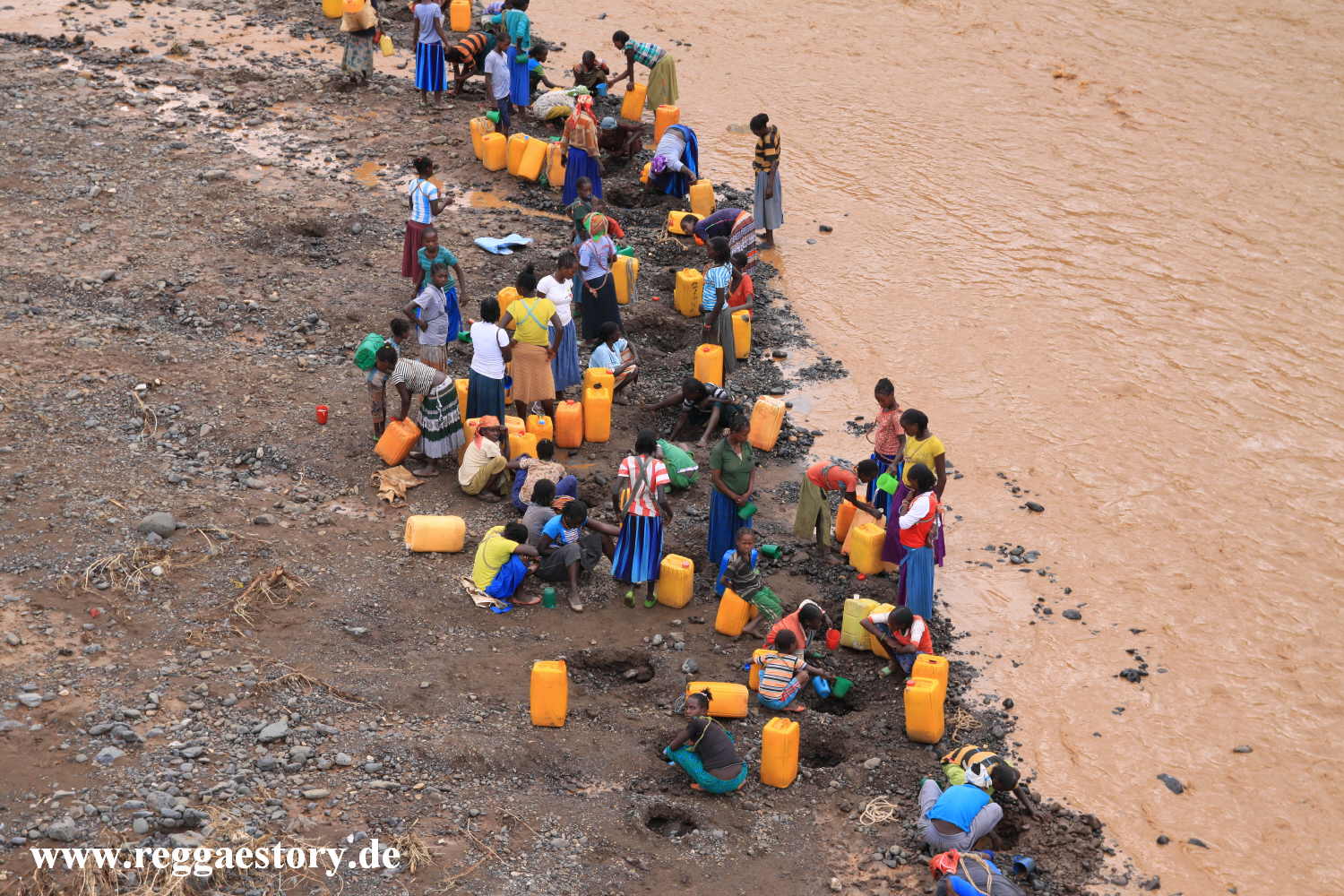 Image 1.115 + 1.116: Water being drawn from pits beside the river 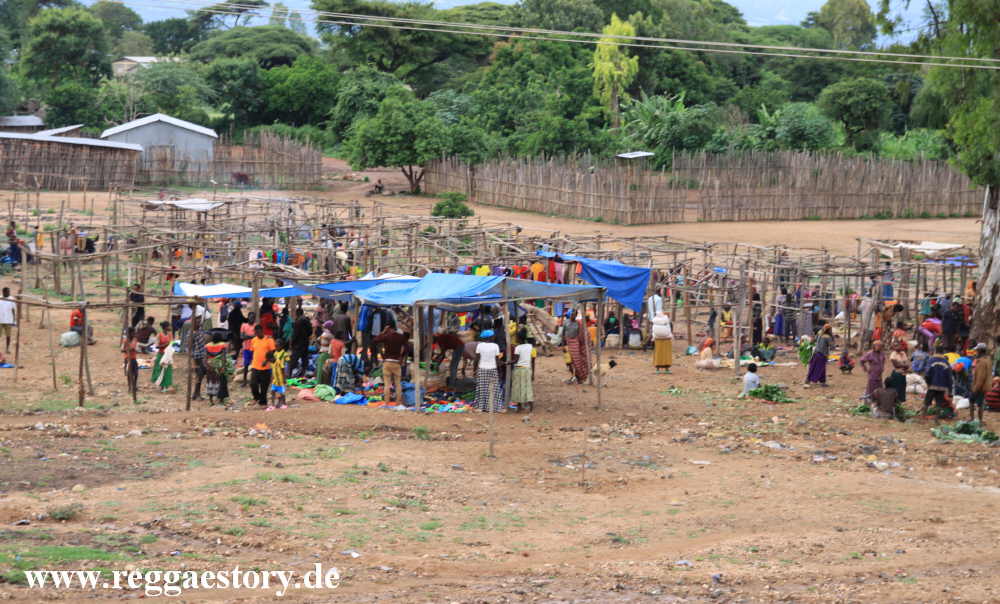 Image 1.117: Market winding down in the same town 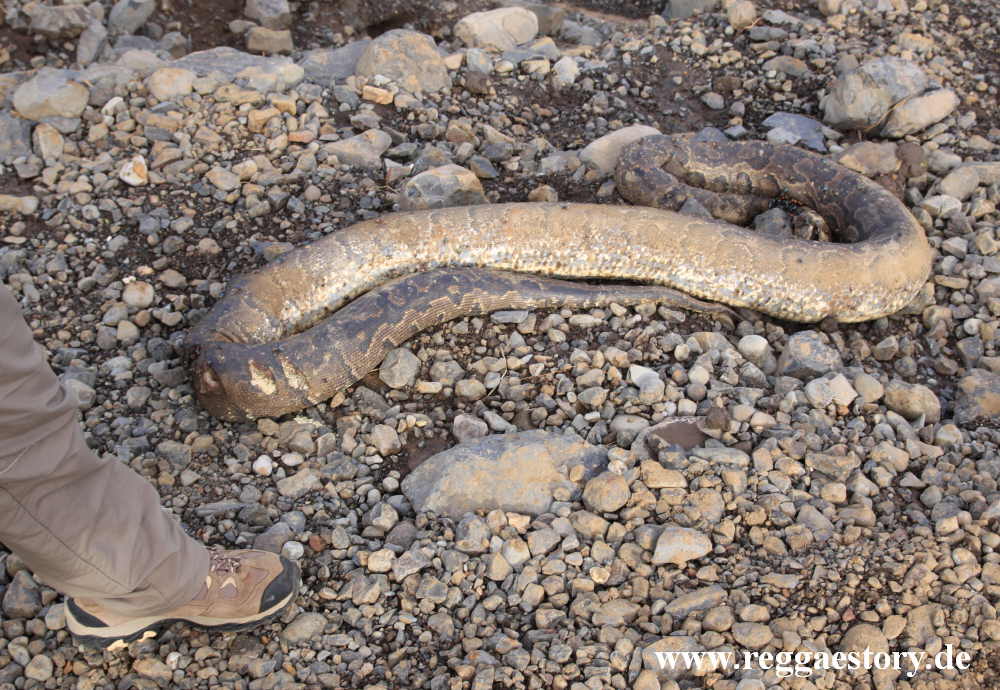 Image 1.118: We lost the battle. Of course, we weren't involved. A dead python lies by the roadside. It's one of the largest snakes in the world and can grow up to 6 meters long. We're slowly approaching our destination. The sun is already very low. But we might still make it. After all, we've already reached the first reaches of Lake Chamo. This lake is approximately 30 kilometers long, and a little further on, at the other end, after the so-called "Bridge of God" (a land bridge between Lake Chamo and Lake Abaya), lies Arba Minch. 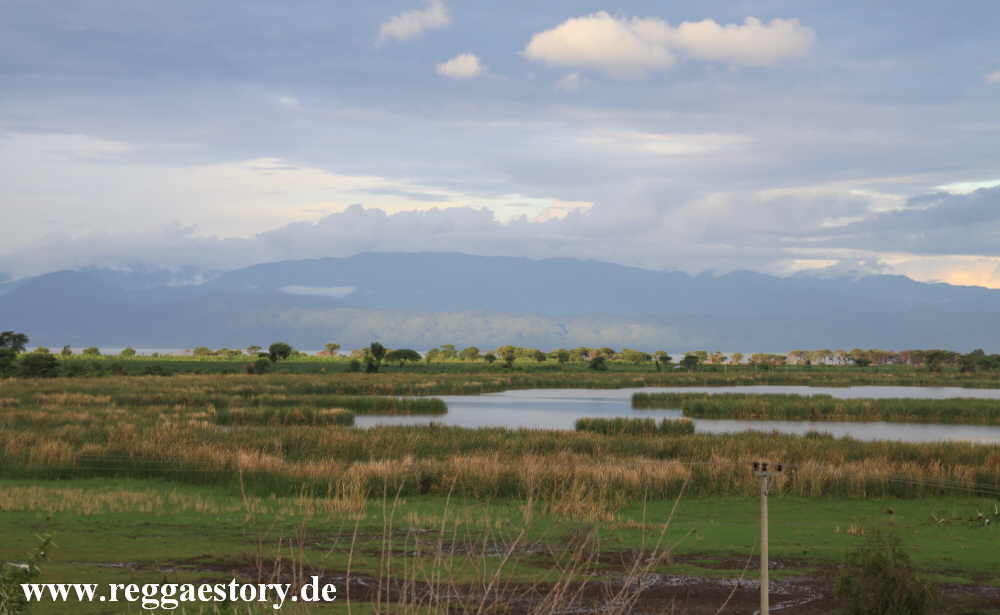 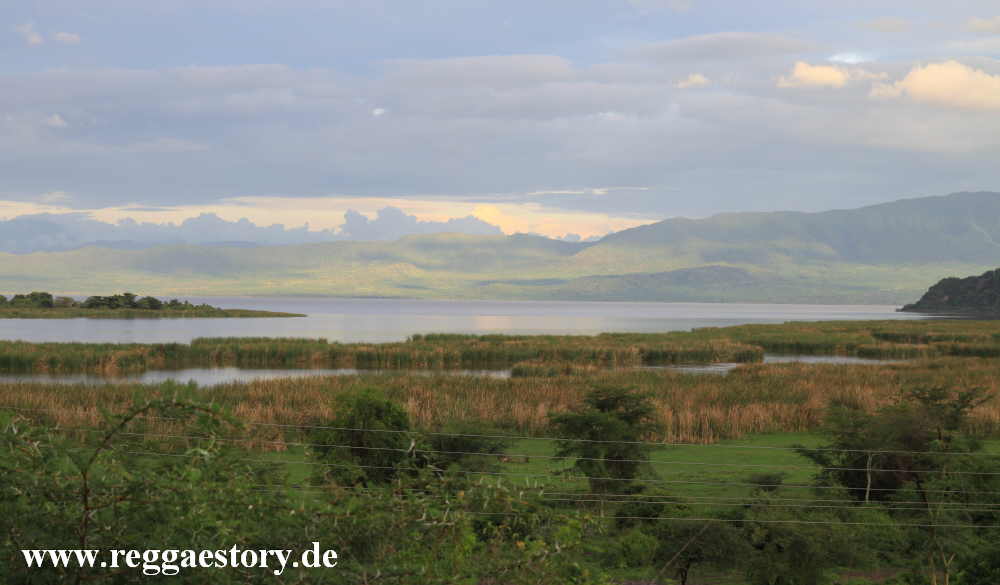 Image 1.119 + 1.120: Southern reaches of Lake Chamo But 30 kilometers can still hold many surprises by African standards. We've almost reached our destination, and most of the journey is behind us. Arba Minch is practically in sight when we're slowed down again by the daily animal roundup. It's already 6:30 p.m., and Alex's nerves are being tested once more. Now it's a slalom course through thousands of goats, cattle, and sheep. The goal is to avoid hitting any of the animals, because in Ethiopia, it's always the driver's fault. This can cost time, nerves, and a lot of money. But Ethiopian domestic animals are easy to handle and remain unfazed by any vehicle. That wouldn't work where we come from; it would be a battlefield on the road. Our animals aren't used to that and would panic, causing chaos and numerous accidents, at least with that many animals and vehicles. Video: Thousands of pets on the road just before Arba Minch. So, we ended up having to accept another 30-minute delay and didn't reach our lodge until after 7:00 p.m. No more photos today. The sun has set, but there's still enough light for us to enjoy the lodge's magnificent location and the beautiful view from our terrace. Unfortunately, that's all we can do today. But that was to be expected after our delayed departure this morning. 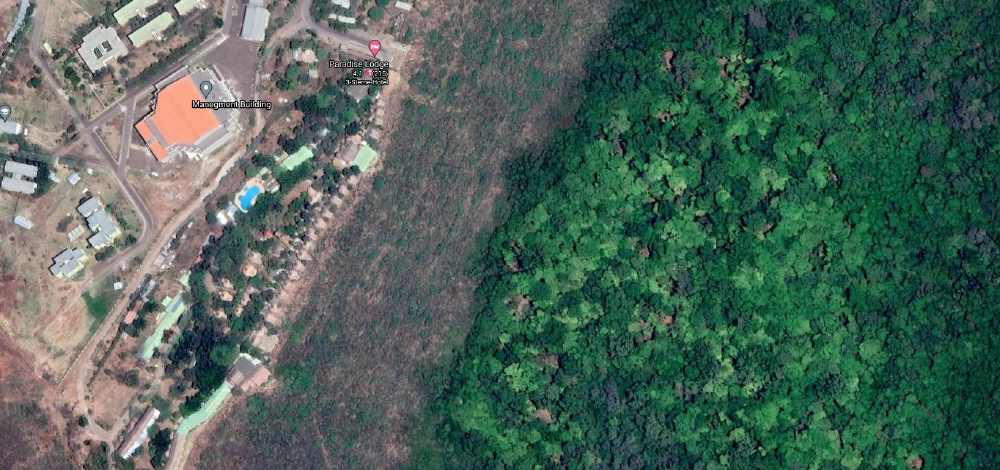 Image 1.121: Excerpt from Google Map - Paradise Lodge in Arba Minch - Simply click on the image or link to explore the location further. All that remains is dinner. We are greeted by a huge restaurant, tastefully constructed and furnished entirely from various woods and other natural materials. In front of it is a large outdoor terrace, which, with its fantastic view, attracts most visitors, especially those sitting near the railing. The last glimmers of daylight still allow us a glimpse of the shadowy landscapes before and below us. From the jungle below, the squabbling screeches of numerous monkeys drift up to us. Anyone sitting right by the railing might even make direct acquaintance with this thieving bunch. Now we know why there's security guard with batons and baseball bats at the railing. ;-) We'll see you again tomorrow when we take a trip on Lake Chamo and hopefully see some hippos, crocodiles, and other inhabitants of the lake. What else are we doing? You'll see tomorrow. Unfortunately, we can't really plan anything yet for various reasons. Copyright: www.reggaestory.de Photos: Marion & Peter Joachim Text and Videos: Peter Joachim English version: Gabriele Brown |
Zurück


