


ETHIOPIA - THE SOUTH
A travel report - part 3
02.06.2019 – From Shashemene via Guba further south to the Dorze
(25.09.2011 according to the Ethiopian calendar)
 |
Today
we will leave Shashemene and travel further south. Our daily distance
will be around 250 km, which will ultimately lead us to the Dorze
people near Arba Minch. But first it goes a long way west to Alaba
Kulito, the capital of the Alaba Woredas with its Alaba people. |
Our departure is scheduled for
9:00 a.m. today. However, we are already on our feet hours before our
departure, so that we can still enjoy the small bird paradise and the
rural idyll of the lodge.That we don't miss anything, the cows in the
neighborhood, the chants of the orthodox priests and the roosters at
the lodge reminded us already in the night that we had to get up early.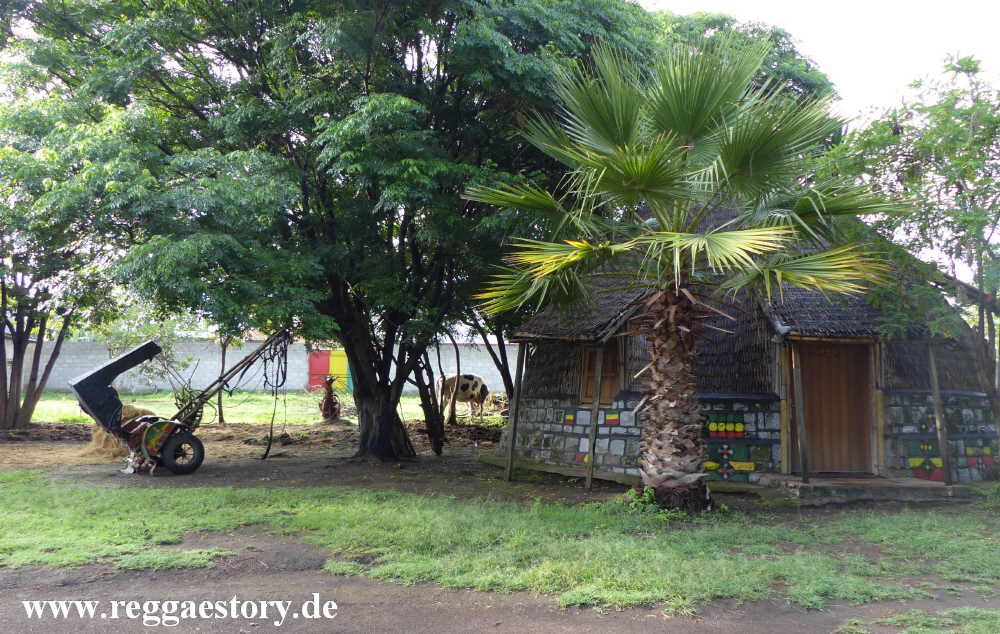 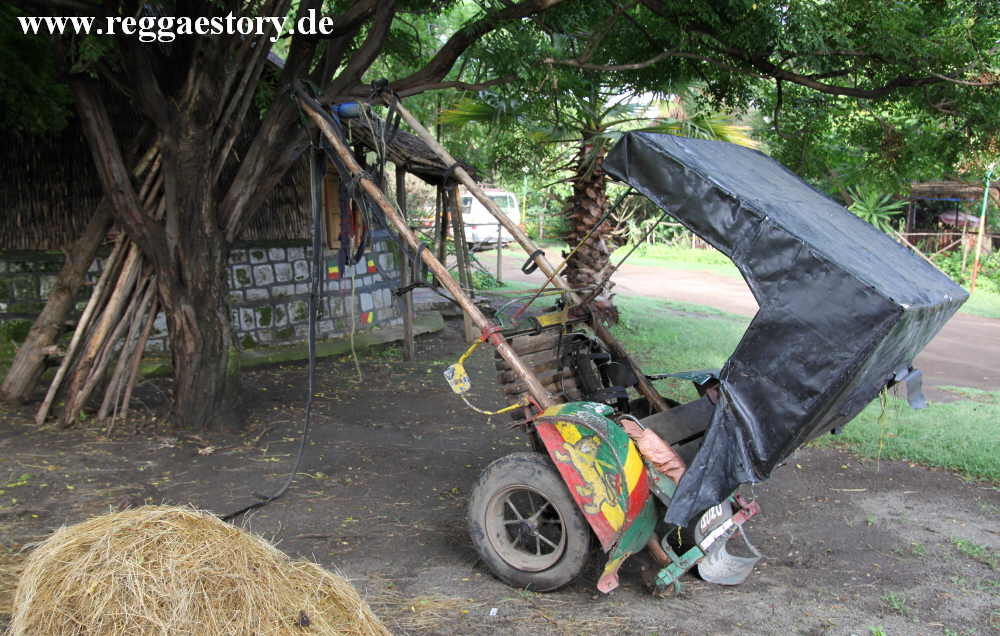 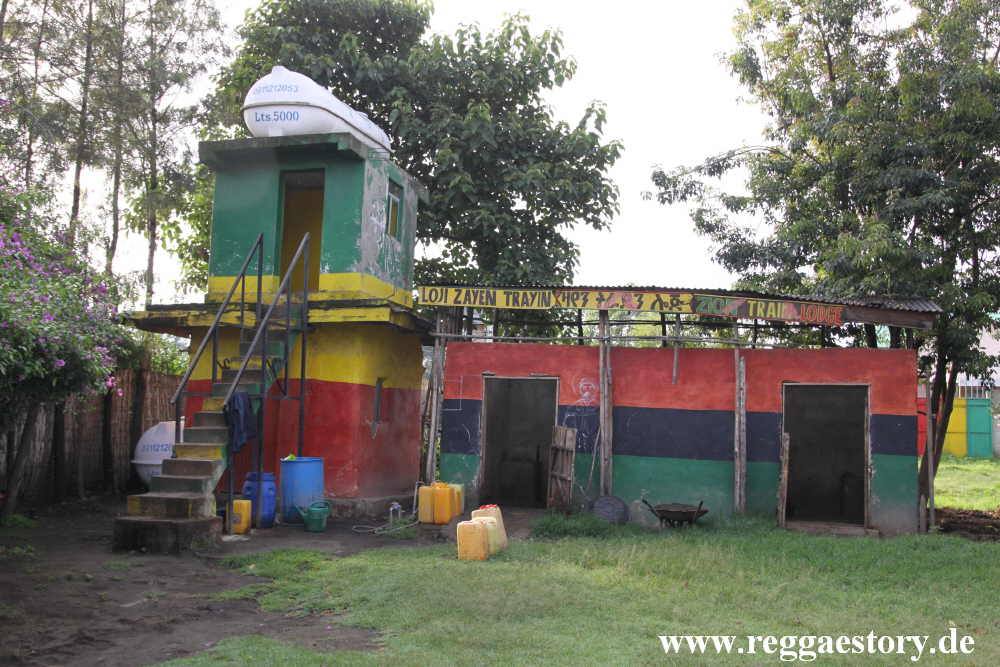 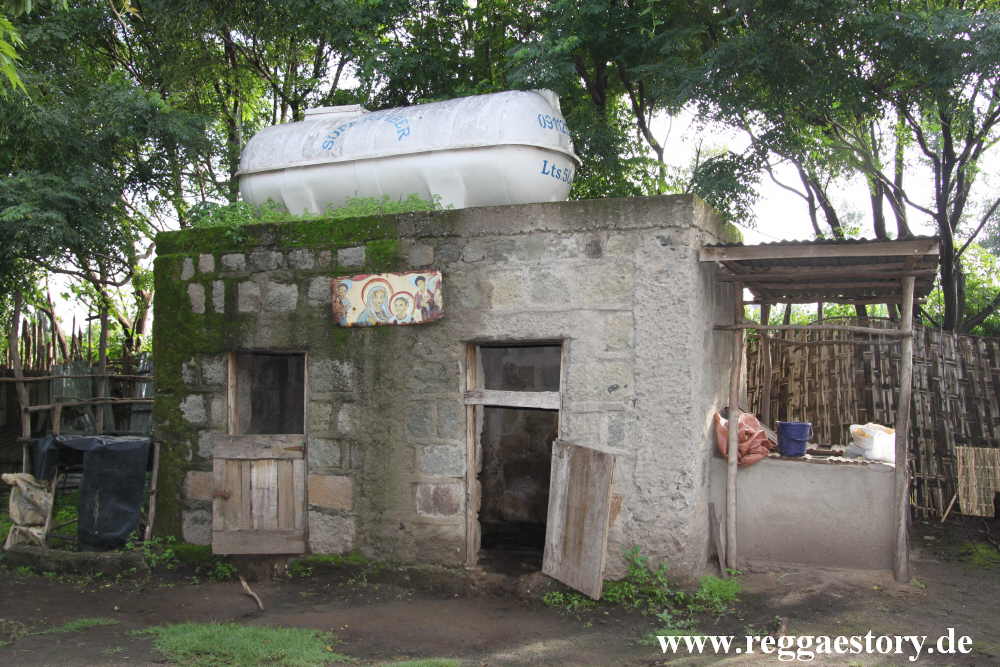 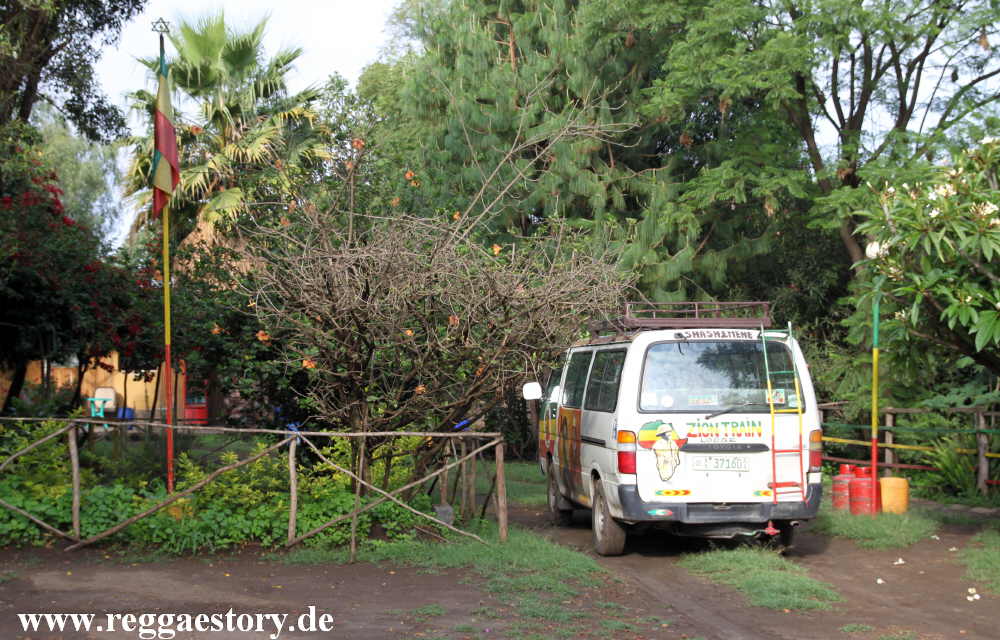 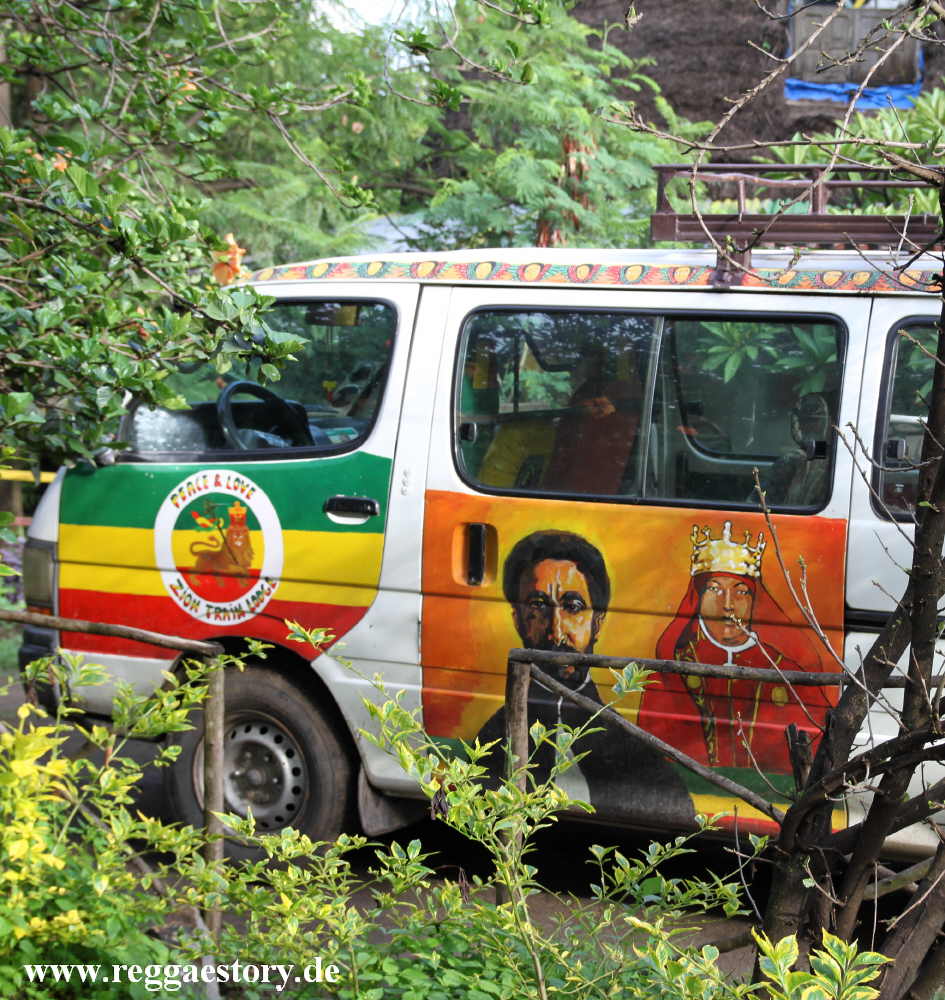
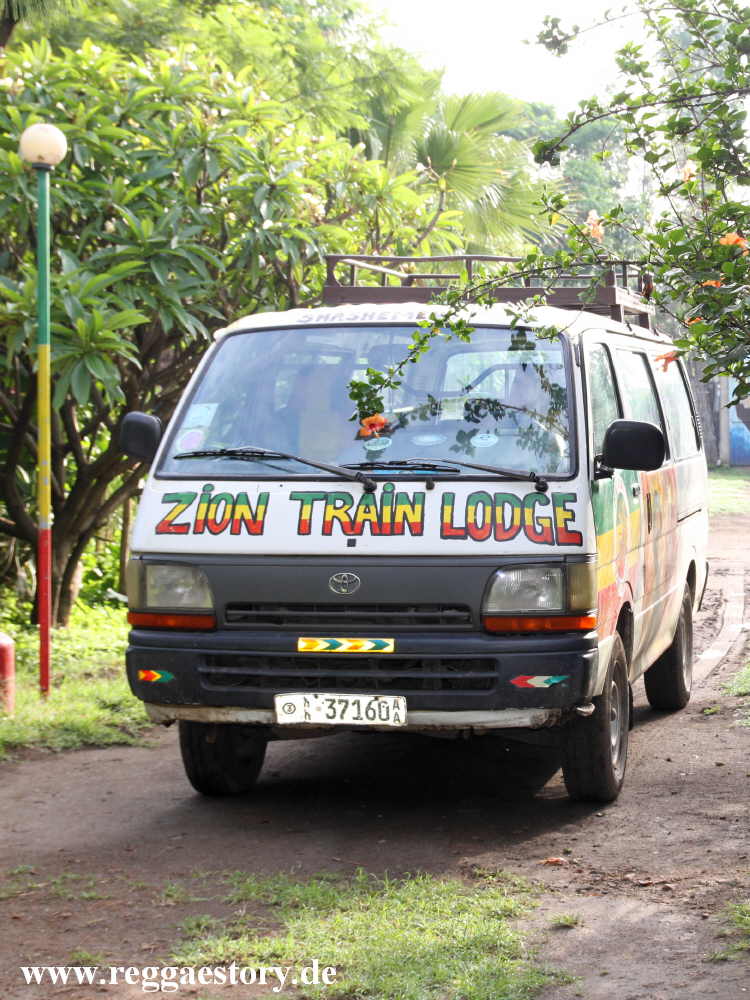 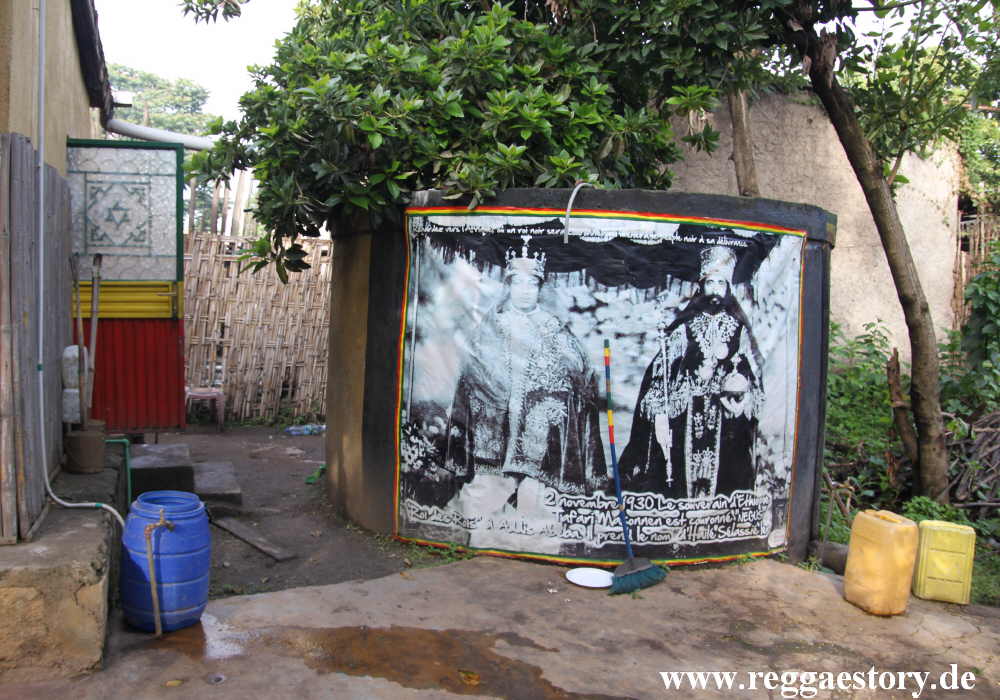 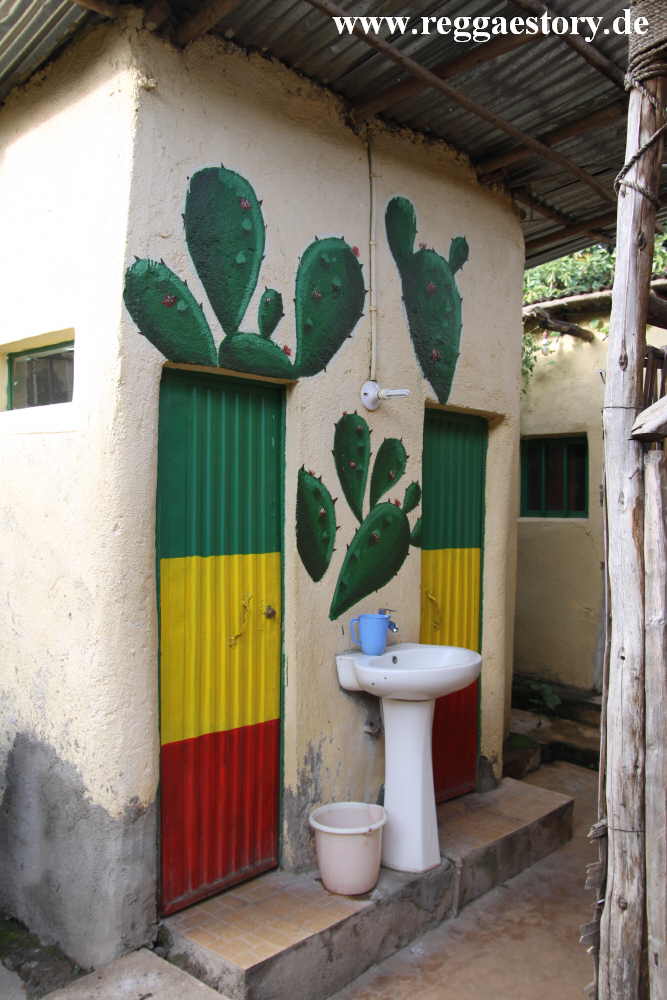
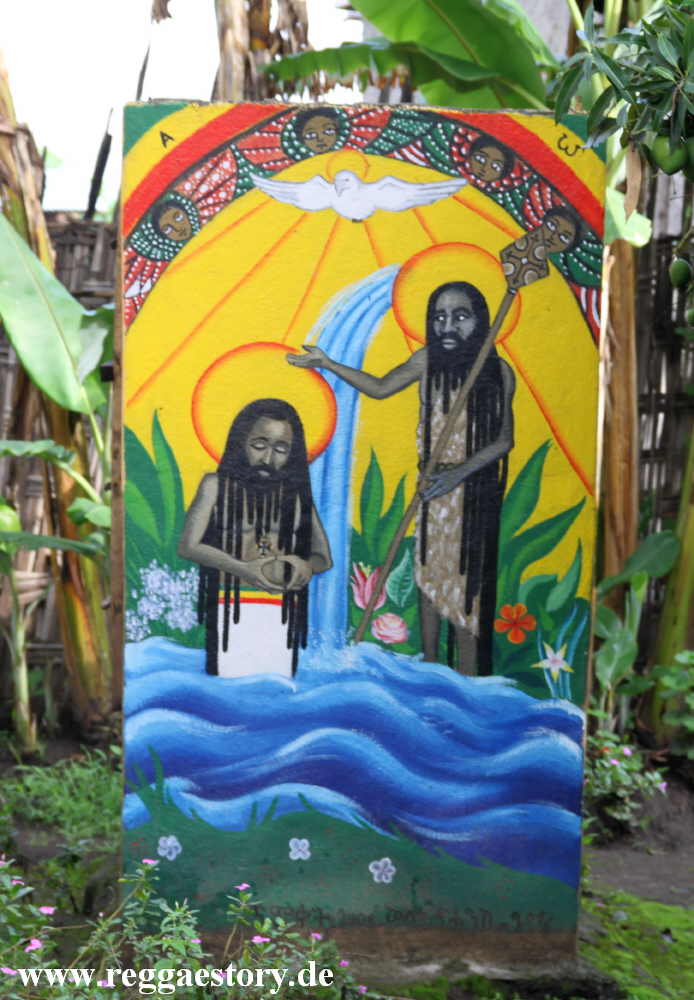 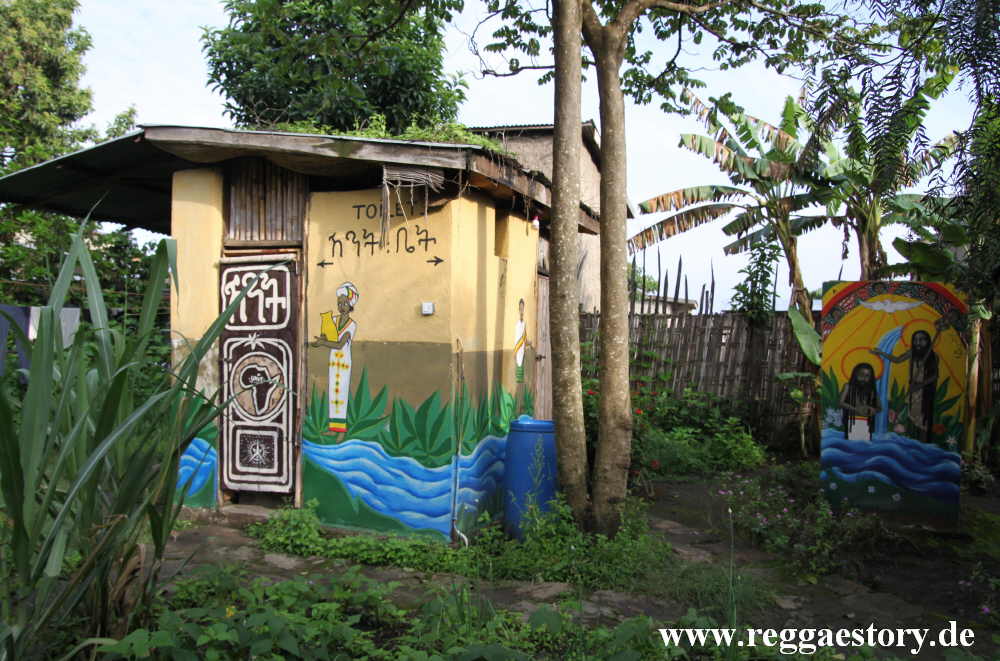 Image 127 - 137: Zion Train Lodge - Shashemene In the lodge, you can discover some wild bird species that are not particularly shy. Whether parrots, owls, hummingbirds and numerous other feather carriers, a clear majority of bird species can be recognized compared to the bird species known in Germany. We couldn't ask for a better backdrop for our cozy Ethiopian breakfast. However, you are always motivated to get up to take photos because it's such a beautiful view. 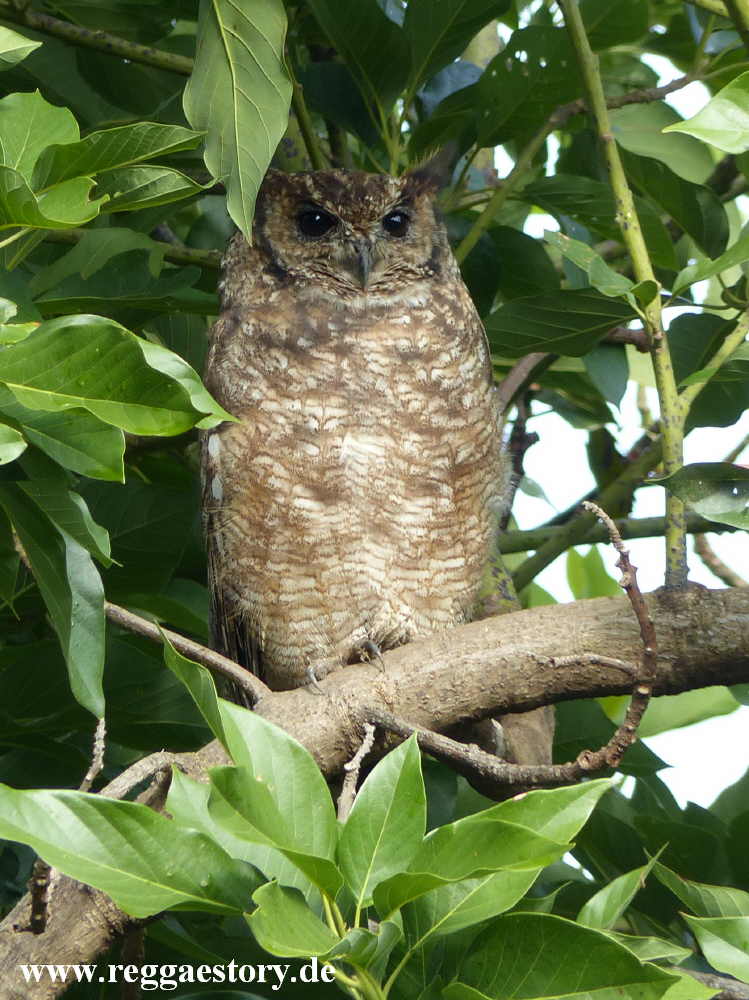
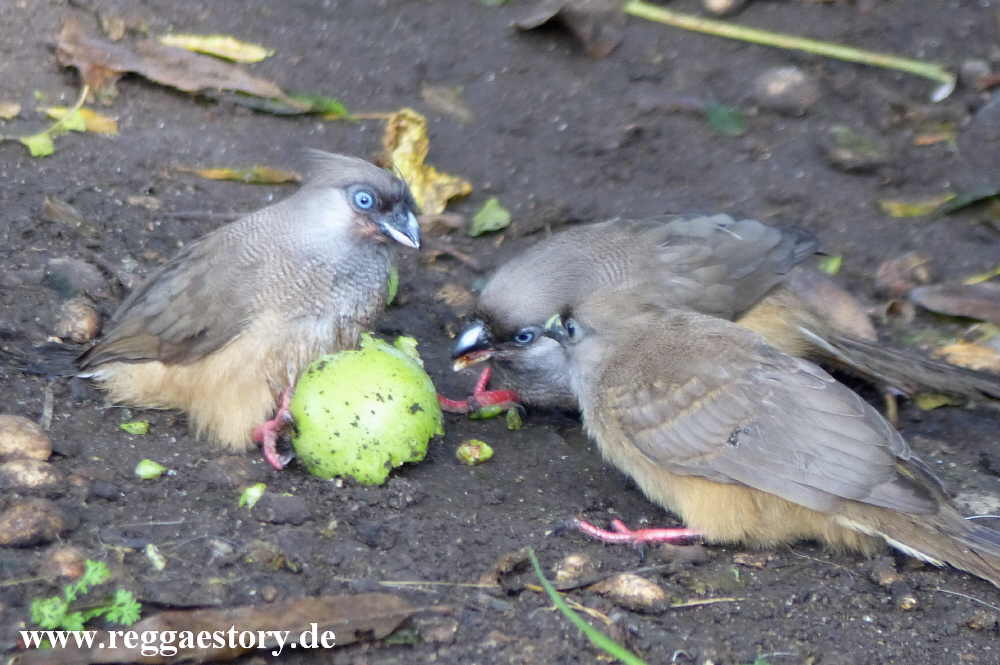 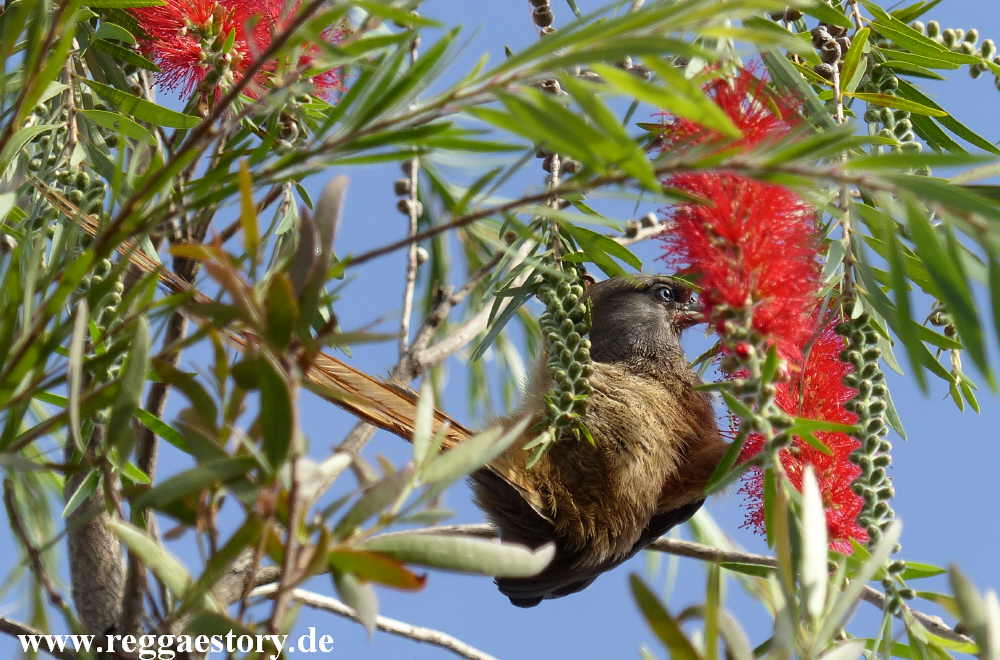 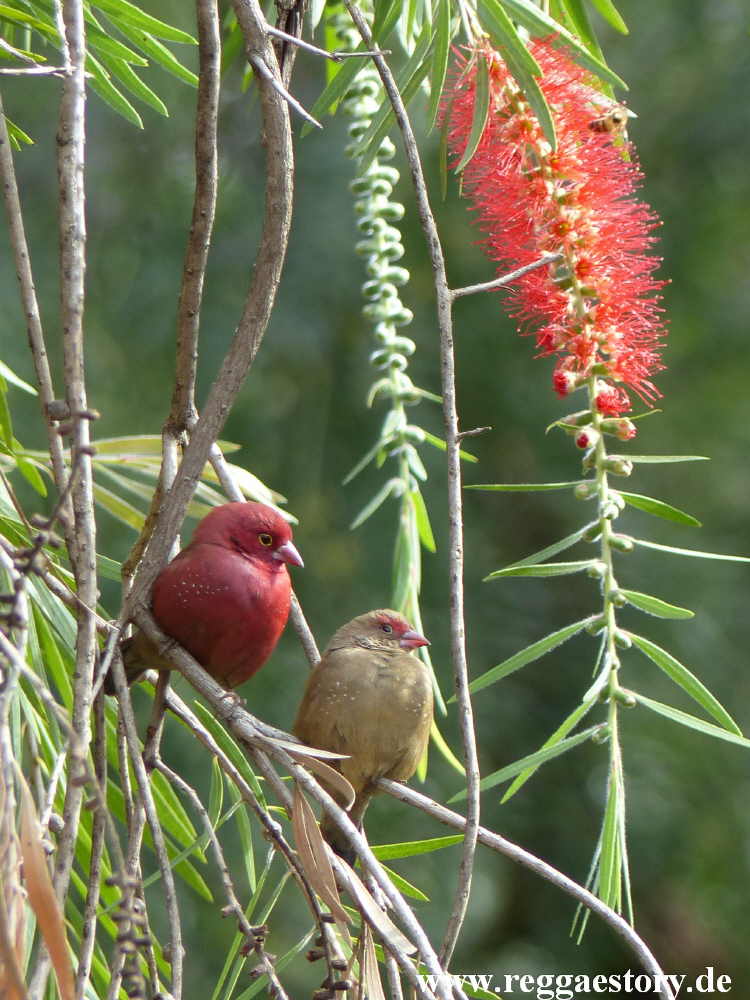
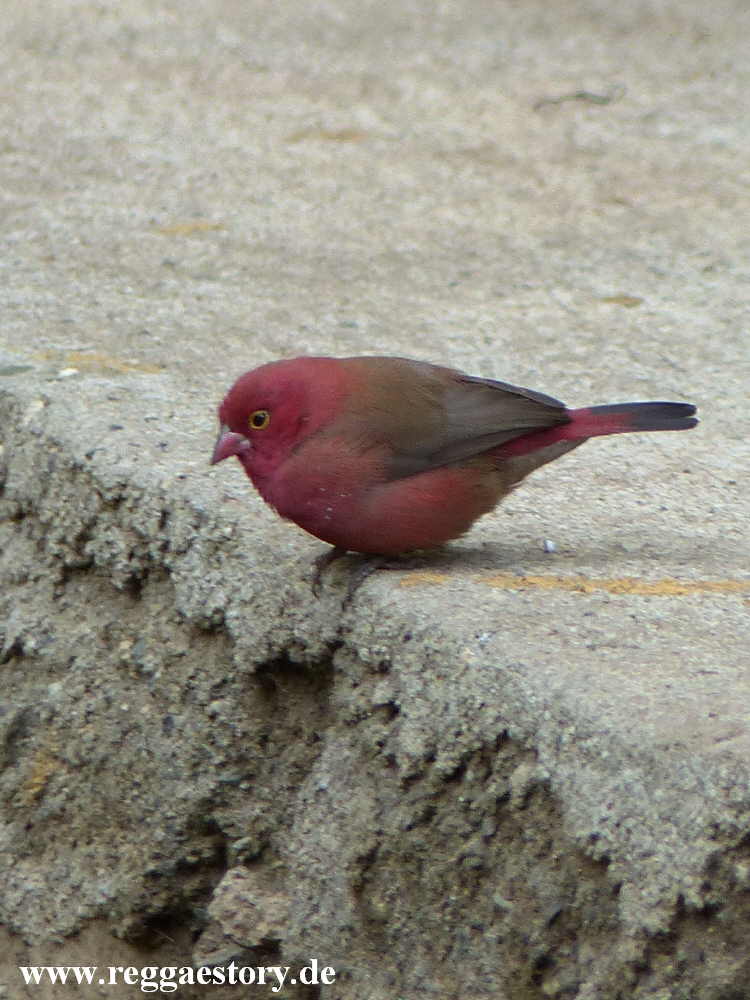 Image 138 - 142: A small selection of the feathered friends of the Zion Train Lodge Image 141 + 142: Red-billed firefinch / also Senegalamarant You can comfortably observe more birds here than anywhere in the wild at one place. But, unfortunately, we can't idle too long if we want to achieve our daily schedule without restrictions. So let's finally finish our nice breakfast before the deliciously fragrant Ethiopian morning coffee gets hypothermic. 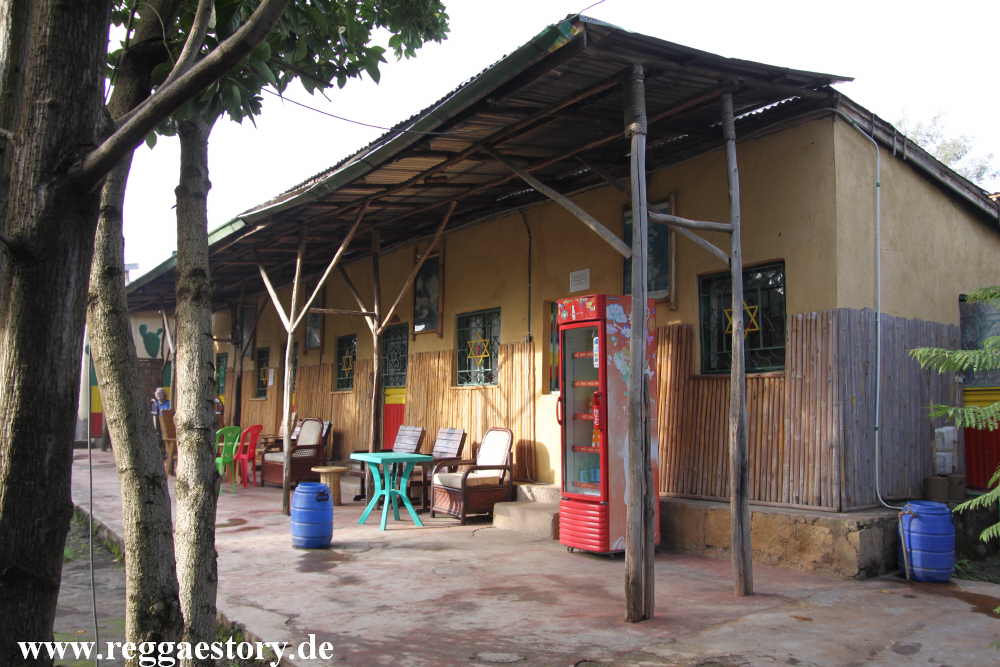 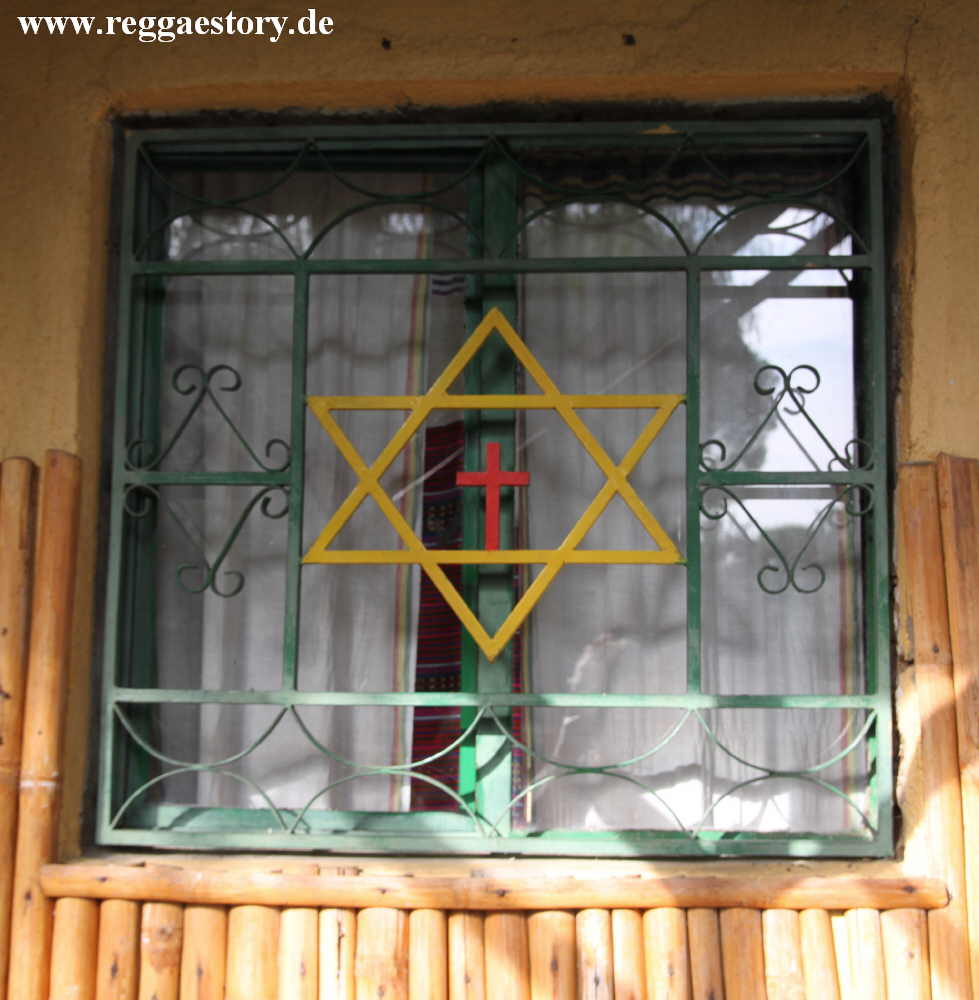
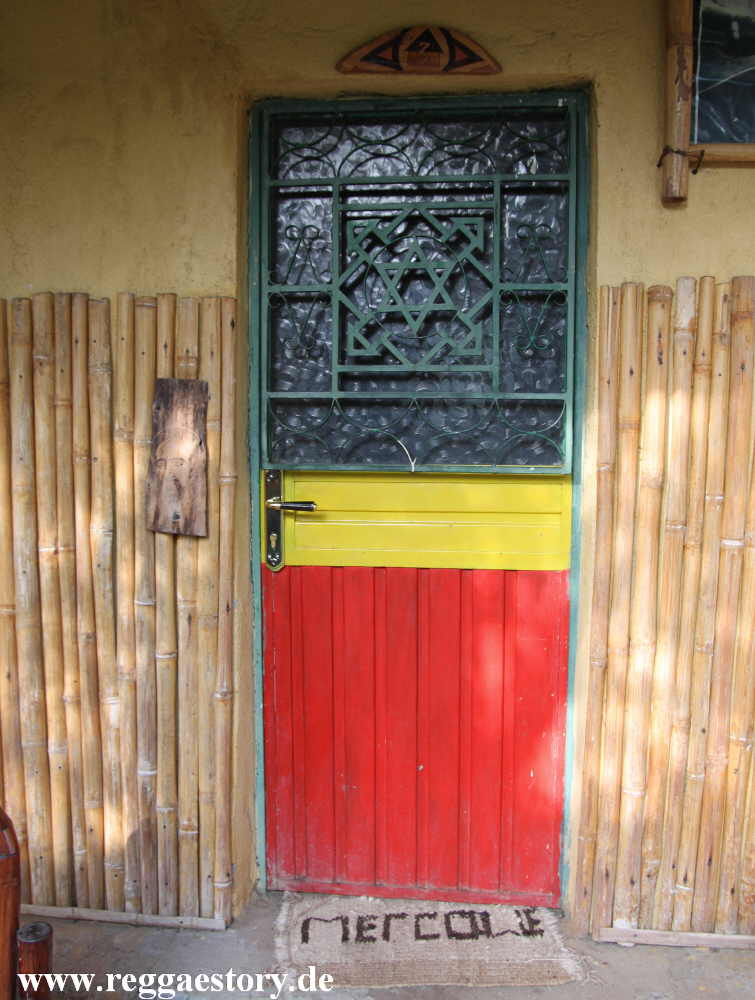 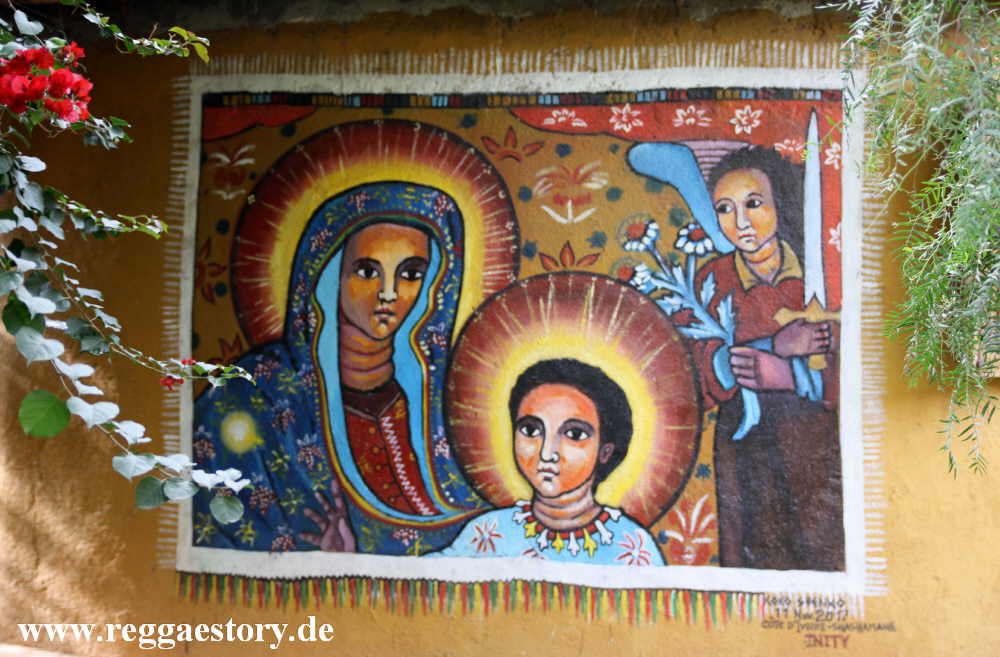 Image 143 - 146: Zion Train Lodge - Shashemene For our breakfast we have chosen our evening spot on the terrace and do not use the existing dining pavilion. So we can enjoy the first rays of morning sun and have a better view of what's going on in the area. Finally, our pick-up time is getting closer and we have to take care of our luggage. 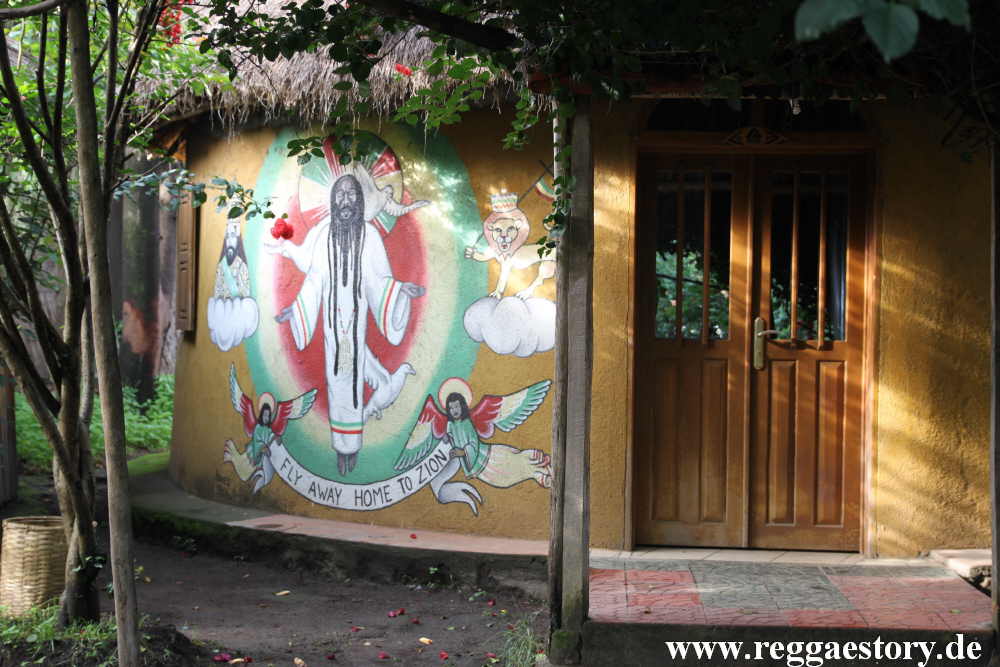 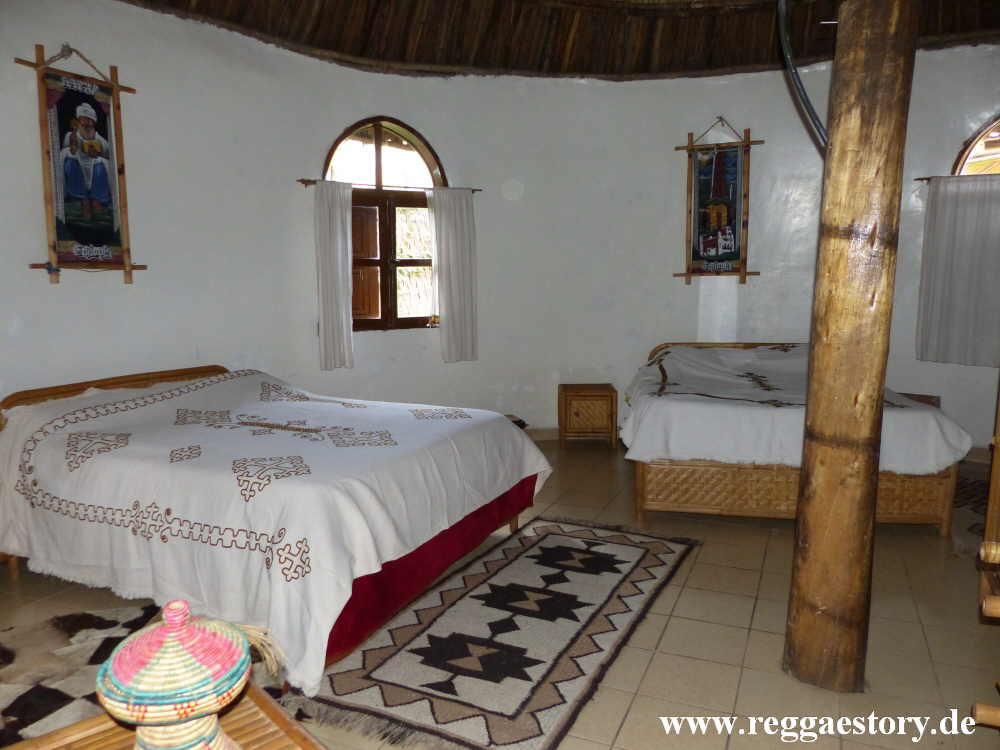 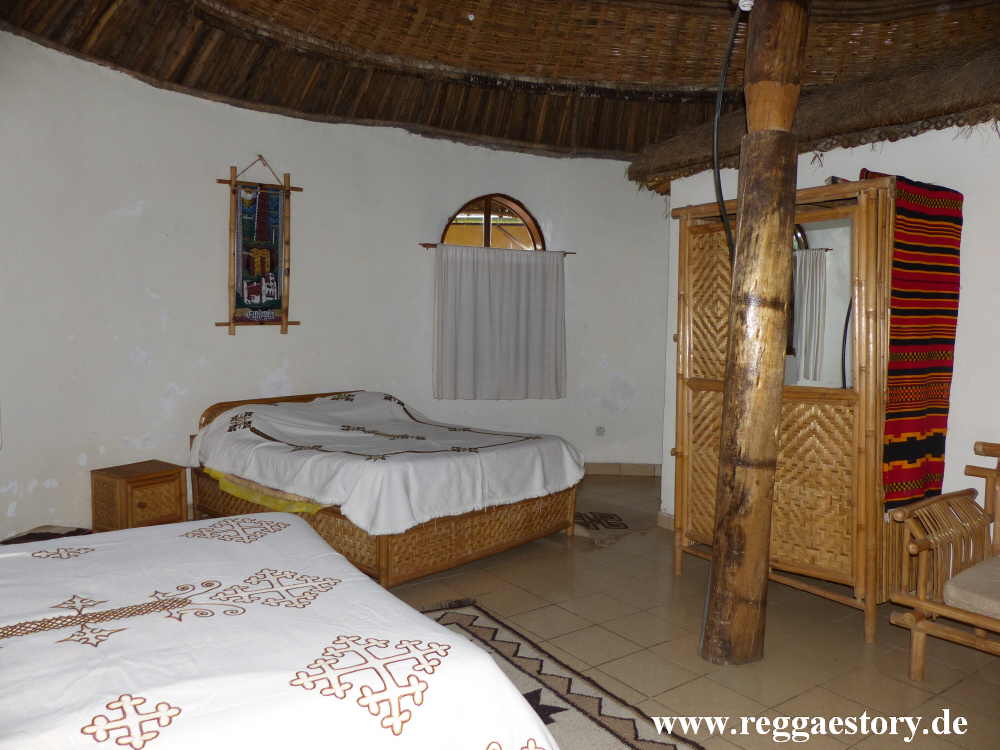 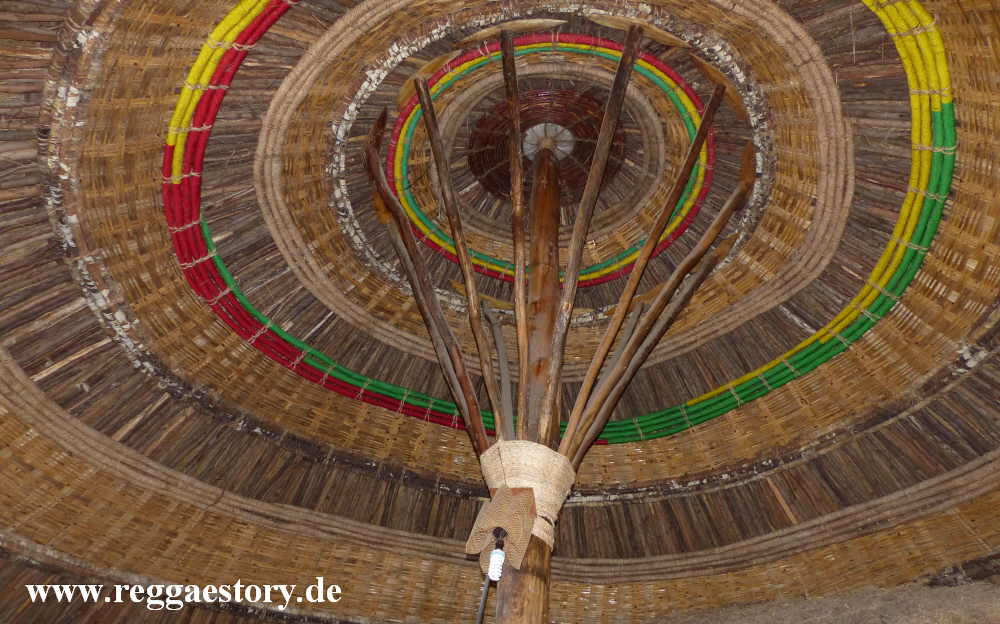 Image 147 - 150: Our great “round hut” in the Zion Train Loge Then the horn horns in front of the gate and our minibus drives into the yard. Our driver Alex and guide Mastu have visibly recovered from the stressful day yesterday and have regained their good mood. Our luggage is quickly loaded and the keys are handed in to Sandarin and Alex. Now just a few farewell photos and then we leave the yard of Alex and Sandrine's Zion Train Lodge. 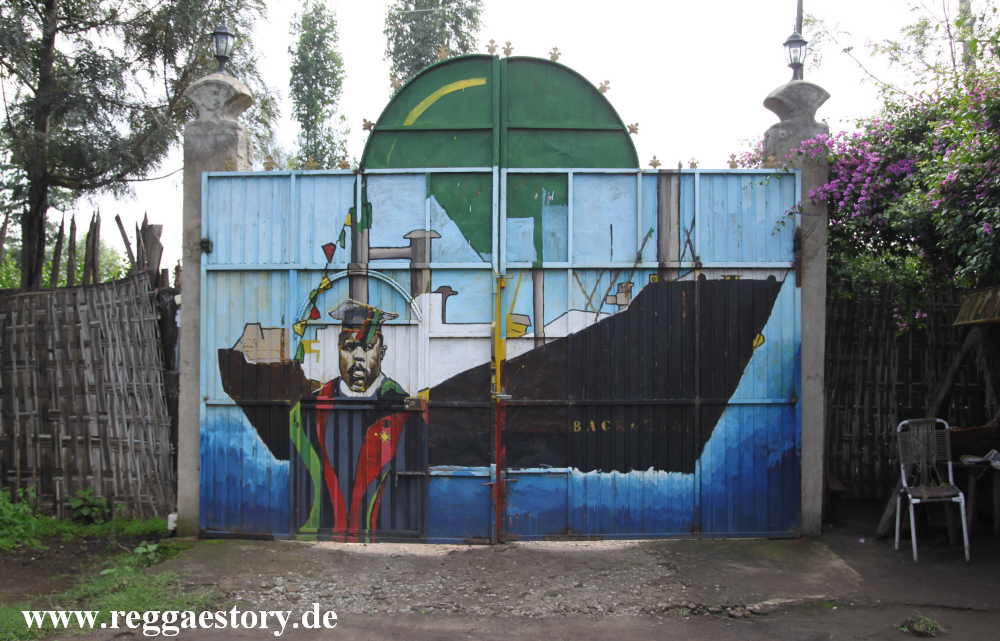 Image 151: The gate of the Zion Train Lodge from the inside with the portrait of Marcus Garvey and a ship of the Black Star Line. 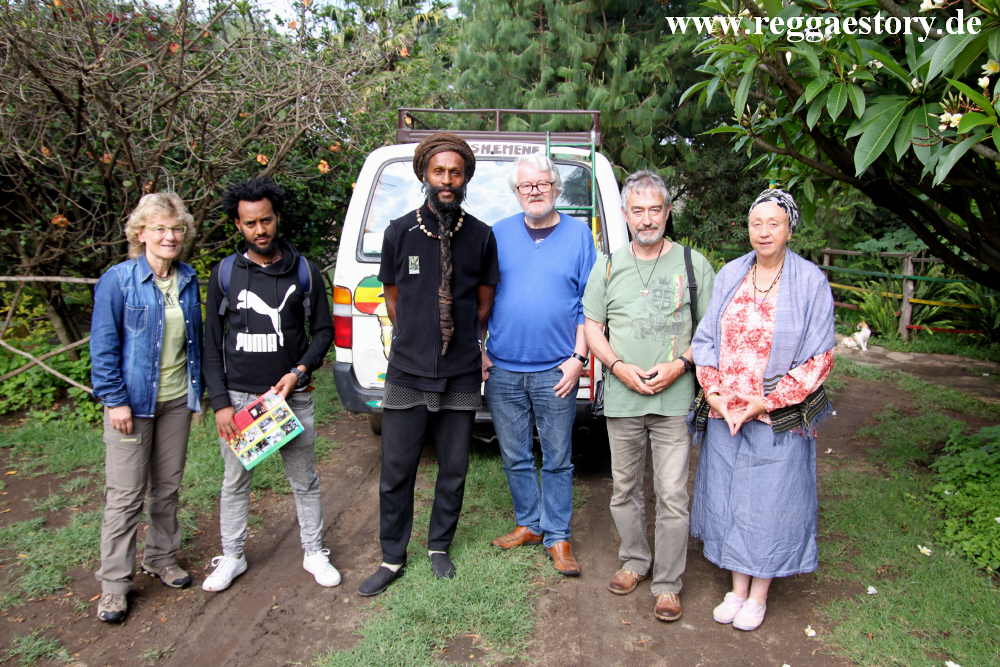 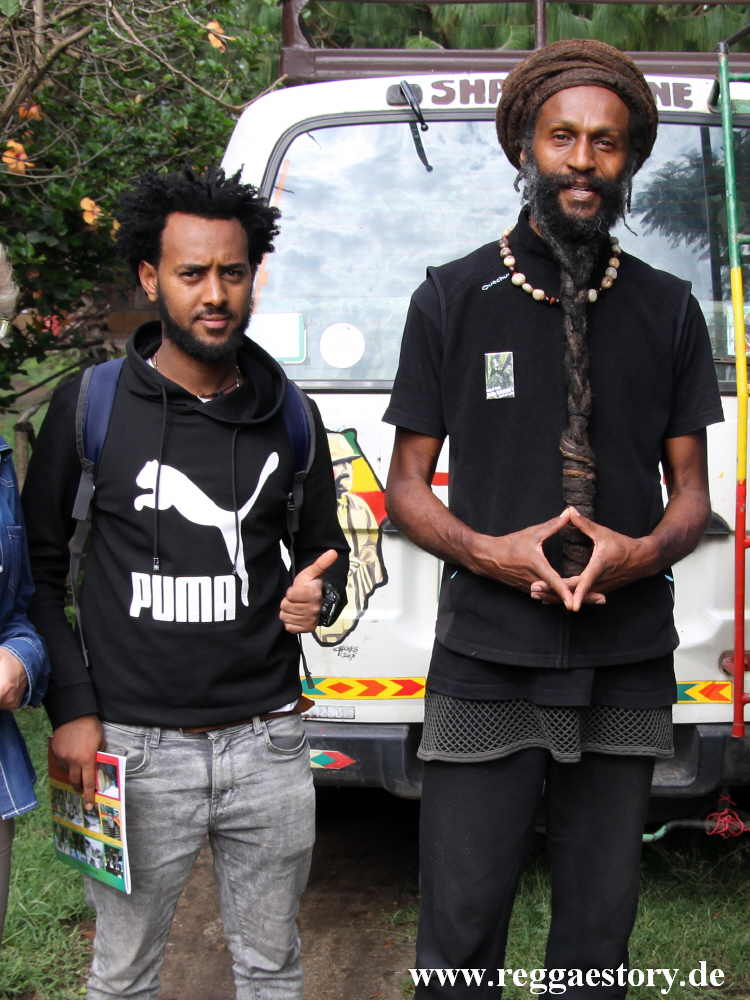
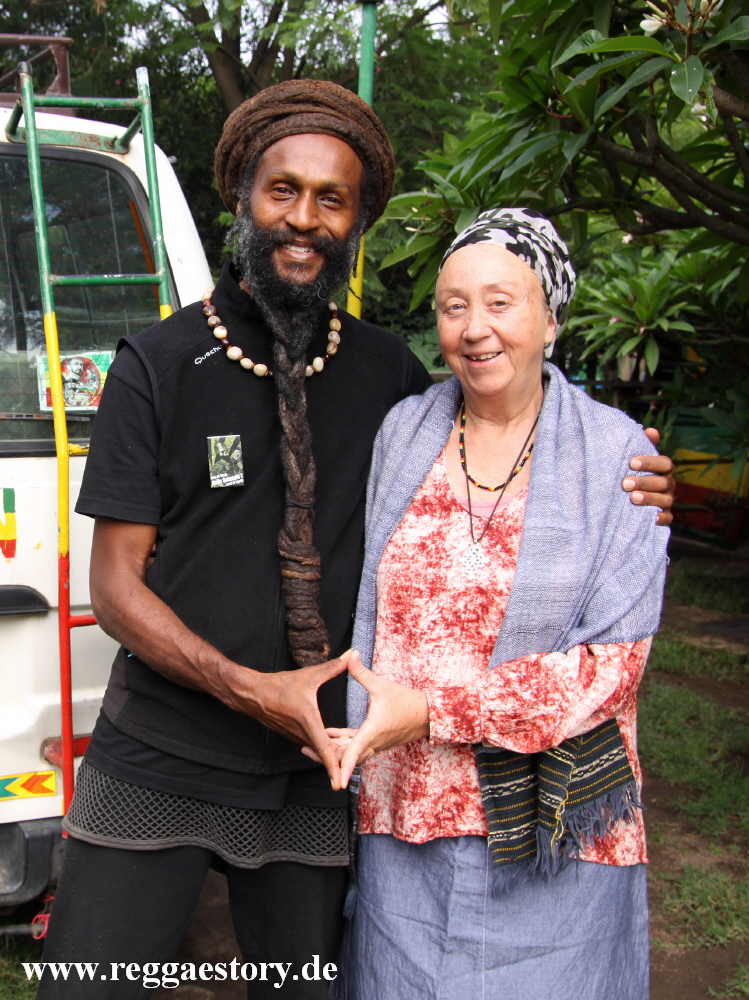 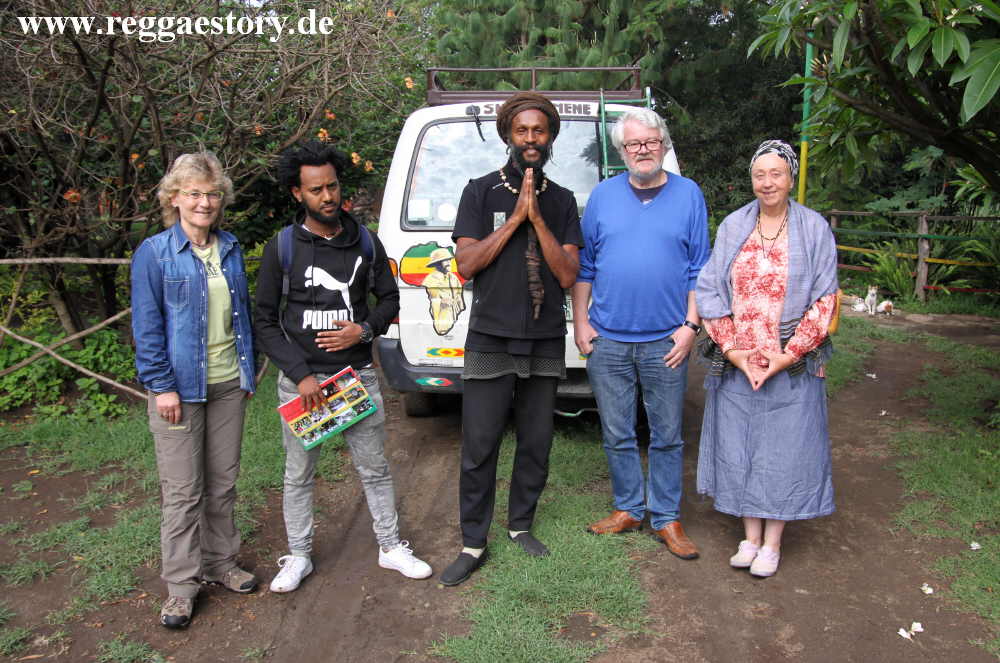 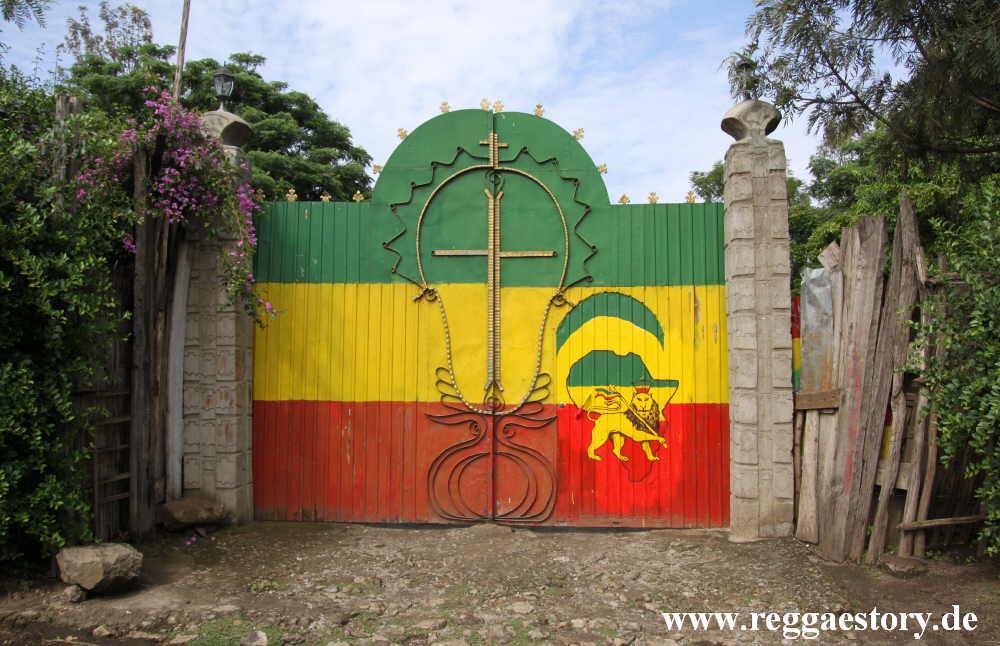 Image 152 - 156: Farewell from the Zion Train Lodge Video: Zion Train Lodge The large red-yellow-green sheet metal gate of the Zion Train Lodge with the Lion of Judah and the stylized cross of Lalibela closes behind us. The appearance of the gate has changed several times over the years. This time Mary with the baby Jesus had to be replaced by the African continent with the Lion of Judah (see picture 625 in Ethiopia Again - Part 6). A few years before, two archangels had guarded the gate (see photo 3 / page 16 - Coming home from Babylon - Carsta Schnabel) 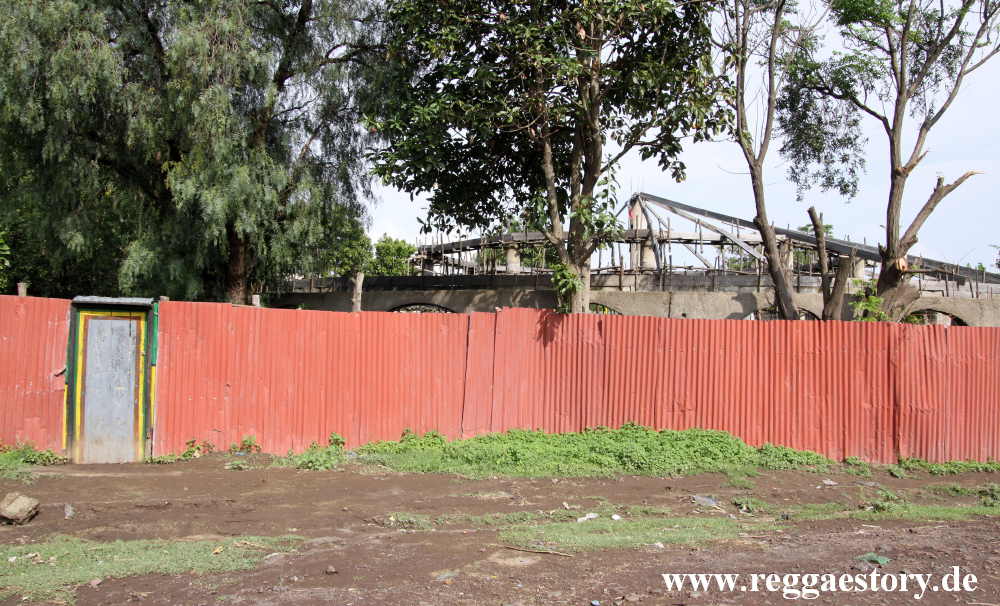 Image 157: One last look at the ruined Nyabinghi tabernacle of Shashemene We drive past the Nyabinghi tabernacle towards the gas station in the direction of the main road A7 and want to pay a brief visit to the Shash Monument. Alex and Mastu have never heard of it, but we can take a quick look at Mama Shashe (because that's the name of the statue of the monument) as we drive by. So we turn again briefly to look for a parking position. 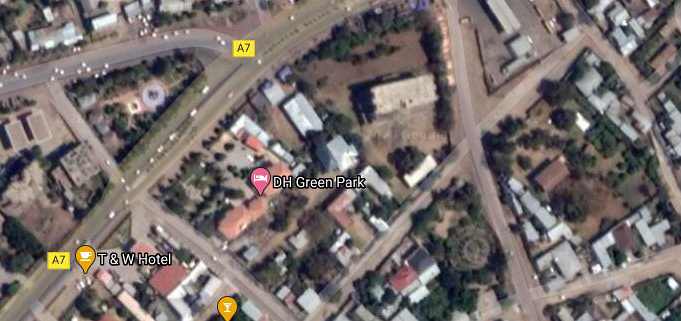 Image 158: Google Map - Shash Monument (top left in the street triangle) + Nyabinghi Tabernacle (right half of the image, bottom) - Simply click on the image or link and continue exploring the location. 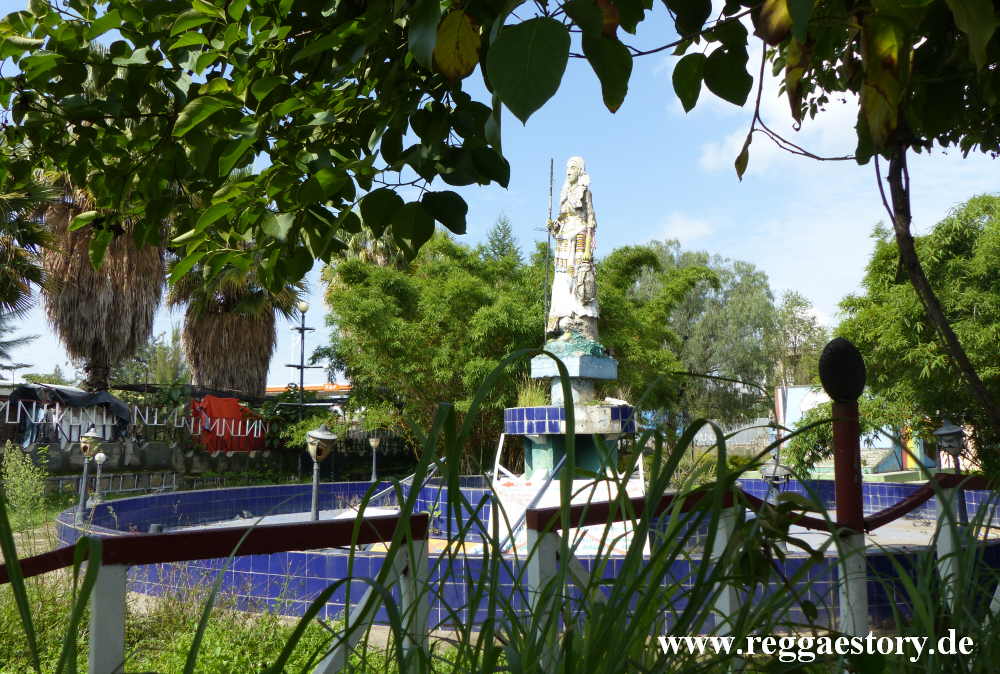 Image 159: Shash Monument - Mama Shashe The area, which was once a small park with a water basin and statue of Mama Shashe, is no longer properly accessible today. Everything has run wild and the Mama Shashe statue is in very bad shape and threatens to collapse. We have to squeeze through plastic bag pots at a plant nursery to take a few photos. While the monument is not a tourist attraction nor is it particularly artistically valuable, it does have an interesting background when studying the history of the city. 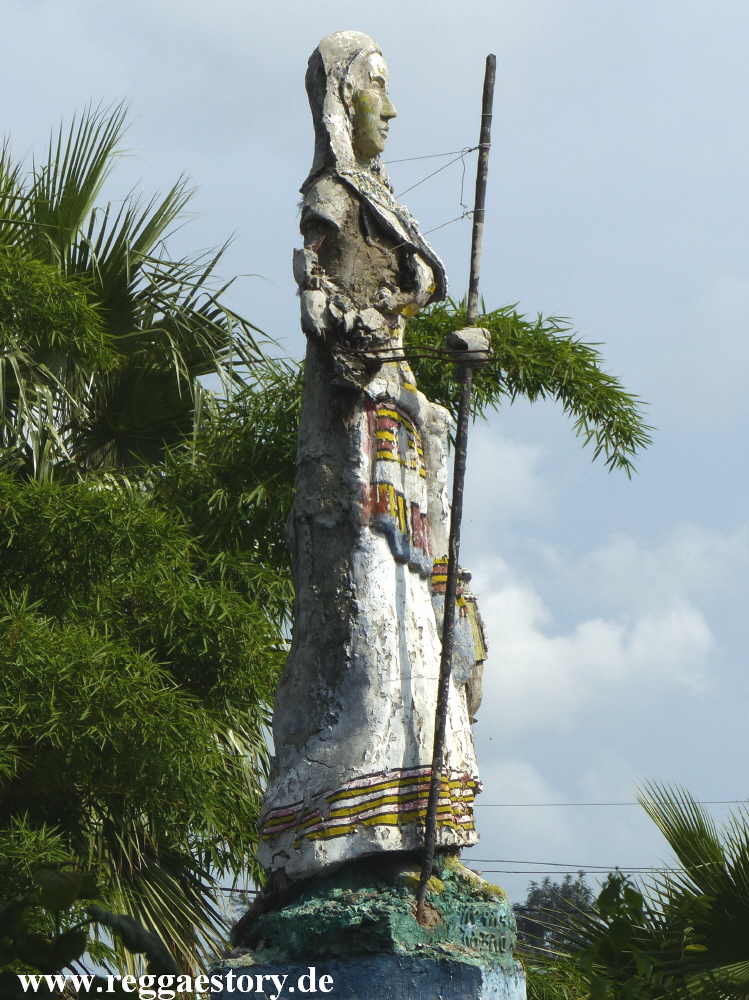
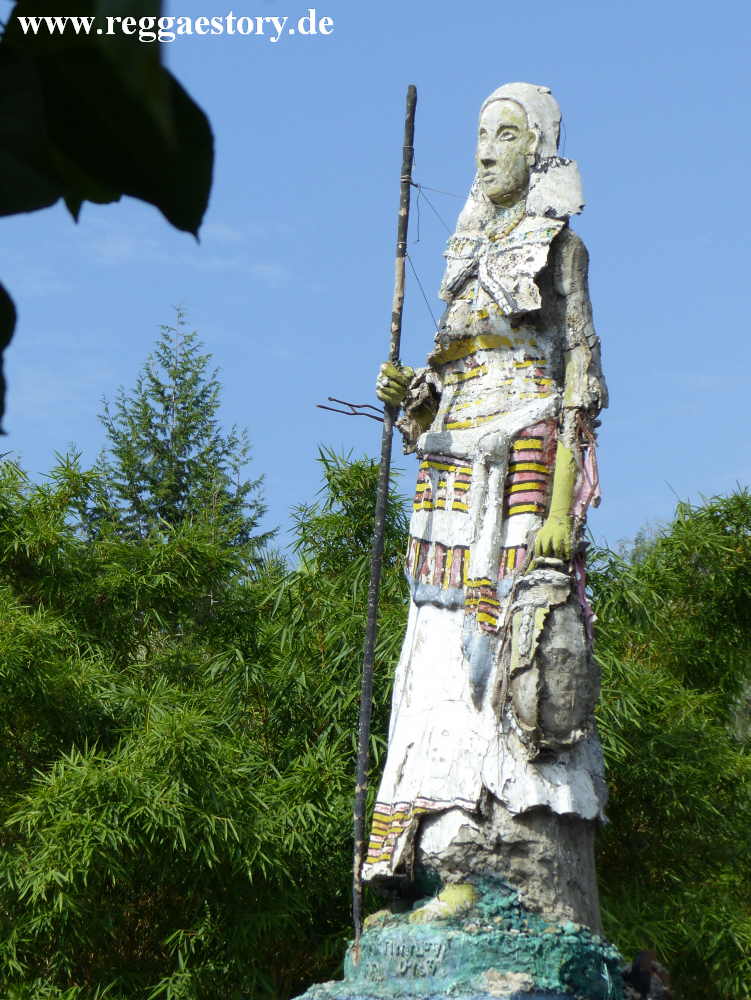 Image 160 + 161: Mama Shashe - Oromo: Mannee On our last Shashemene trip we wrote about Ras Mweya Masimba (Ethiopia Again - Part 5). He wrote the following in his brochure "Rastafari Lighthouse" (page 5), which we introduced from Fig. 572: The statue of Mama Shashe became a landmark on the day of the millennium (according to our calendar on September 11, 2007) announced by Shashemene. The statue is reminiscent of a woman named Shash, who came from Tigray to the Oromo region in the last decade of the 19th century and who invented great popularity through her novel admixtures with local drinks. She sold her drinks in Harufa, (as the area was called at the time). Shash developed into a successful business woman who, in addition to mills and a fleet of horses for the usual means of transport of horse carts, owned a number of well-running guest houses, referred to in Oromo as "Mana" - welcome house. It became known nationwide, so travelers did not fail to stay in a "Mana Shashe" or "Shashe Mane" house. The origin of today's name of the "crossroad town" Shashemene is unmistakably here, through which every day a high number of traders and travelers to all southern regions of the country up to the border of Kenya pass. (German version from: Heimkehr Aus Babylon - Carsta Schnabel) If the 12 year old monument is already in such bad shape, either the wrong building materials or the wrong craftsmen were involved. ;-) Let's hope that someone will be found who will give the city's namesake a more dignified appearance. 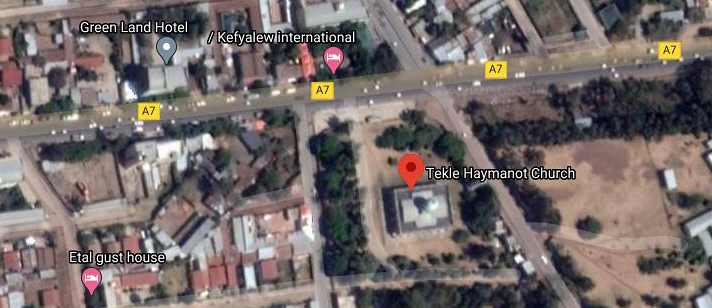 Image 162: Auszug Google Map - Tekle Haymanot Church in Shashemene - Simply click on the image or link and continue exploring the location Let's drive a few kilometers further along the A7 and make one last stop in Shashemene. The Tekle Haymanot Church, which we will briefly circle around, is right on the roadside. We have written in detail about St. Tekle Haymanot, to whom the church is consecrated, in "Ethiopia - Break in Addis - Part 2". So if you want to find out more about this one-legged holy man, just look again in Part 2. 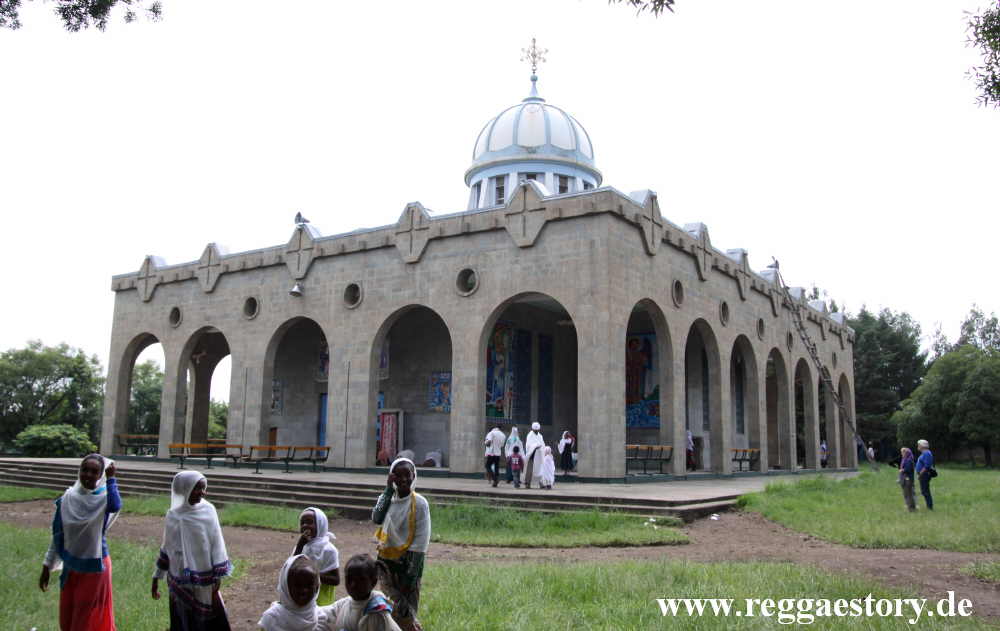 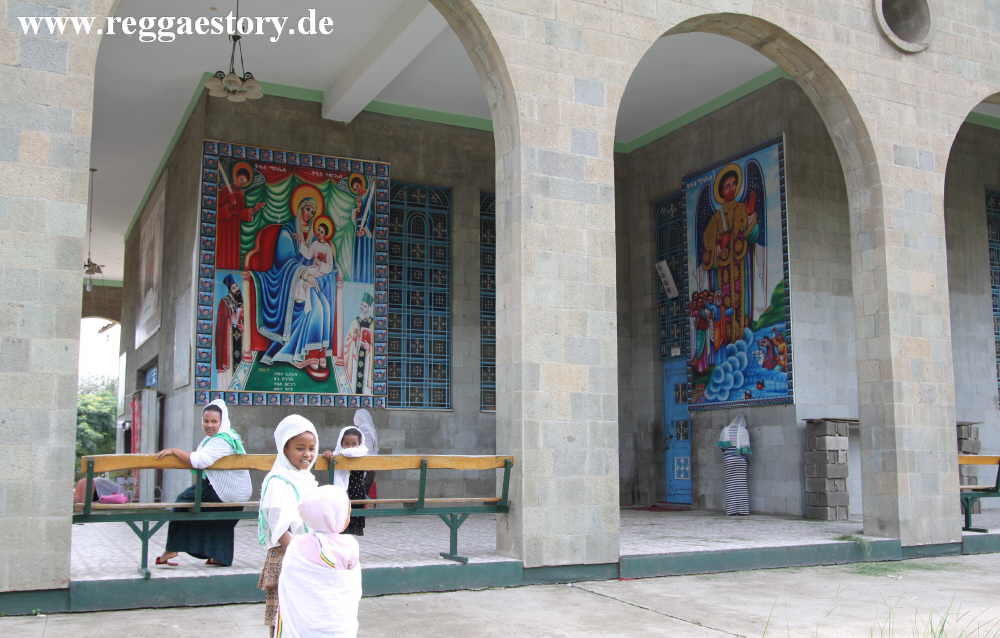 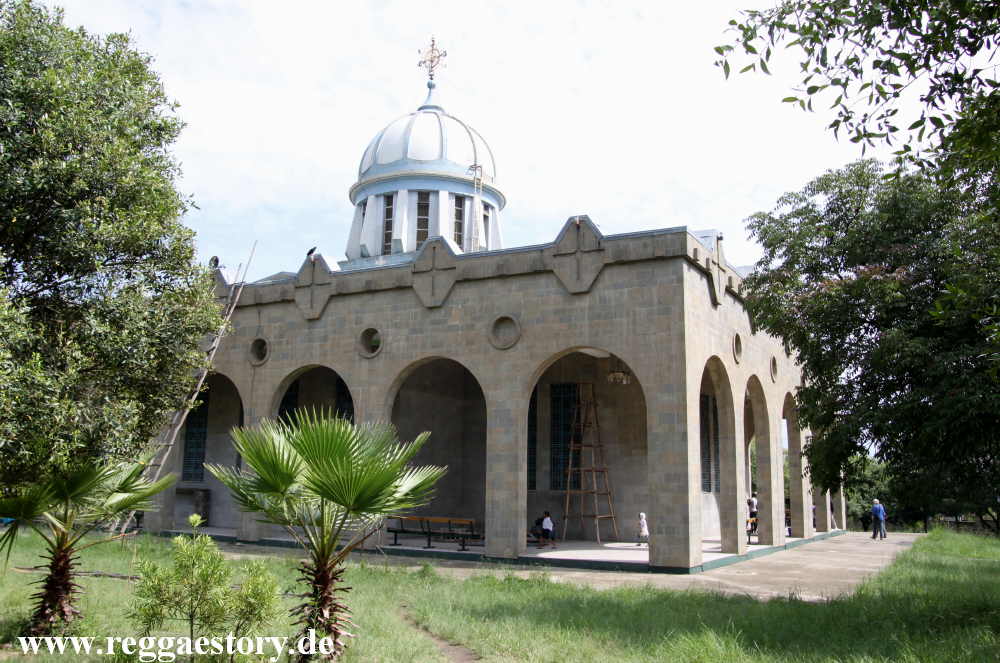 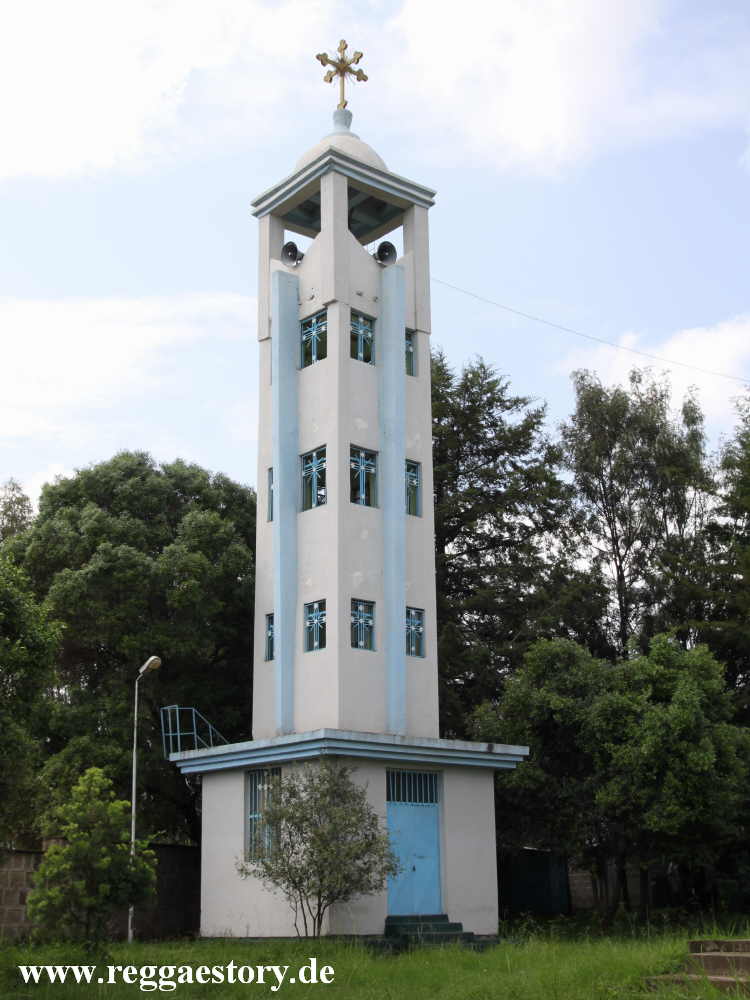
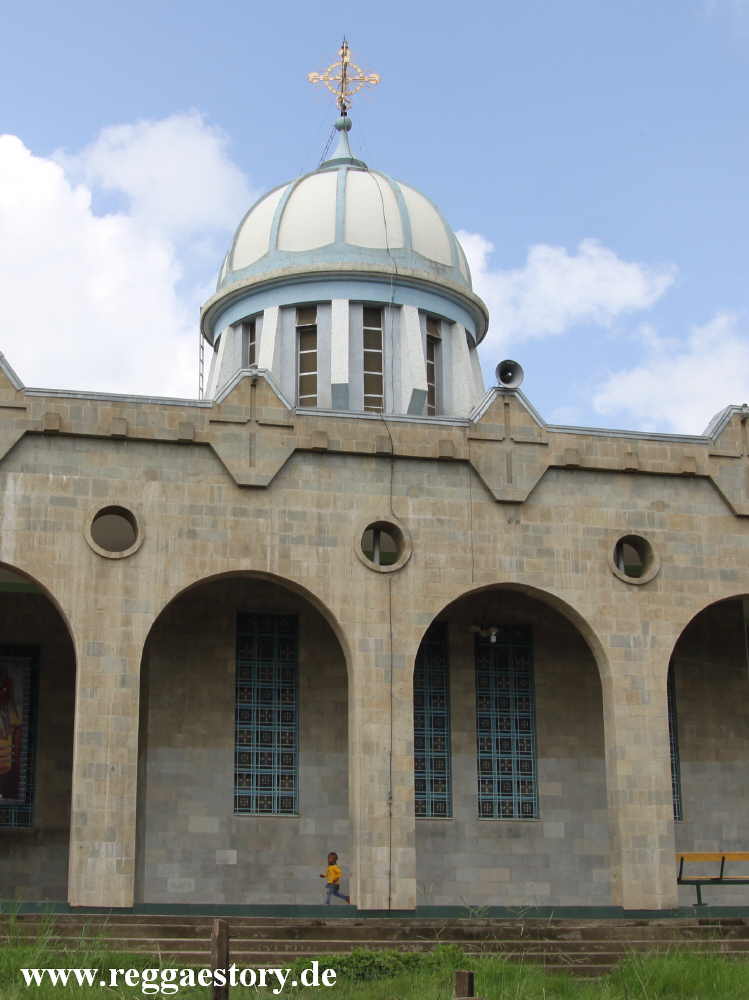 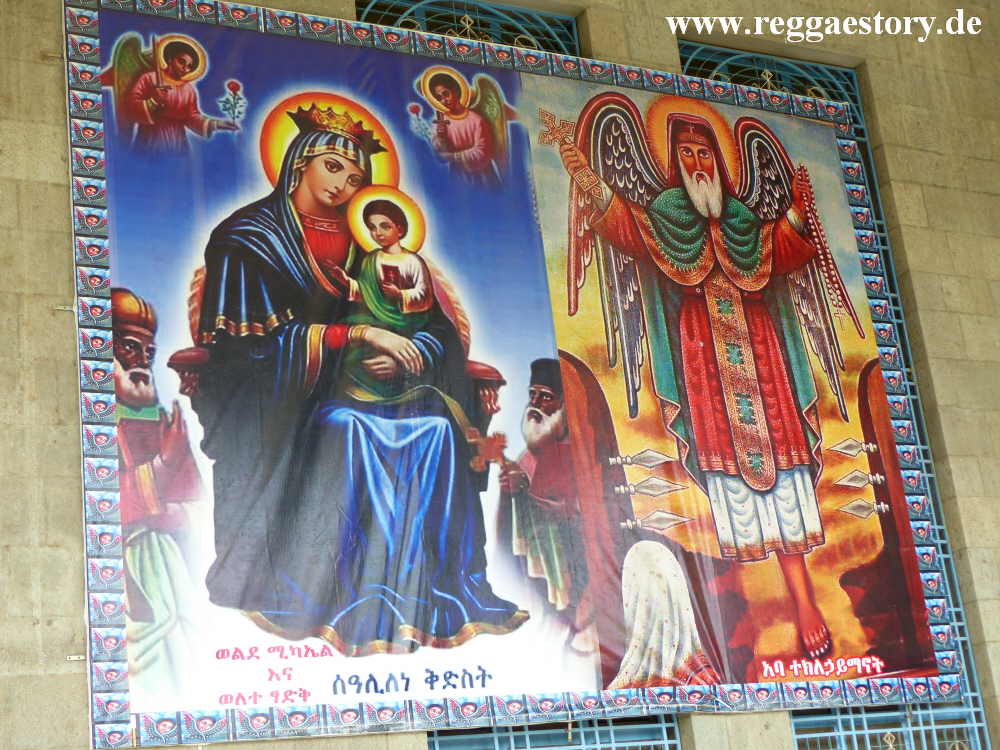 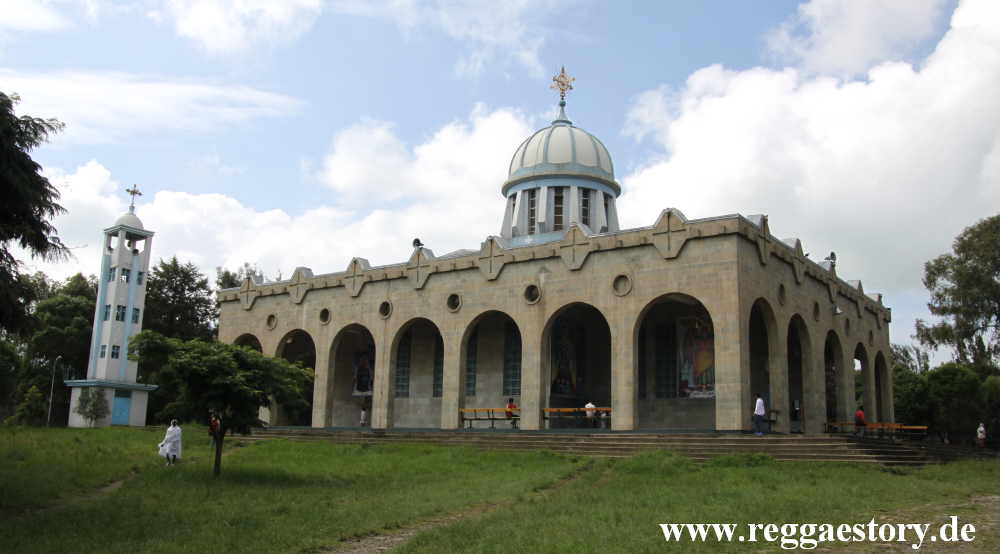 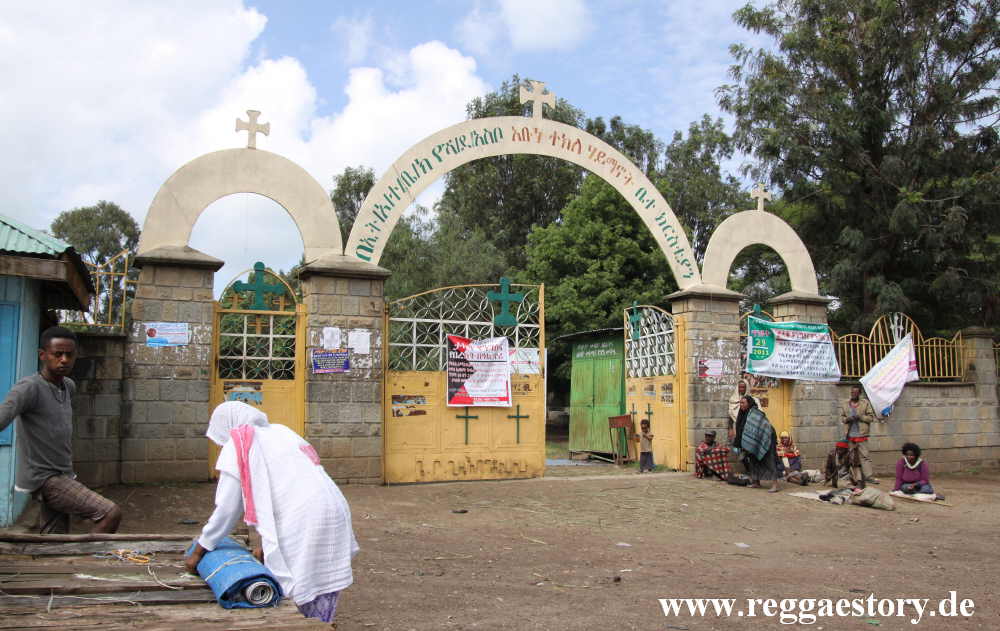 Image 163 - 170: Tekle Haymanot Church Shashemene Image 168: Mary with the baby Jesus and Saint Tekle Haymanot Video: The Tekle Haymanot Church in Shashemene Shortly afterwards we leave Shashemene in a north-westerly direction and stay on the A7 road. Less than an hour later we leave the administrative region of Oromia and come to the area of the Southern Nations, Nationalities and Peoples or the administrative region of the southern nations, nationalities and peoples. However, this part of the country is not synonymous with the south of the country, because this is still divided into the parts of Oromia and Somali. Here is an overview. In addition, these parts of the country are divided into zones and these in turn into woredas.A little over the border from Oromia we come to the Woreda Alaba (also Halaba), named after the people of the Alaba or Halabe. There we visit part of the village of Guba. We were here a few years ago when we were coming from the other direction and wanted to go to Shashemene (see Ethiopia Again - Part 5). 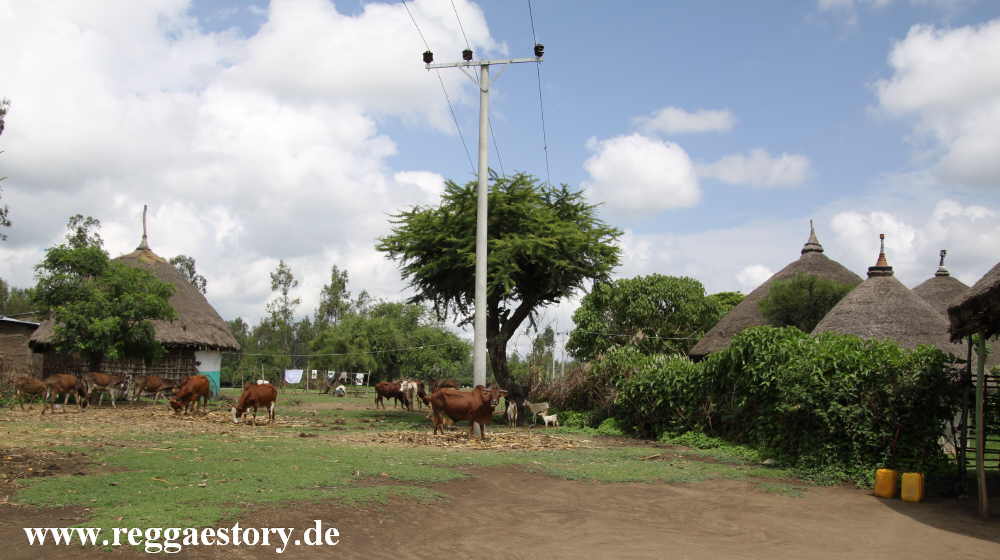 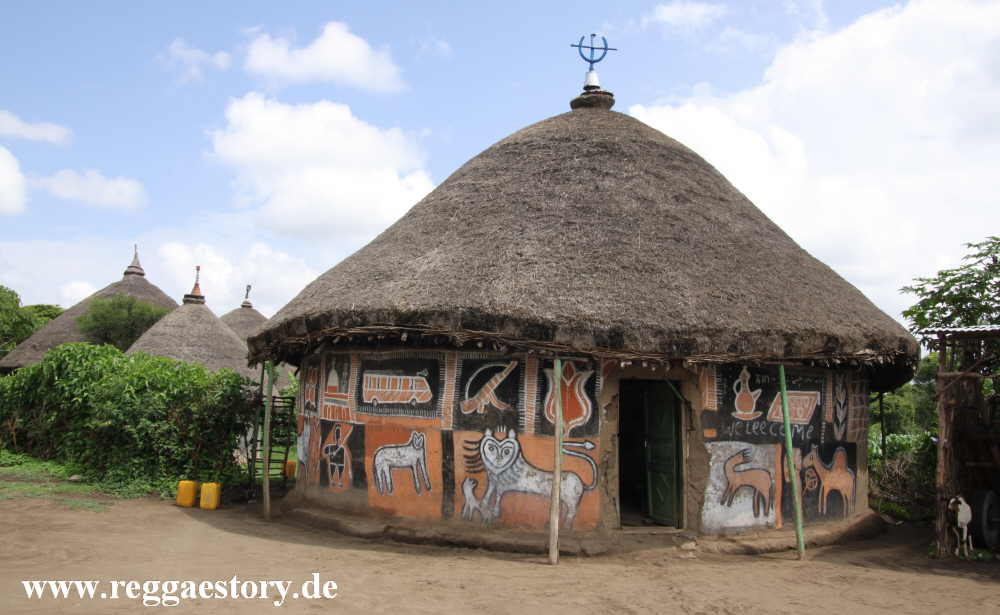 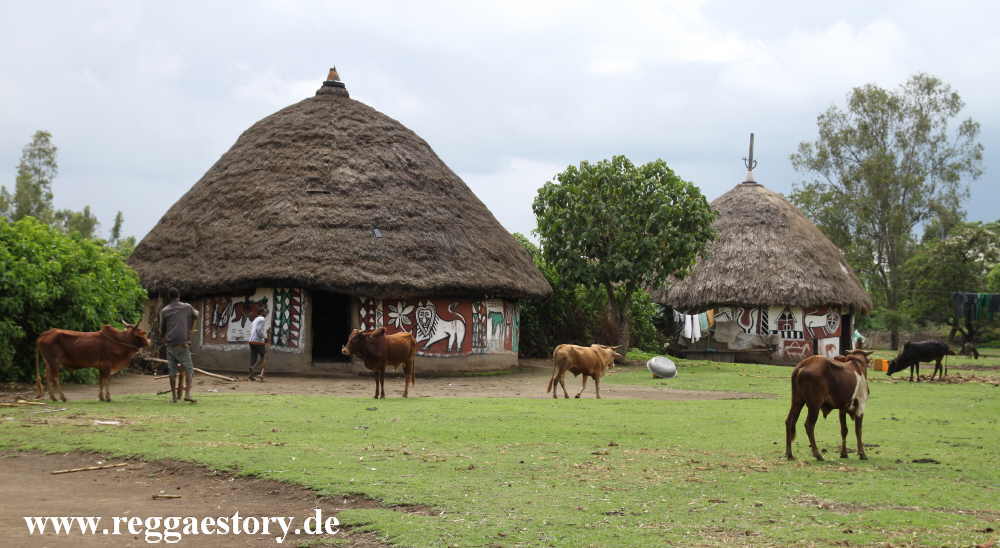 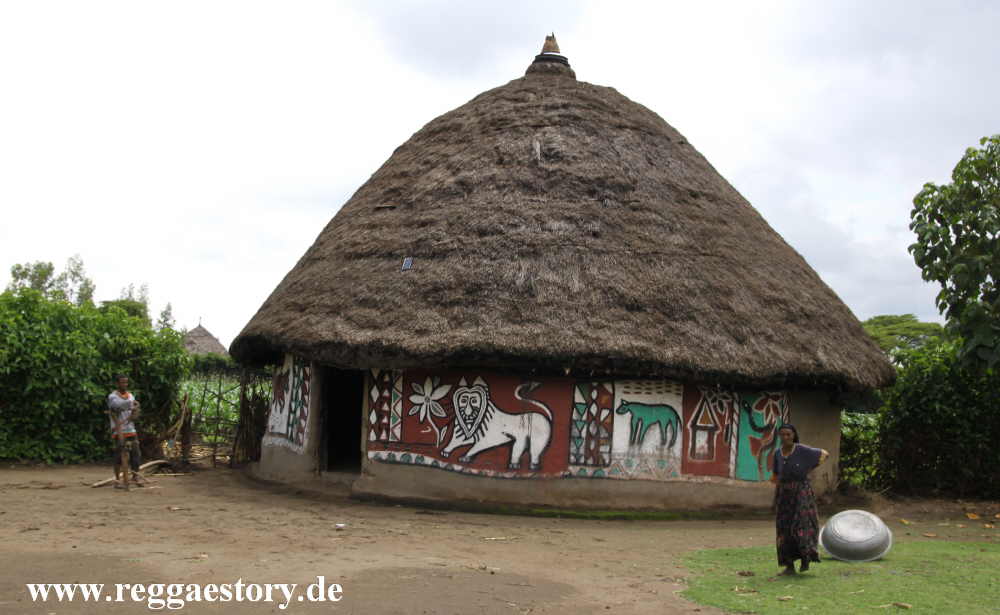 Image 171 - 174: In the village of Guba of Alaba Woredas The Alaba Woreda is mainly north of the A7, between Lake Shala and Hosaena or the B 51 and is located at an altitude between 1,700 and 2,200 above sea level. The capital of the Alaba woreda is Alaba Kulito. Our route crosses this woreda over a distance of around 20 kilometers, halfway between Shashemene and Wolaita Soddo. The Alaba (also Alabe, Halaba or Allaaba) are predominantly Muslim and claim to be descended from the spiritual Arab man Abadir, who once settled in Harar and later became the Emir of Harar. 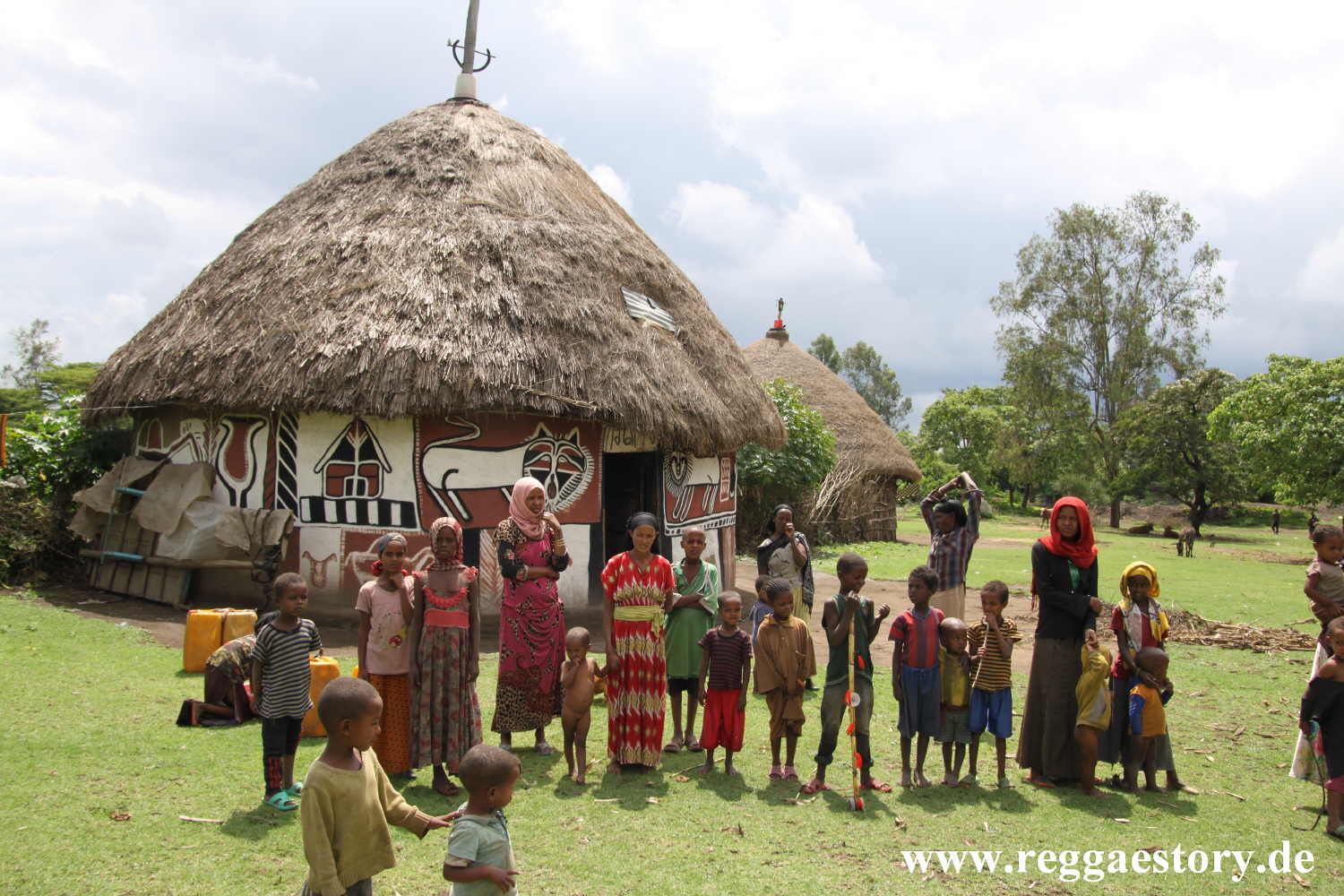 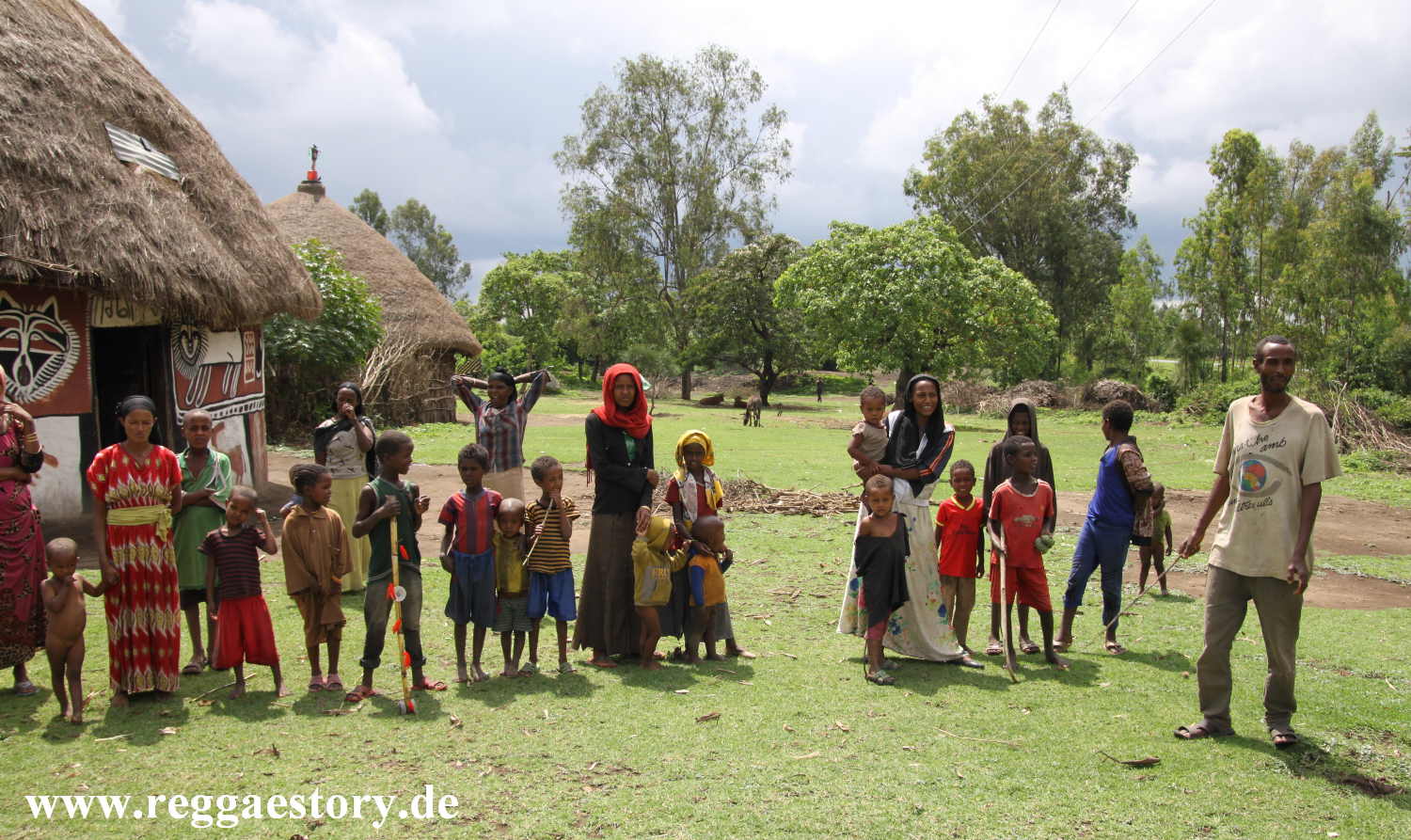 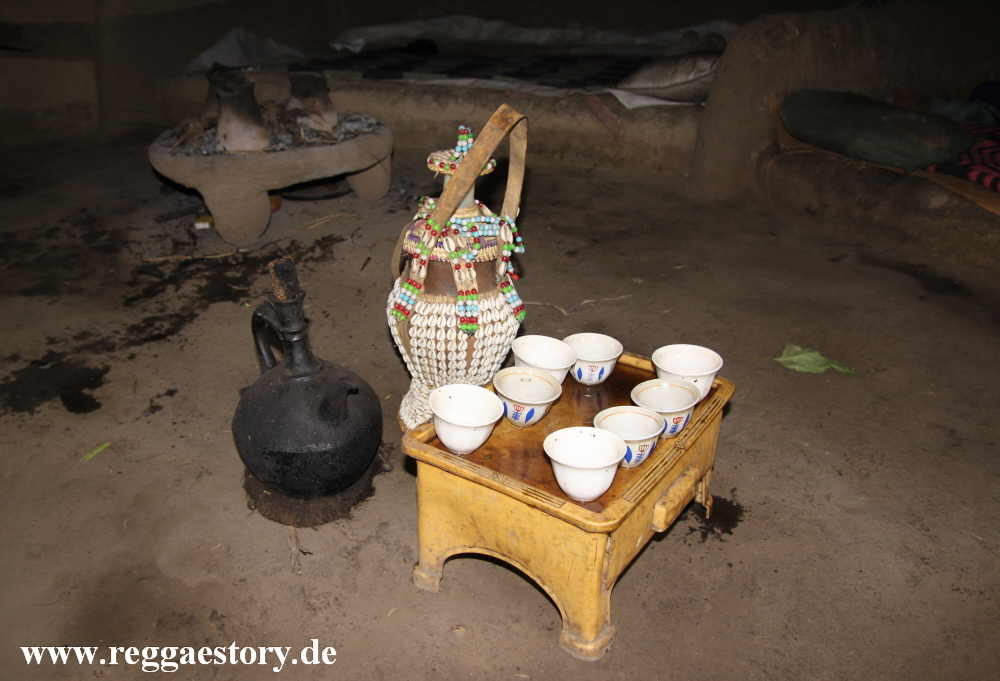 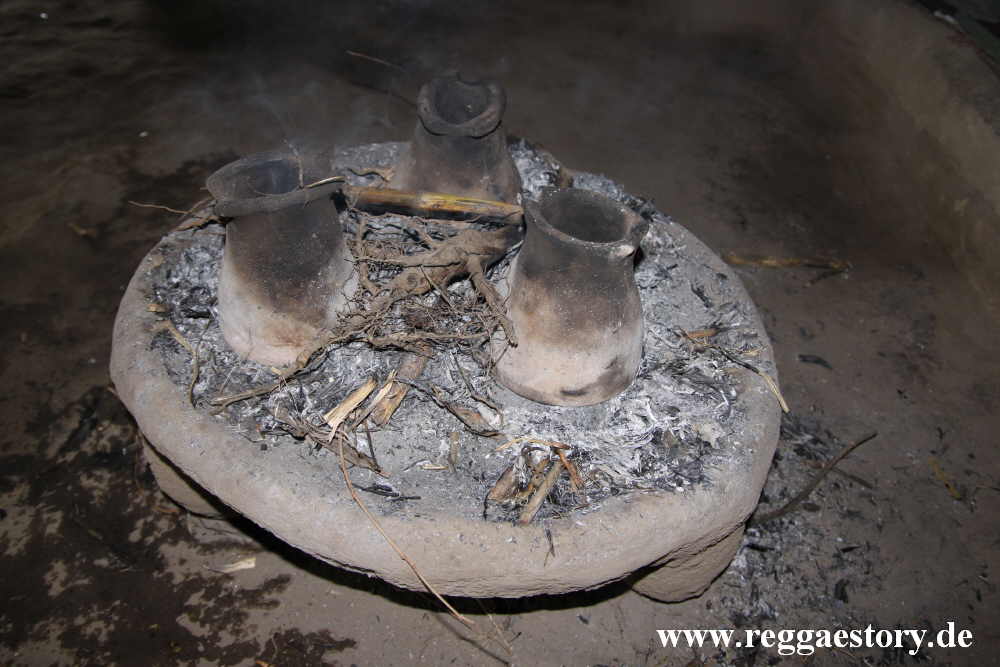 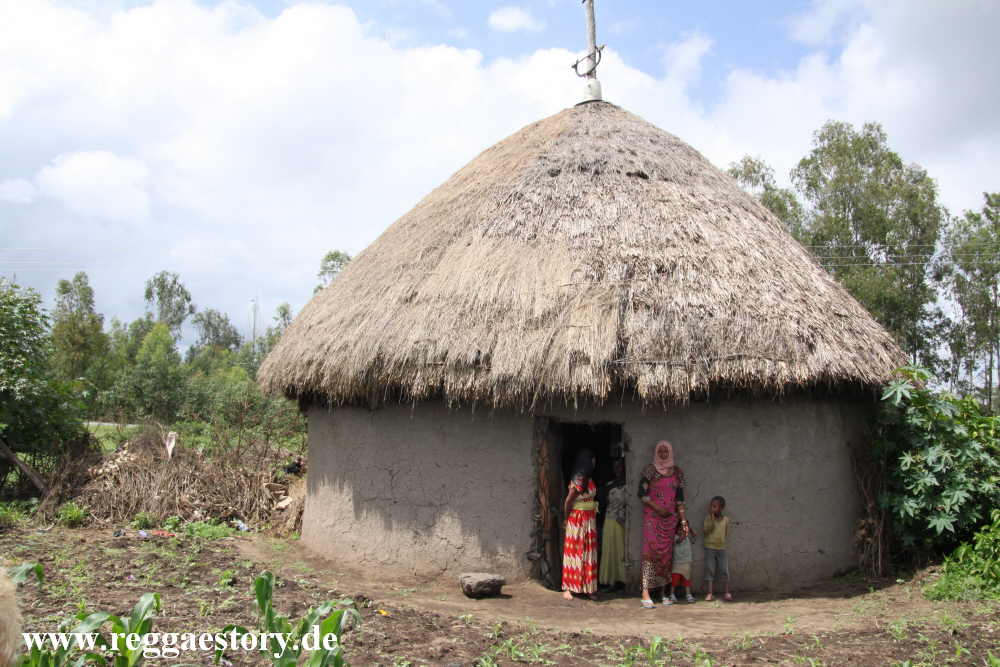 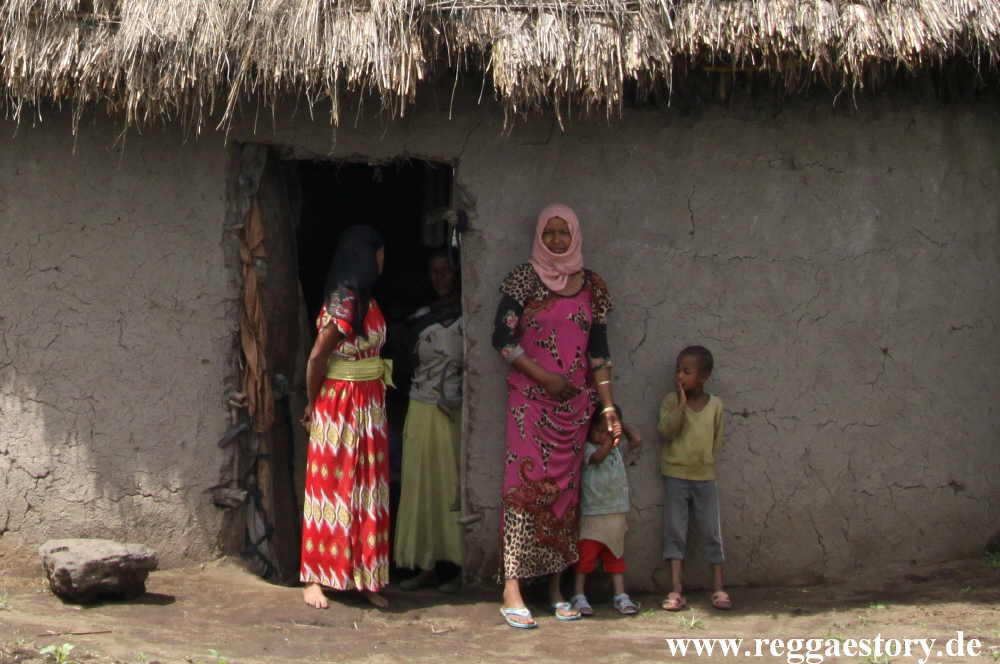 Image 175 - 180: Family visit in Guba The round houses of the village usually have two entrances, one to the green village square and one to the rear to the adjacent fields. The fronts of the houses are painted with a wide variety of motifs. In addition to animals and plants, technical things such as vehicles and machine guns are also shown. Not much household items can be seen inside of the houses. The most important personal things are stowed in a wooden box and everything else is hung on the walls and wooden beams. In moments like these we always get annoyed that you can never take enough things with you on the trip to give it to the people. The thing with additional luggage on the plane is always a tightrope walk, because if you have more luggage than allowed, it will be really expensive. So we always have to divide our supplies exactly so that there is still something left at the end of the trip. 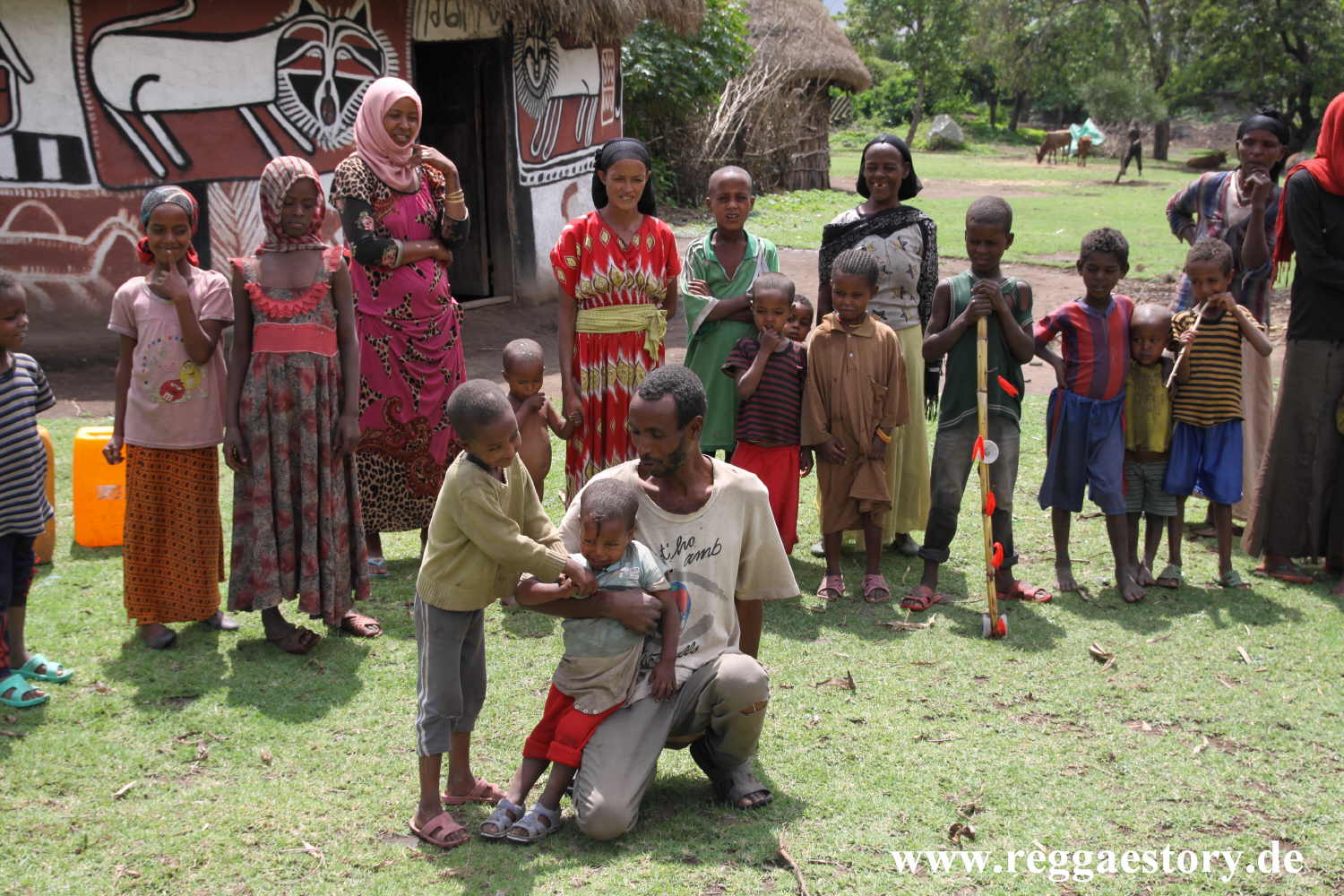 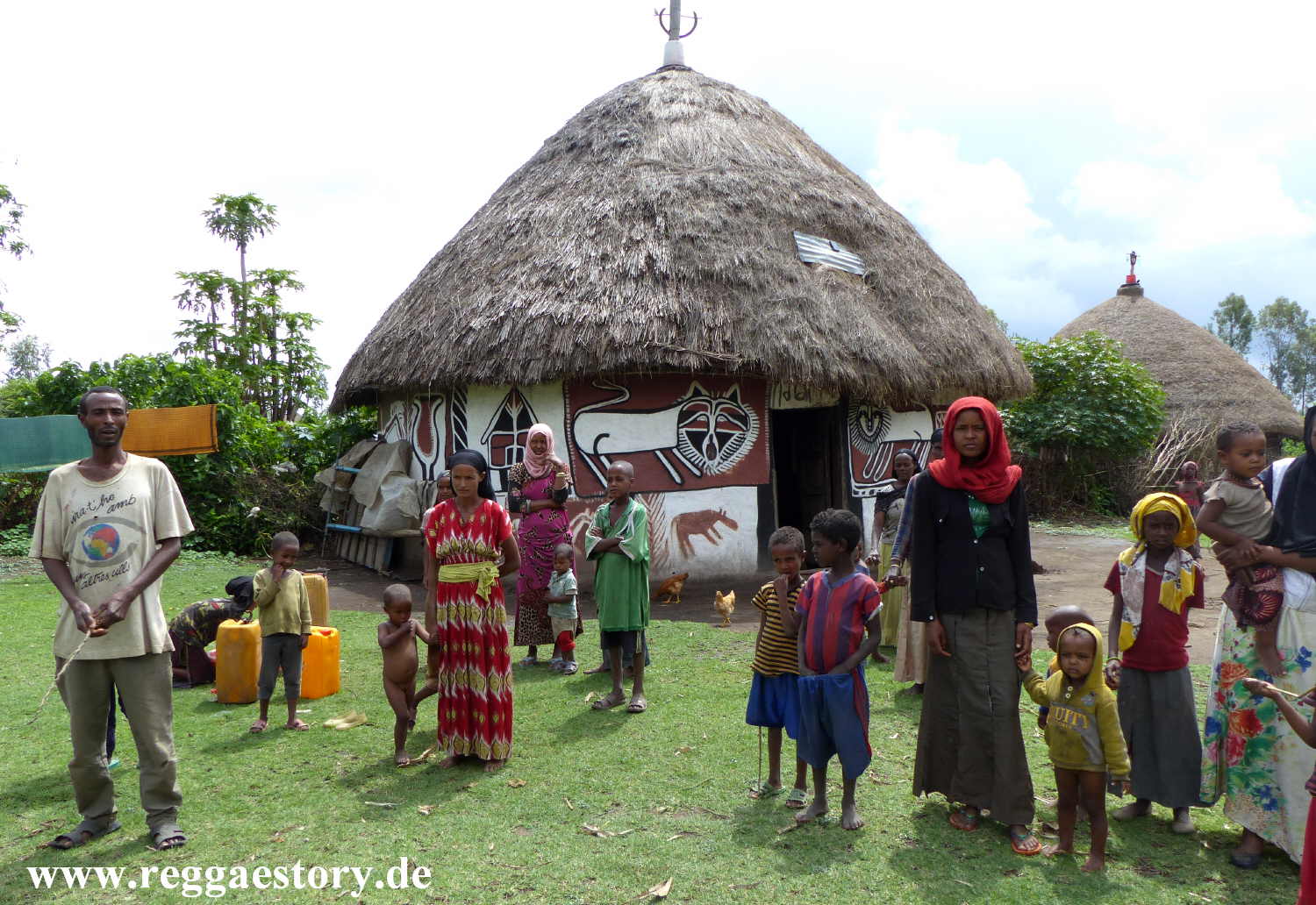 Image 181 + 182: Family visit in Guba As soon as the gifts are bigger and more valuable, than as pens, small cuddly toys, soap bars or similar things, please always look out for the oldest woman in the house first and then give her the entire package for later distribution. Otherwise, unpleasant scenes can quickly arise that nobody wants, neither the traveler nor the residents of the village. These principles are not only required for Ethiopia or Africa. 
   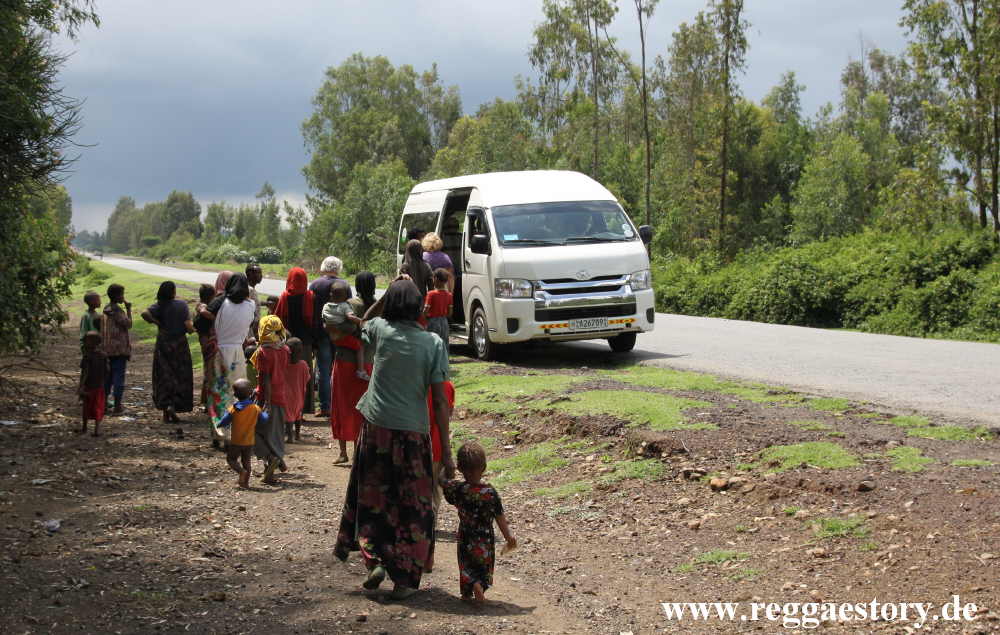 Image 183 - 187: Farewell from Guba Let's continue towards to Alaba Kulito, where our route will then turn directly south. Until then we are about 40 minutes away and have time to admire the many brightly painted houses along the way. In Alaba Kulito we have the opportunity to visit a well-kept restaurant for a short coffee break. 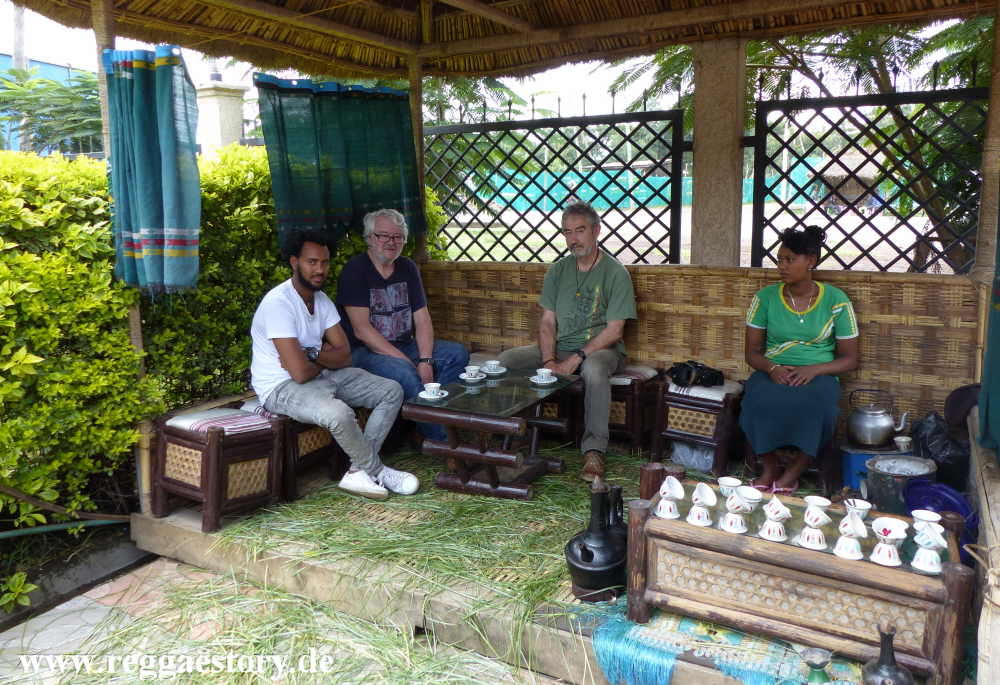 Image 188: Coffee break in Alaba Kulito in a completely different world
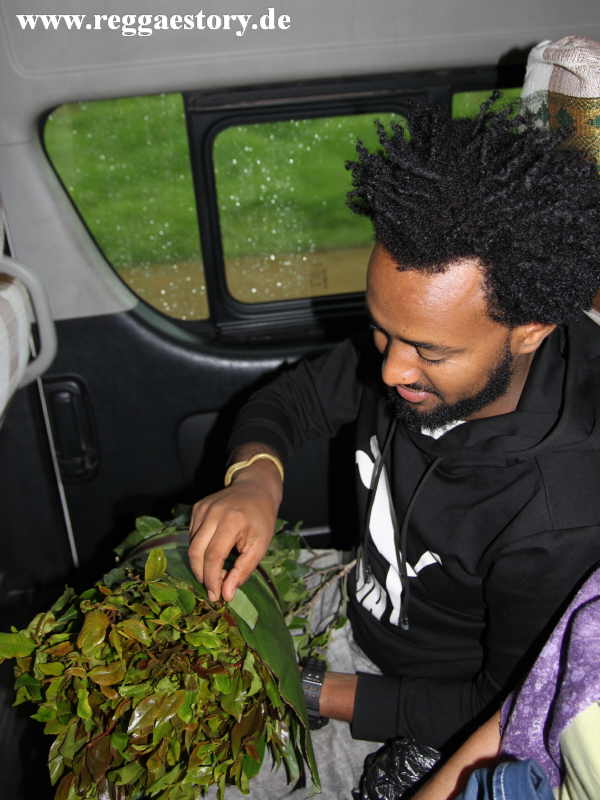
We don't like it at all. Apart from the bitter taste and the feeling that the jaws are getting wider and wider because more and more of the leaves are stuck between the teeth, I at least don't notice any mood swings or wellbeing. I am happy when I can release the green ball into the green wilderness at the next stop. 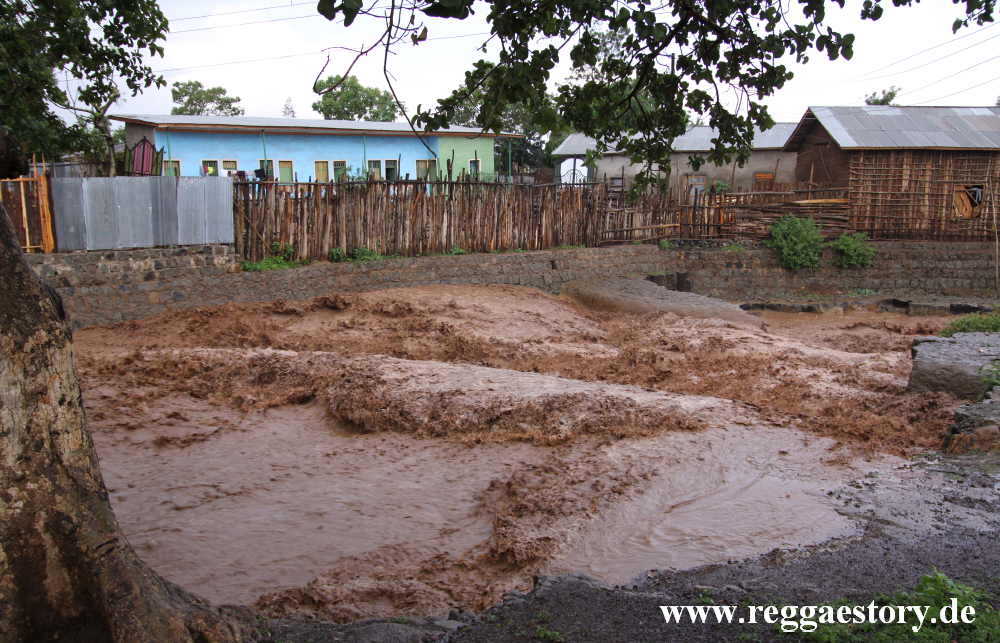 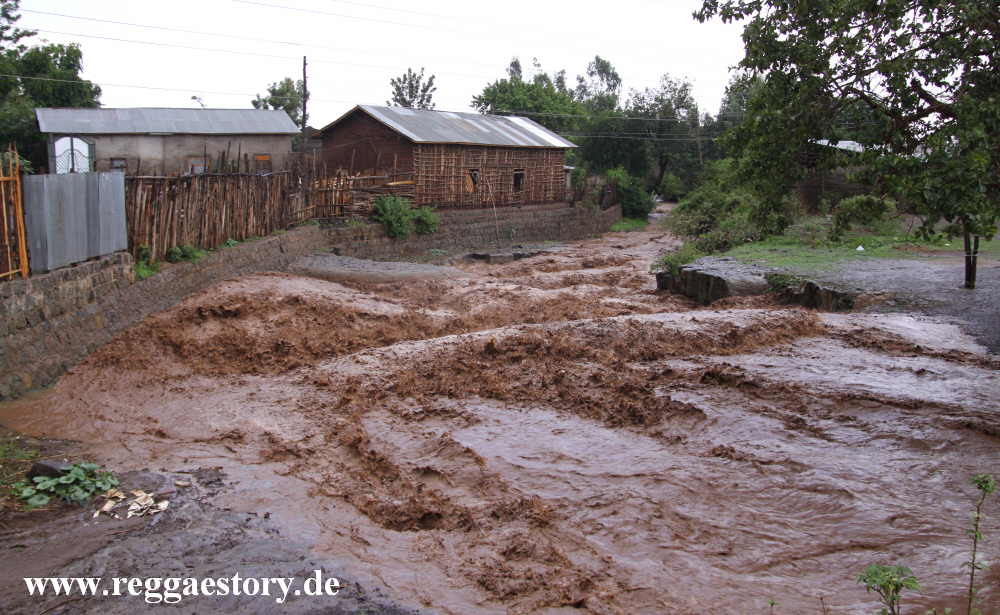 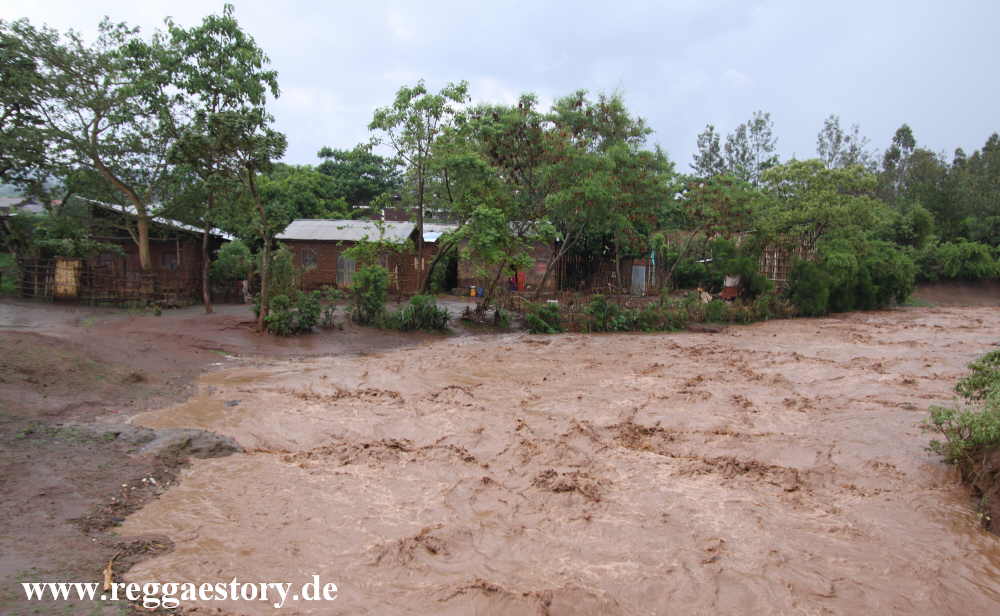 Image 190 - 192: The dry rivers overflow after the rain In the meantime it has actually rained. Not much on our route, but probably a little further away. The river valleys on our route are overflowing with muddy brown water, which roars and hisses further down the valley. Obviously it happens more often and nothing happens, but I would still prefer to move my hut to a different location. 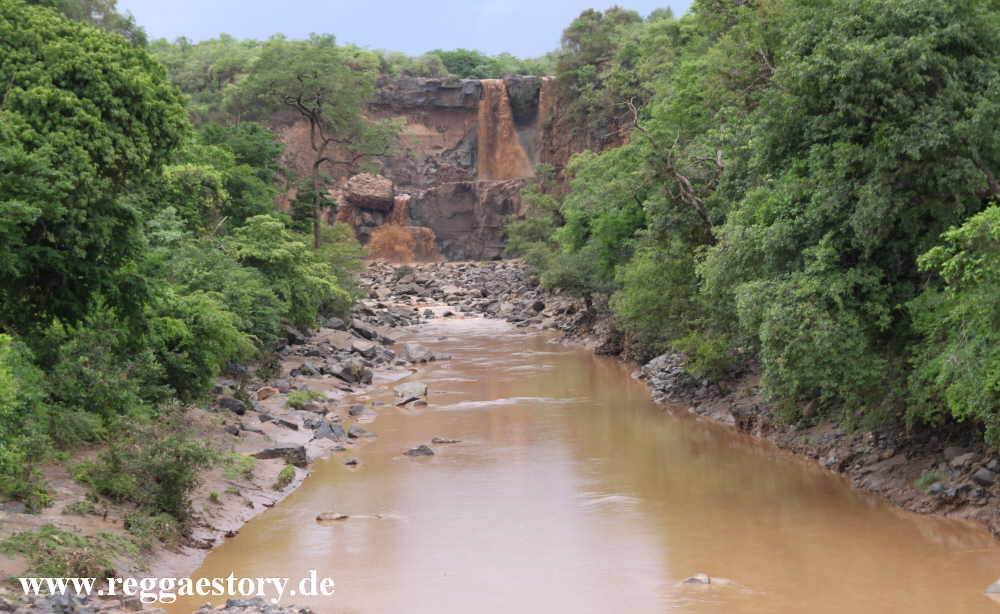 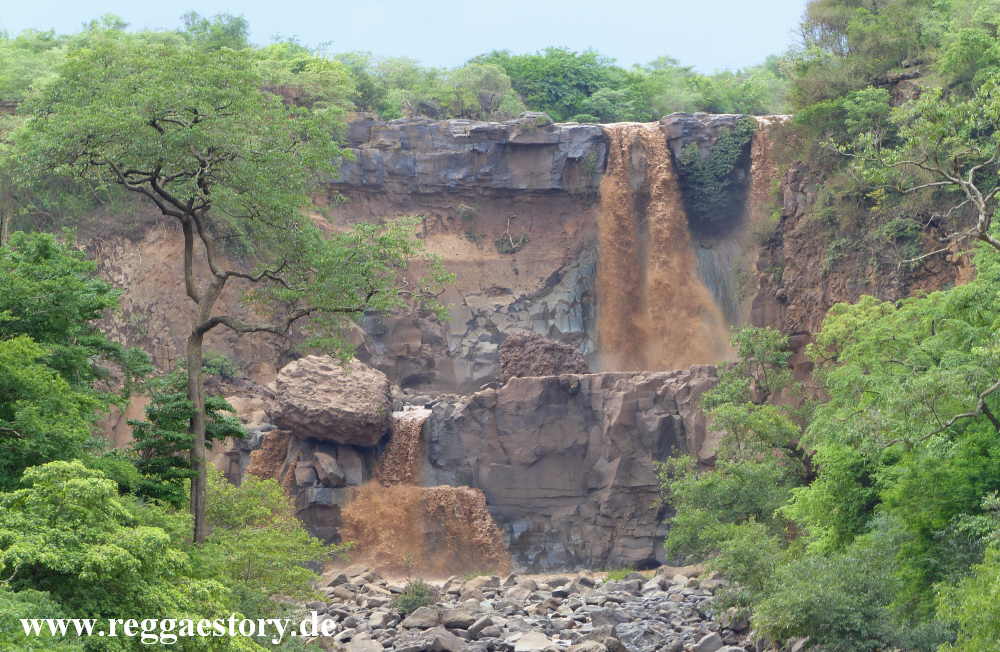 Image 193 + 194: Temporary waterfall, just before the former provincial border of Gemu-Gofa A few minutes later the situation is definitely much more relaxed, but when we reach Lake Abaya (also Lake Abaja or Abaya Hayk) an hour later, you can clearly see the effects of the rain in it. Due to the muddy inflow, the lake and the waterfall have now taken on a brown color (if the lake has not already had this color before). 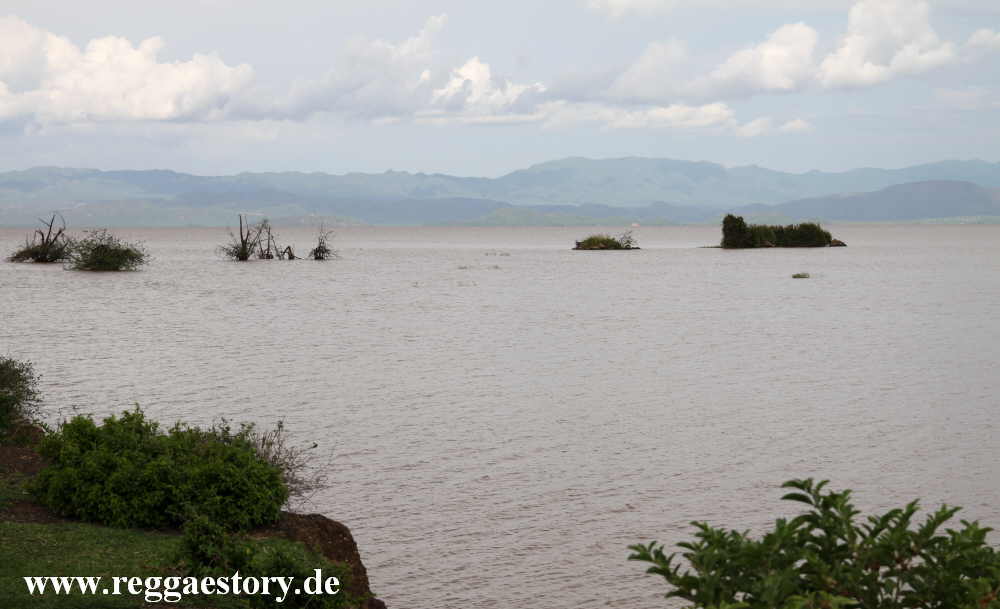 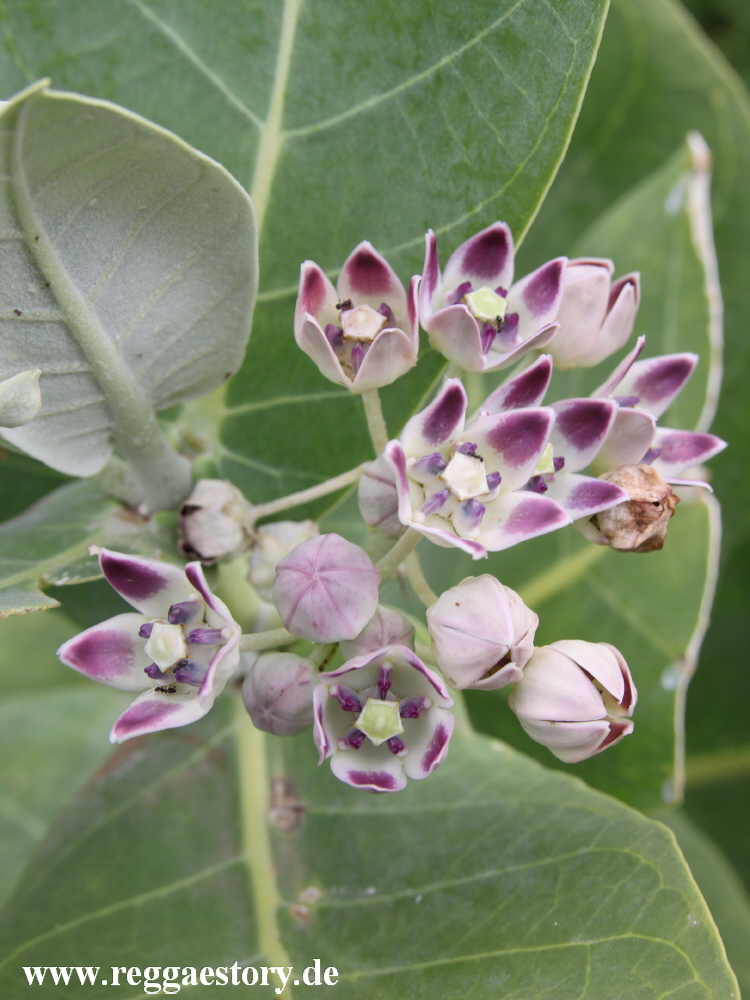
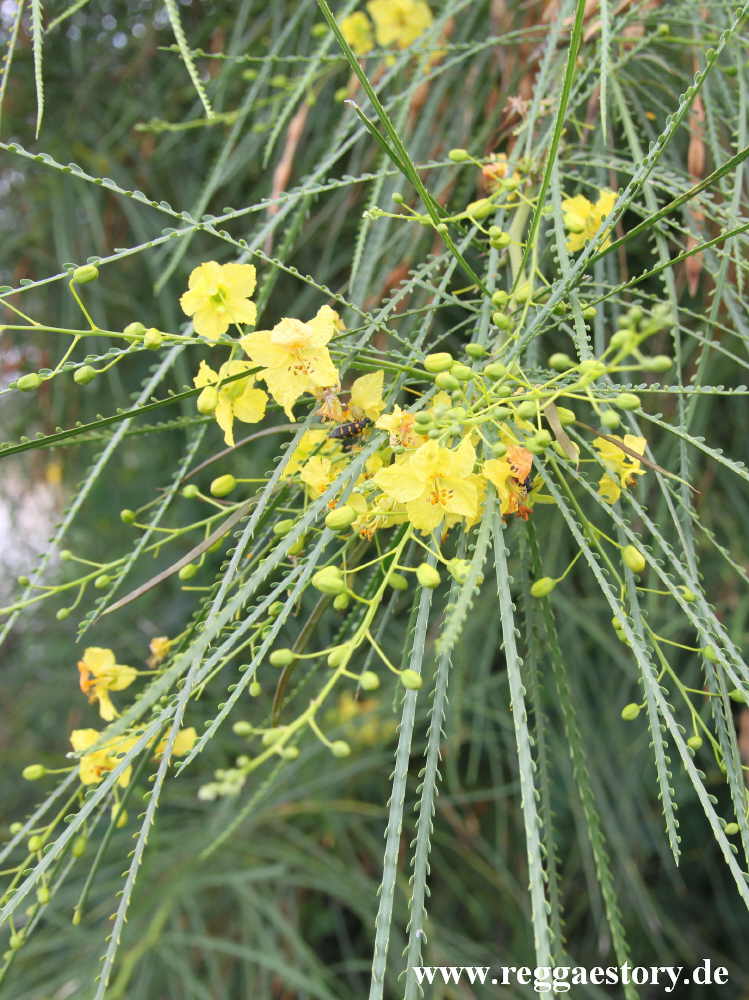 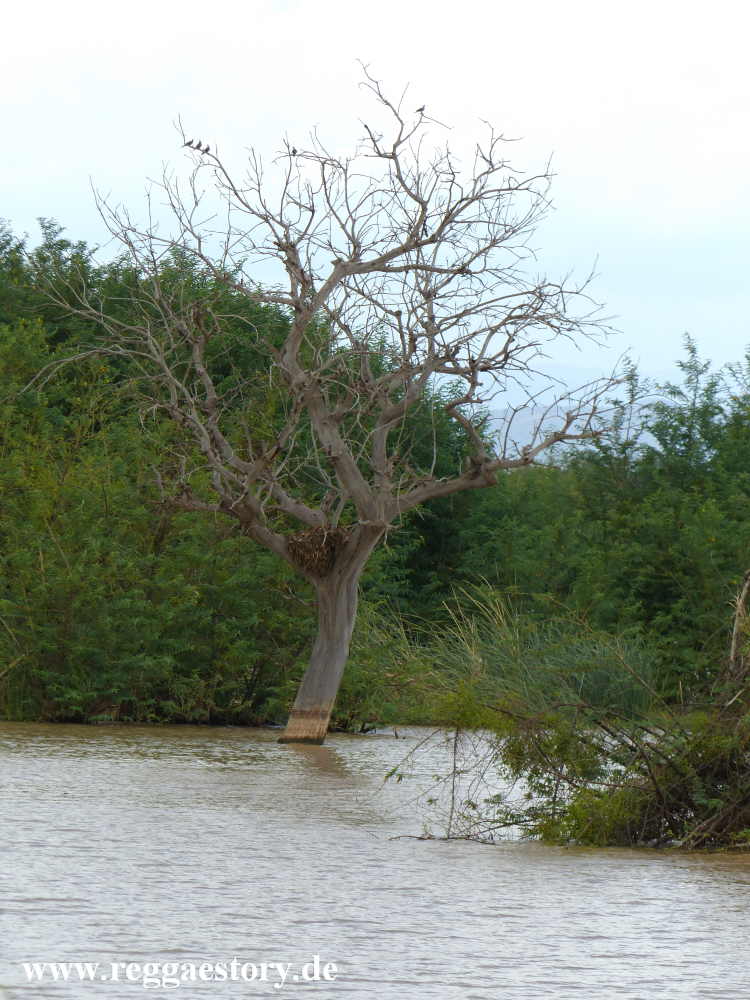
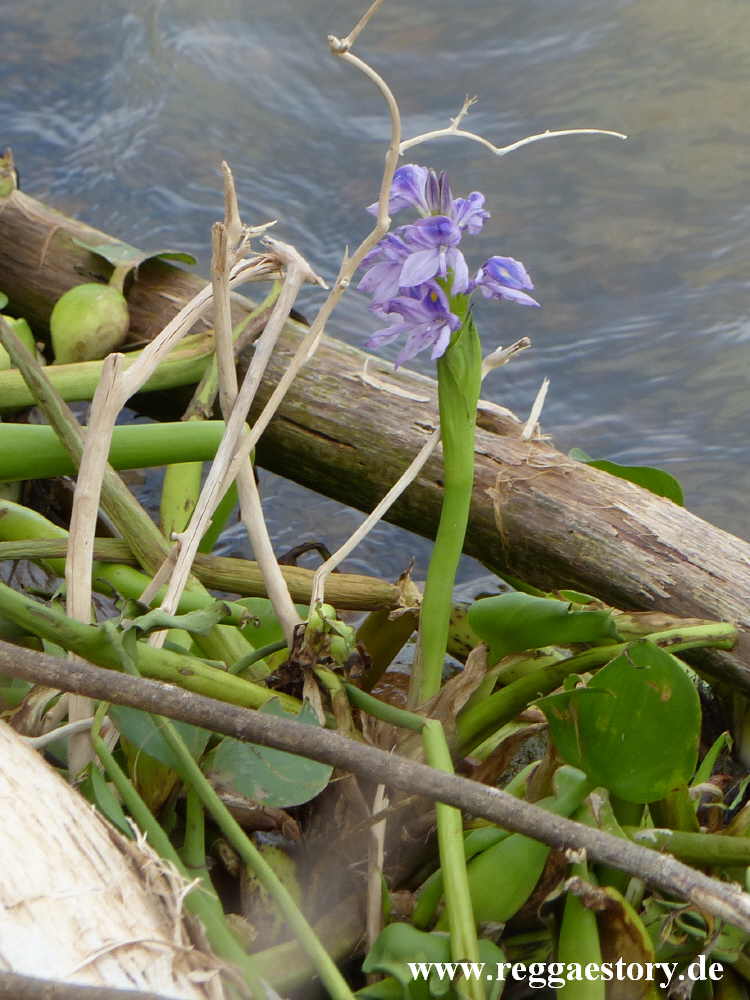 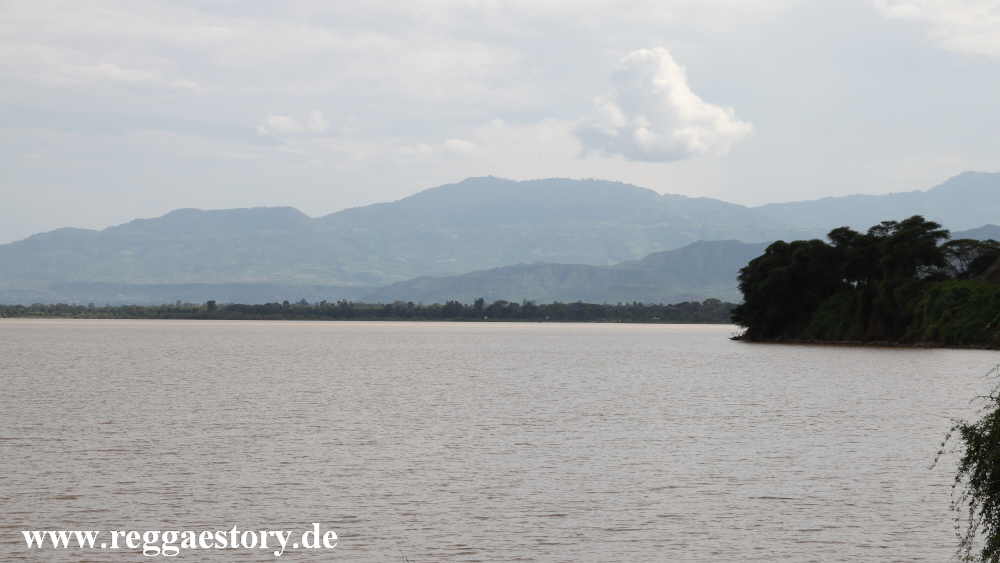 Image 195 - 200: At Lake Abaya north of Arba Minch Image 196: Fat leaf tree or Oscher tree / Calotropis procera Image 197: Presumably Jerusalem's thorn / Parkinsonia aculeata (originally not from Ethiopia) Image 198: The water was probably already higher. Image 199: Water hyacinth / Eichhornia speciosa The Abajasee (Lake Abaya) is 72 km long and at the deepest point 24 meters deep. Since it is located in the Ethiopian rift valley, hot springs can also be found in the area of the north bank. It is almost always mentioned in the same breath as Lake Chamo, which connects to the south after the "Bridge of God" (Tosa Sucha). The "Bridge of God" is a 3-8 kilometer wide isthmus that separates the two lakes. The water level of Lake Abaya is on average 60 meters above that of Lake Chamo. At 32 kilometers in length, Lake Chamo is significantly smaller than Lake Abajasee. The lakes have a diverse fauna that we want to take a closer look at on our return trip. On the west side of the "Bridge of God" is the city of Arba Minch, which is also on our route, but we won't get there today. A few kilometers before we reach the city, we will climb into the mountains in our minibus to visit the Dorze people. So we first drive south along the entire lakeshore on the A7 and turn north about 6 kilometers before Arba Minch into a sandy road with many serpentines. Because of the rain that took place before, the route is not always easy and Alex often has to think about which lane to choose. If we are to believe mastu, it can even go so far that we have to turn back. Our destination is the place Cencia (also Chencha or Dincha), where we will visit a Dorze "Tourist" Village (Moke Dorze Community Village & Lodge) to get in the mood for the region. After three quarters of an hour we finally reach our destination in the mountains above Arba Minch around 4:00 p.m., measured when we left the A7. 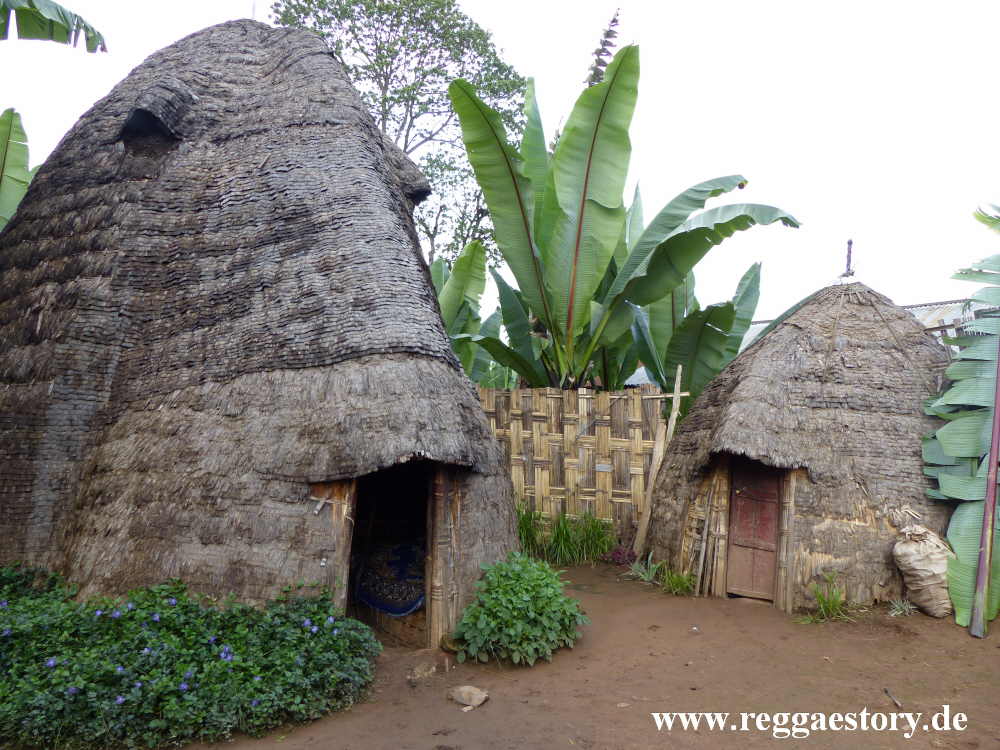
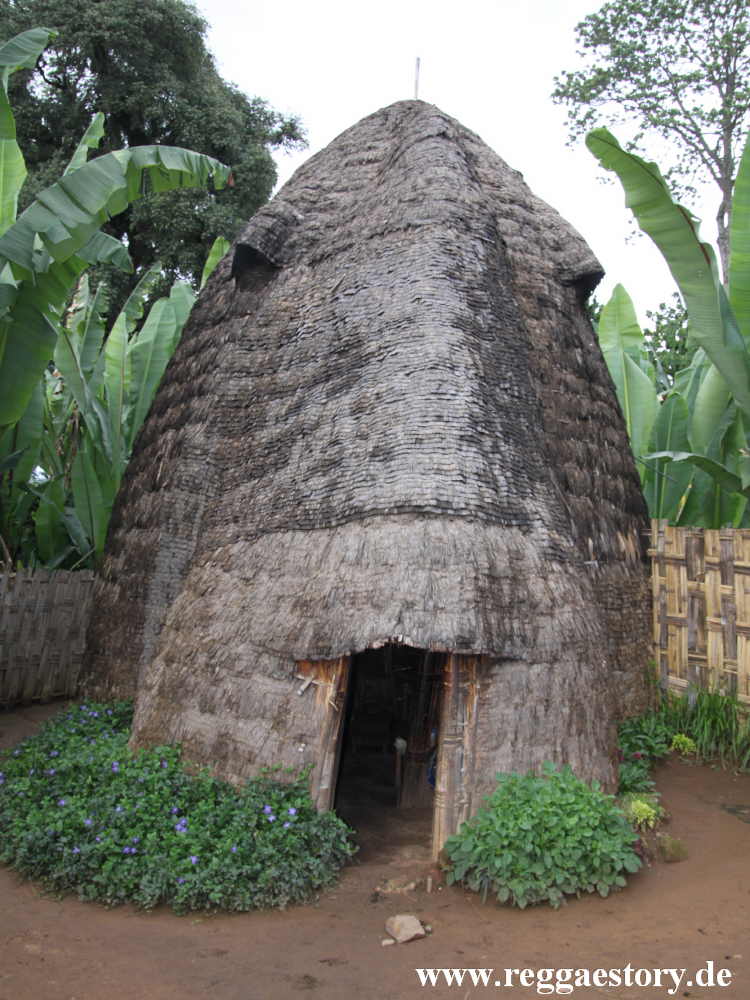 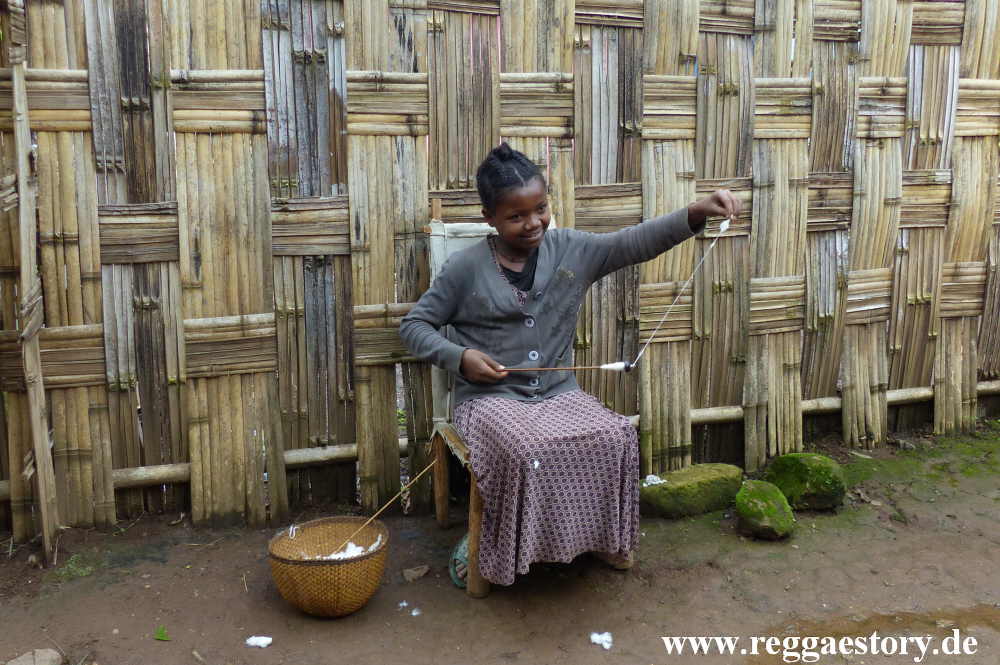 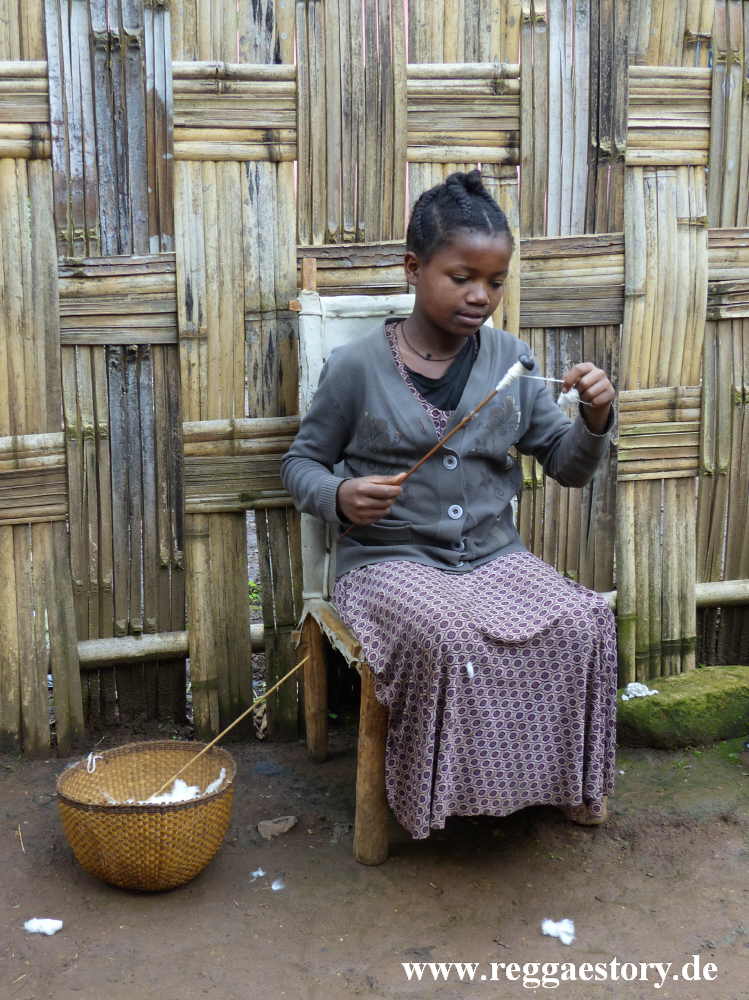
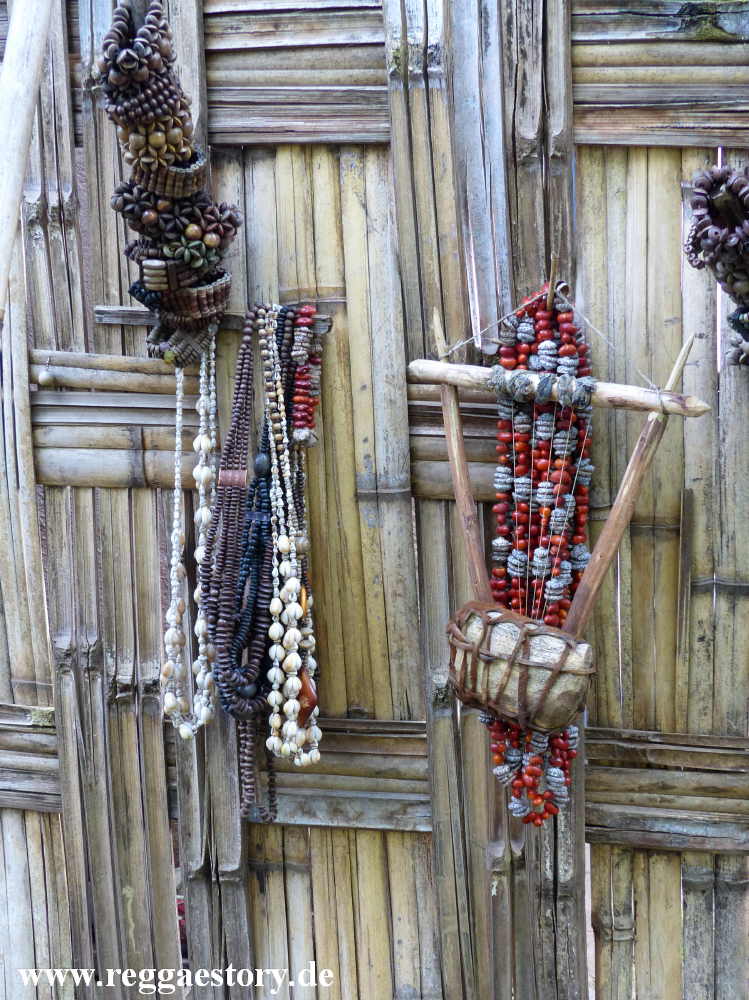 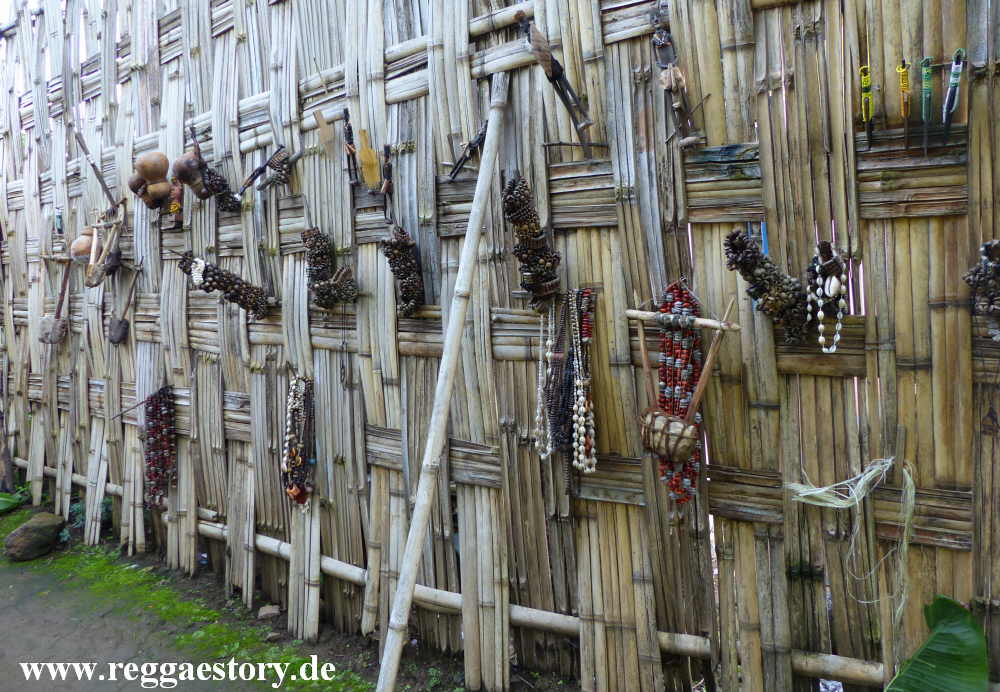 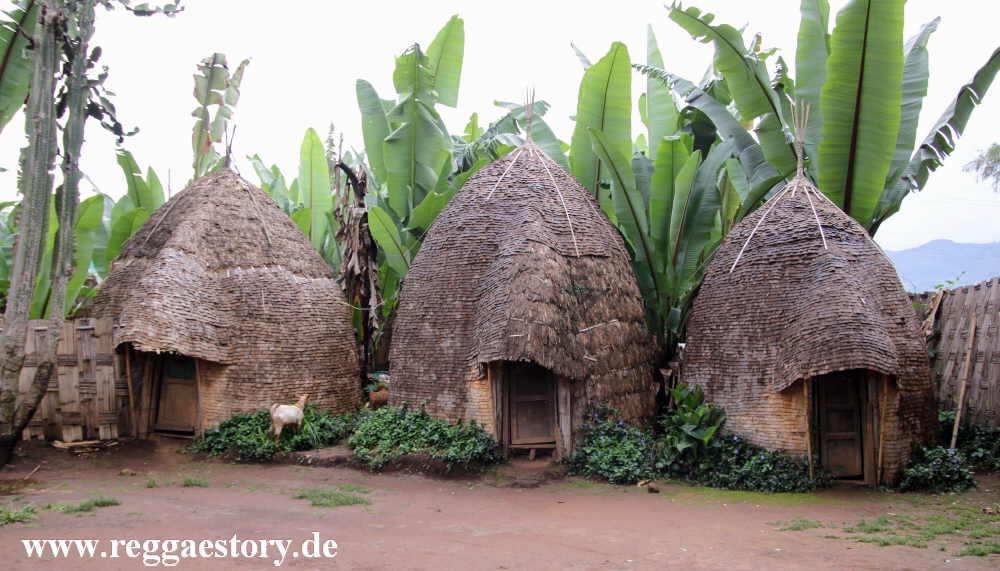 Image 201 - 207: In the Moke Dorze Community Village and Lodge north of Arba Minch Image 201 + 202: The typical "elephant houses" of the Dorze Image 203 + 204: Manufacture of yarn from wool The Dorze is one of the many ethnic groups in Ethiopia and has around 30,000 people. They live mostly north of Arba Minch in the Guge Mountains (also Gughe). They mainly earn their living with weaving, bamboo carpentry, some pottery and of course with agriculture. The primary raw material is the ensete, also known as the false banana, which can be found in almost all areas of life, whether as bread, in weaving, for building fences, for making your houses and much more. These round to oval houses are among the most striking that can be found in Ethiopia. They are reminiscent of huge beehives and sometimes also of elephant heads. It is said that the Dorze were inspired in the design of their houses by the elephants that used to live in this area. The colors of the Dorze are black, red and yellow, which can be found on their hats, scarves, trousers, capes and other items of clothing, especially on festive occasions. 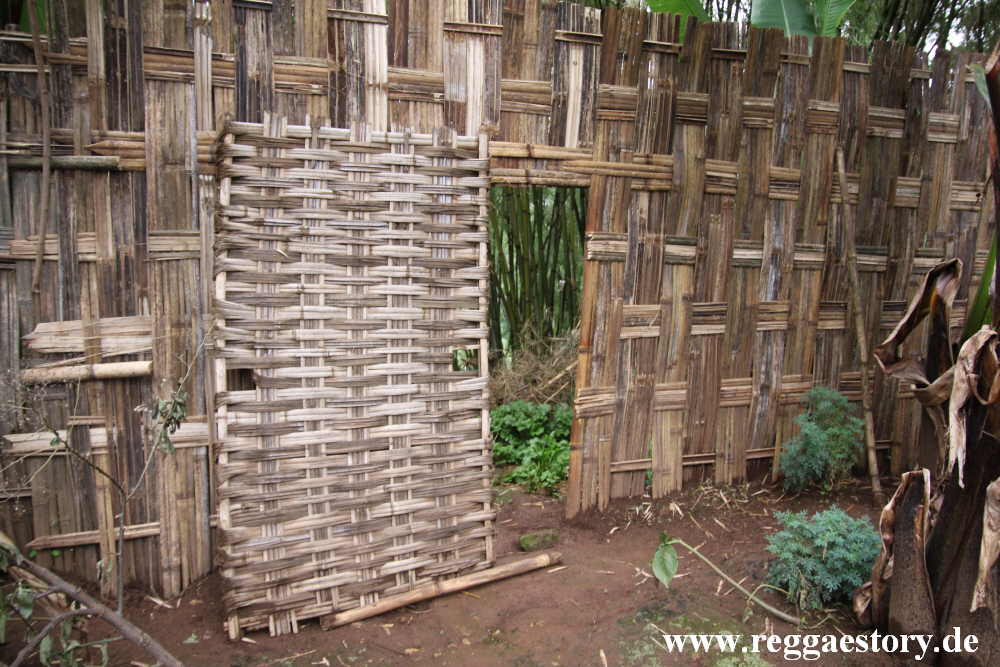 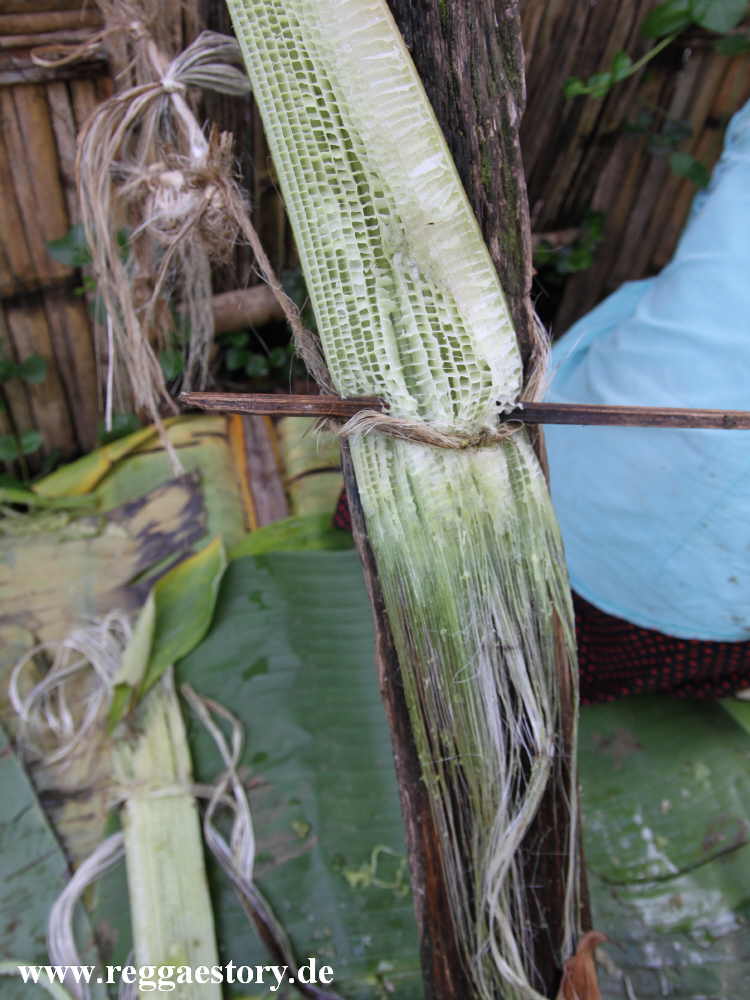
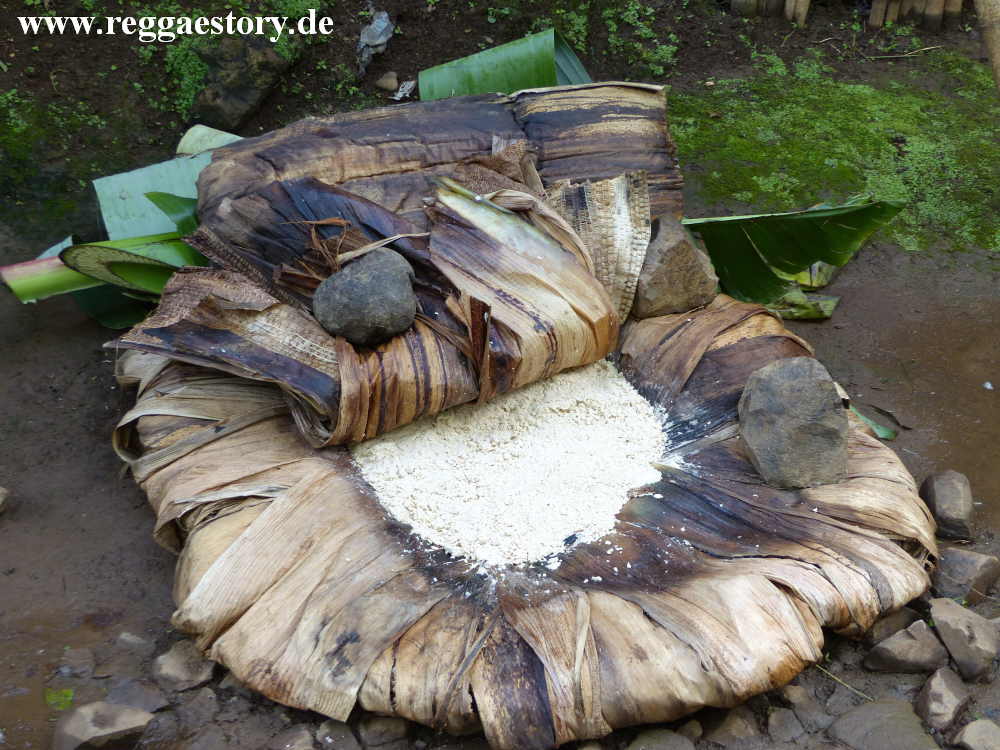 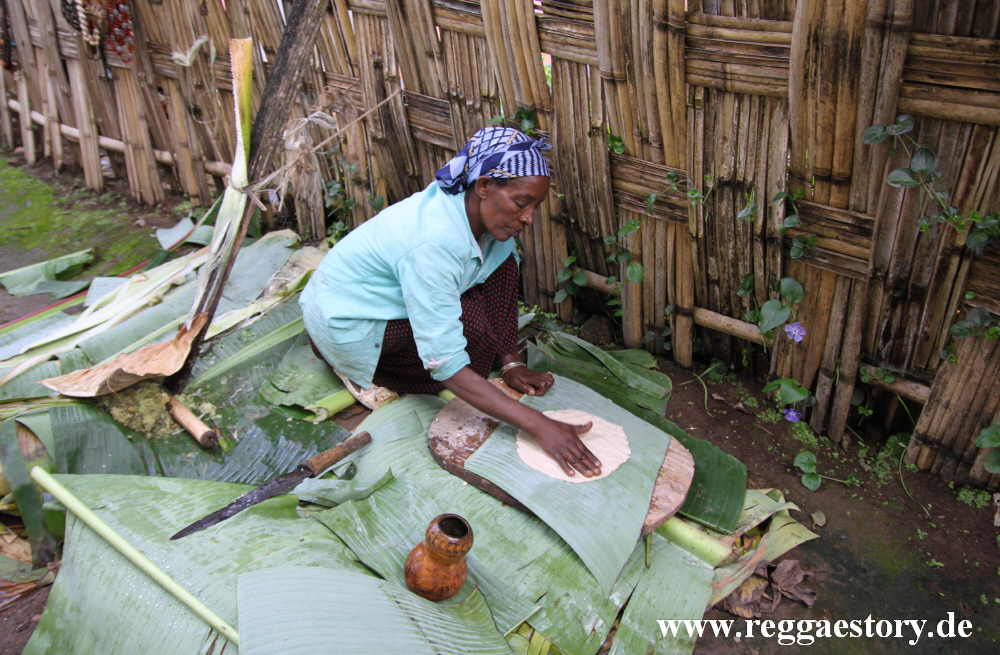 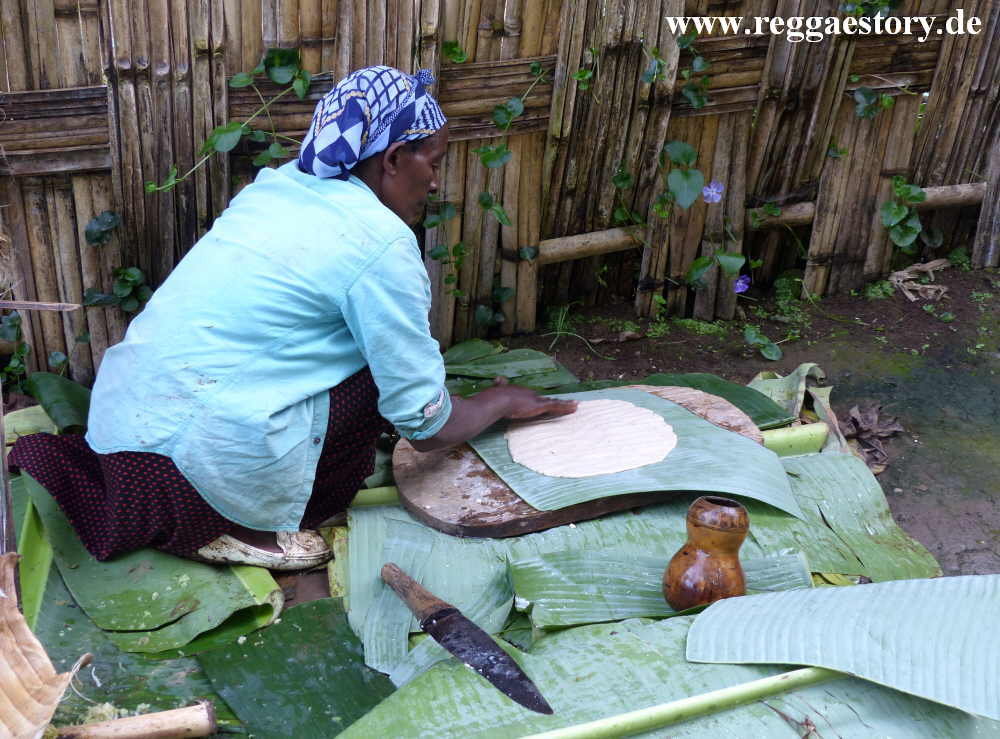 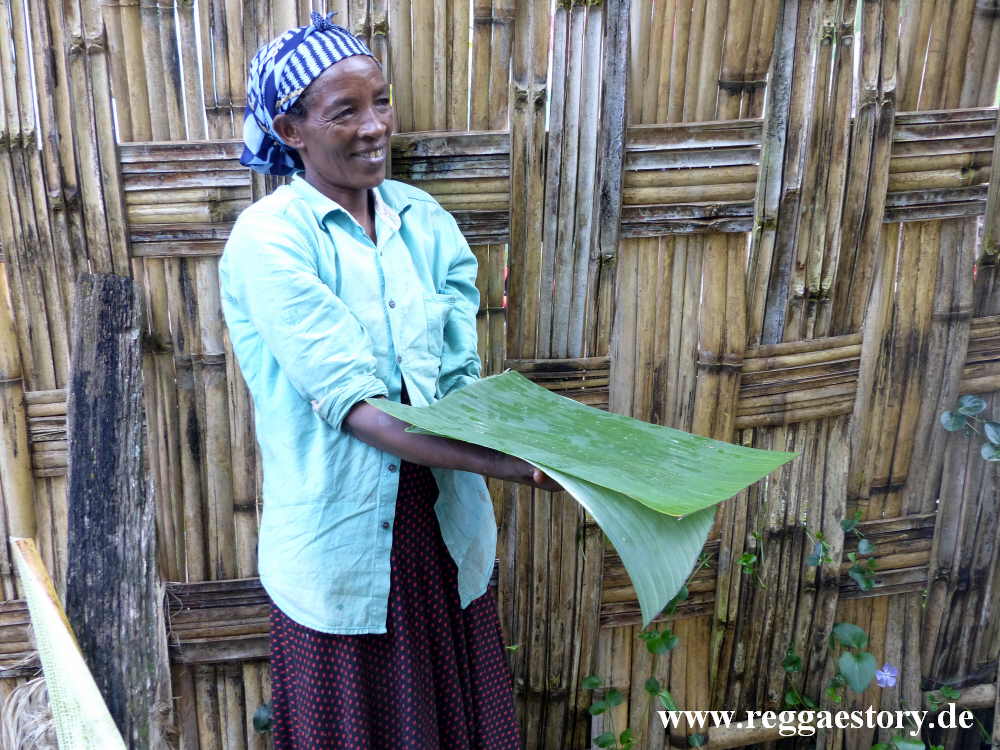 Image 208 - 213: The Ensete in the life of the Dorze Image 208: Fence made of Ensete leaves Image 209: Extraction of the Ensete fibers Image 210 - 212: From the Ensete bread production Image 213: The leaves of the Ensete also serve as the perfect underlay and packing material And while we're already watching the bread being made, of course we also have to take the last step up to the tasting. We go to the fireplace in one of the typical houses, where the bread is baked on an ensete sheet. There are still places to sit and sleep in the house. Various utensils hang on bamboo frames on the Ensete wall. Some of the Dorze animals also live in the house. 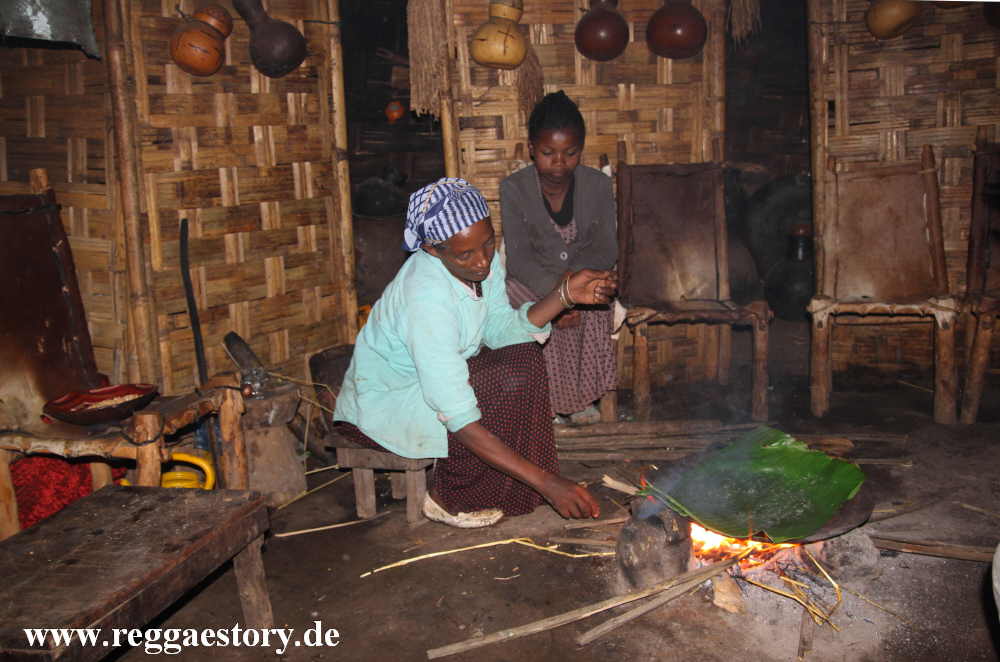 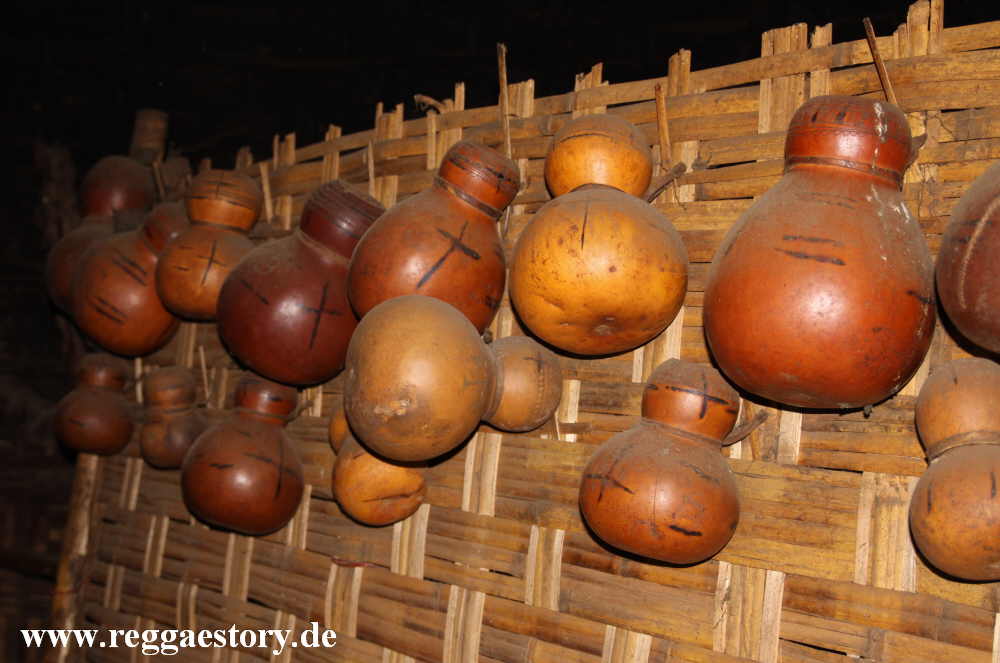 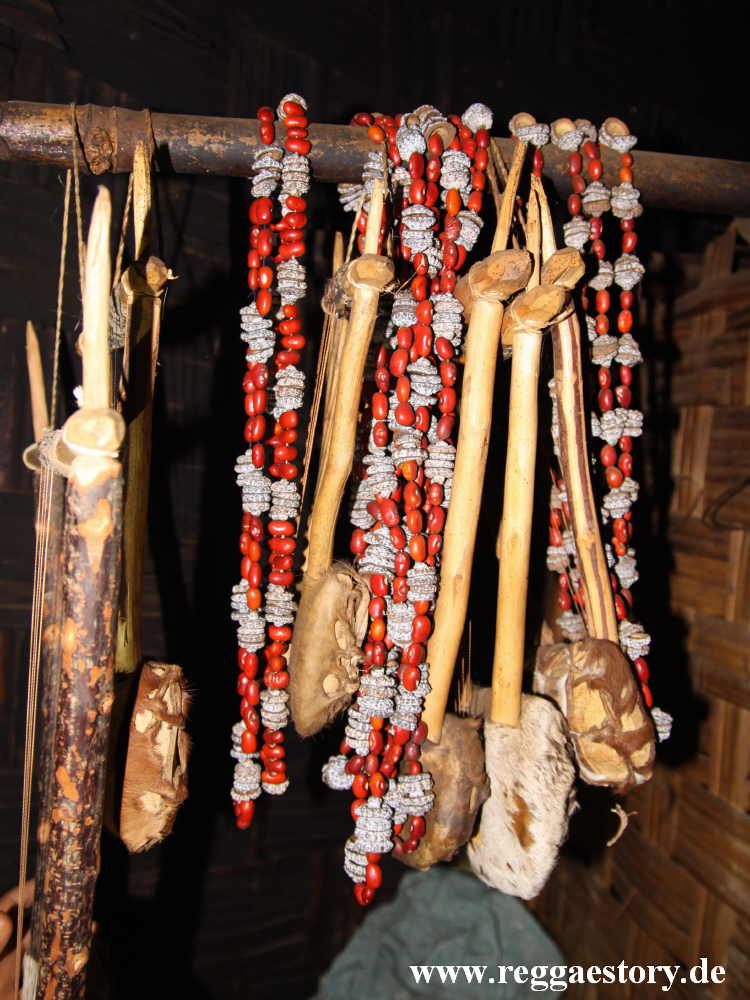
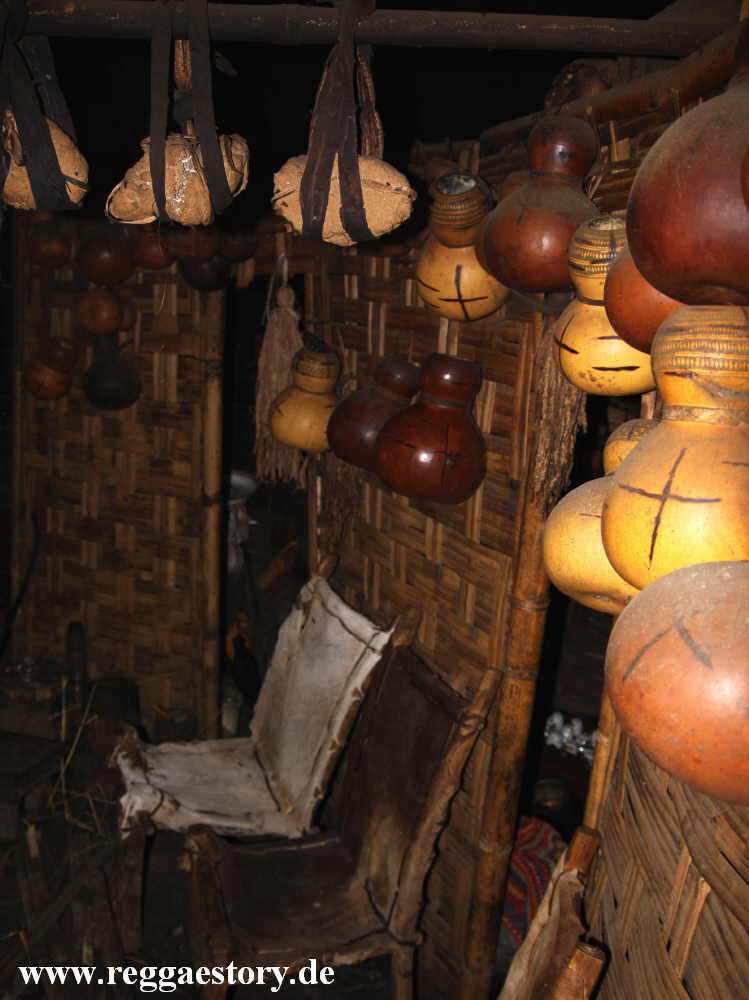 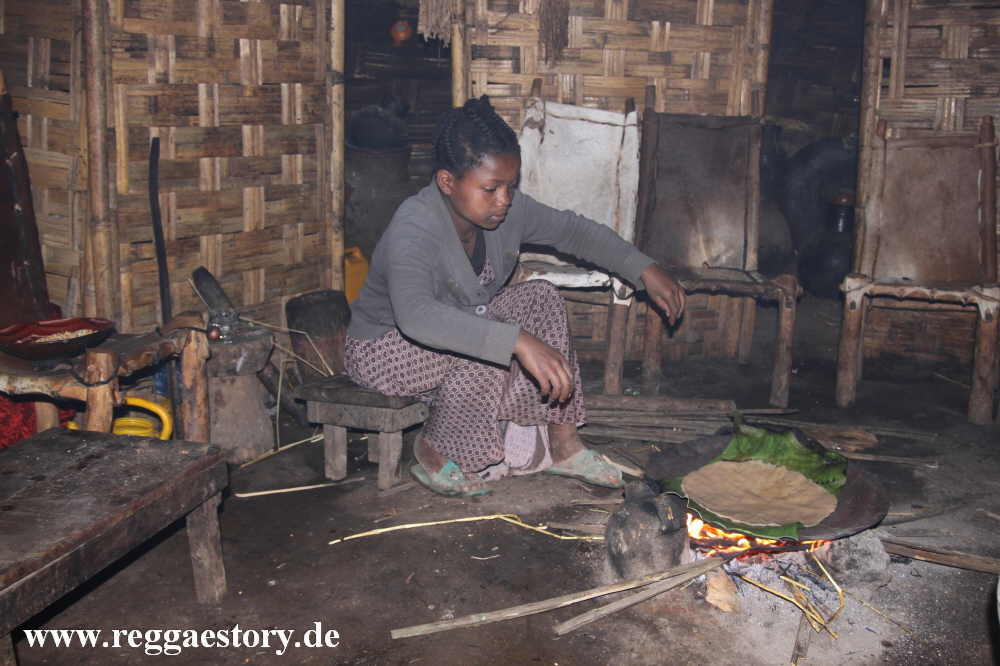 Image 214 - 218: In a Dorze house Image 214 + 218: The Ensete flatbread is baked Image 215: Vessels made from pumpkins Image 216: Jewelry made from red beans and eucalyptus seeds Image 217: Barley seeds tied up in packages and prepared for the house's beer production hang under the ceiling Amazingly, the flatbread doesn't taste very different from any other flatbread. We lack a direct comparison, but as an alternative to the otherwise common grain, the Ensete doesn't have to hide. 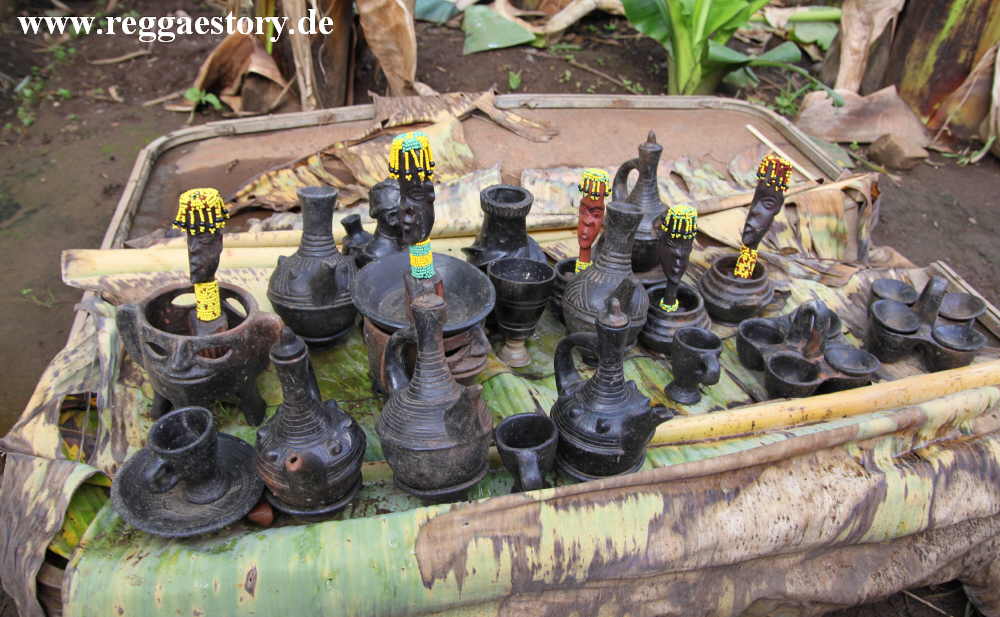 Image 219: Dorze ceramics for sale 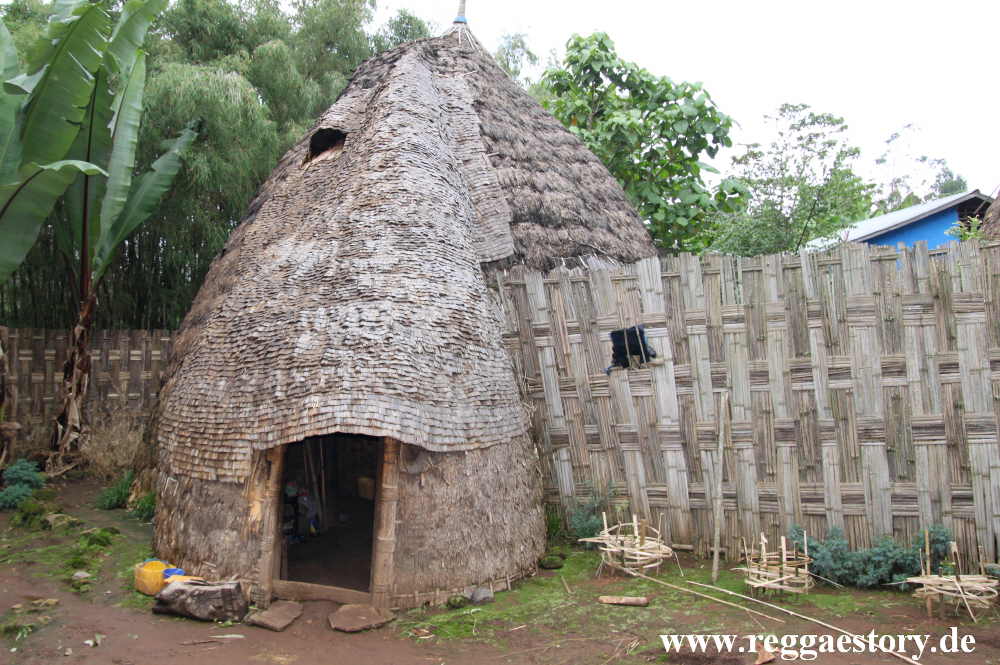 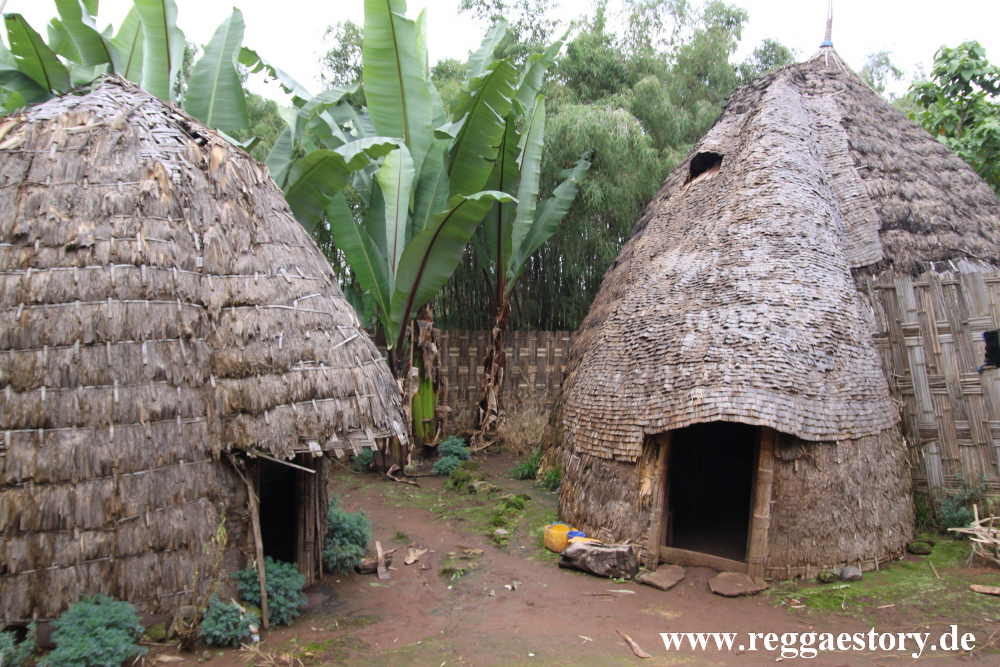 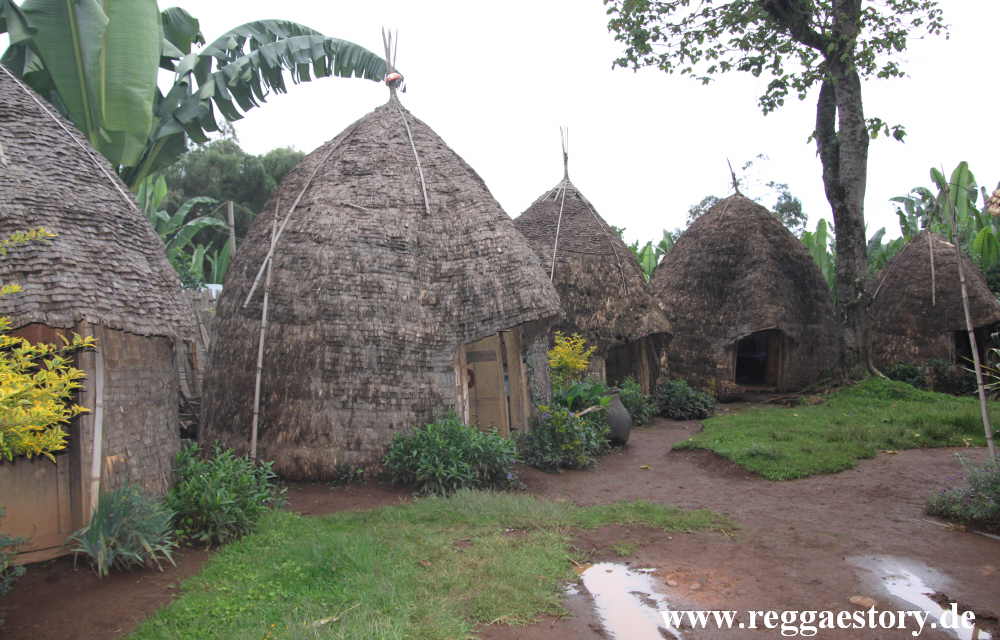 Image 220 - 222: Dorze Village We walk a little further between high Ensete fences and come through various gates from one square to the next with further round houses. A four-legged friend has just died behind one of these fences. We prefer not to look too closely, because what is happening there is the preparation for dinner for the guests. Maybe you don't have to know that in detail. 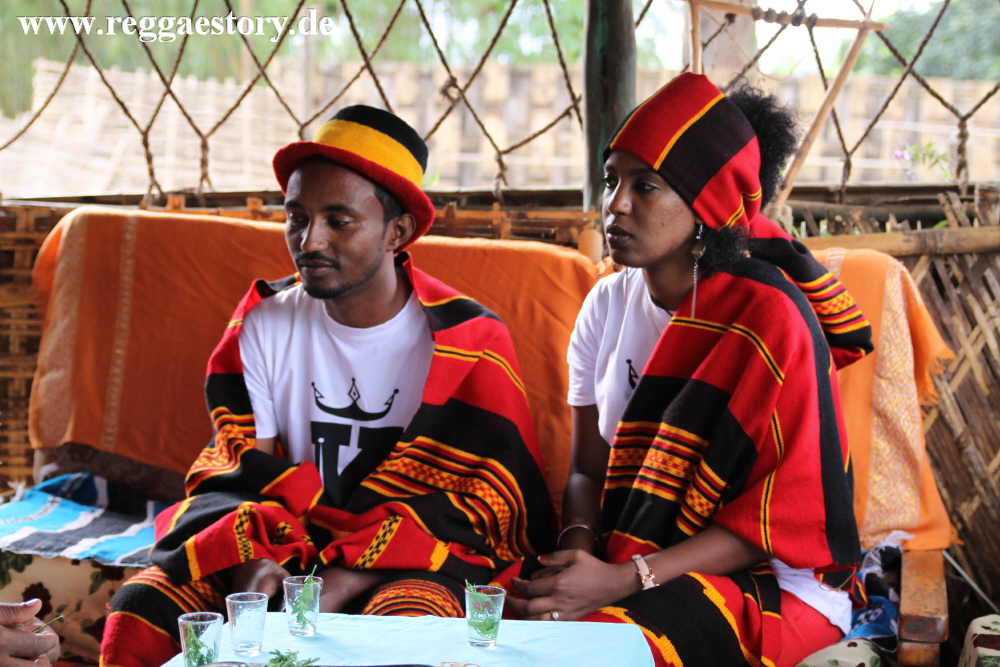 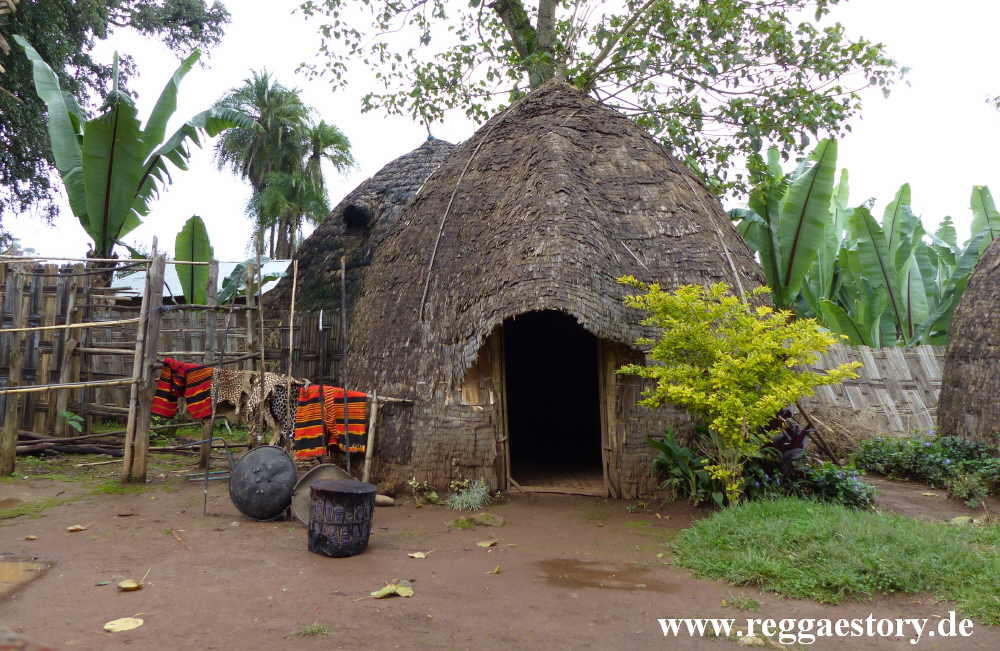 Image 223 + 224: Dorze Village Image 223: There are white self-distilled with rue - Jo Jo Jo Jo Jo Jo - Joooooo We come to a large village square with a small shop and a guest pavilion. Here you can buy all the handicrafts of the Dorze, from jewelry to pottery to textiles and much more. Here you can be sure to find a souvenir. Now we have to try the Dorze schnapps until two bottles are empty. To improve the taste, rue is added to the glass, which was already known as a herb and medicinal plant in Roman times in Europe. Elsewhere we have already seen it as an ingredient in Ethiopian coffee. After numerous toasts, we got so far that we also do things that we would probably not have done without the Dorze schnapps. There has to be some fun too. 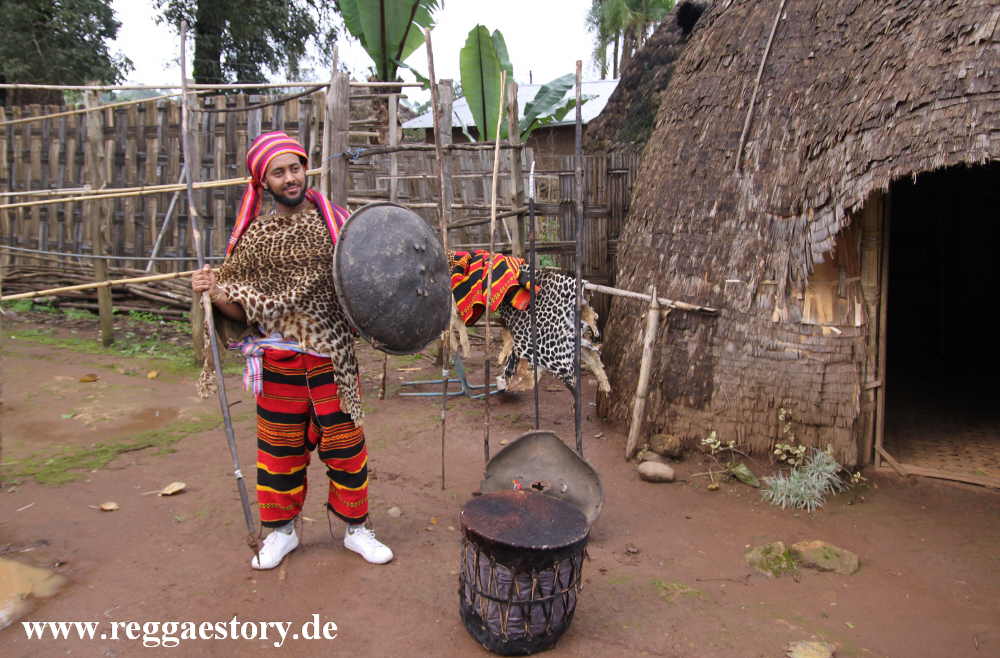 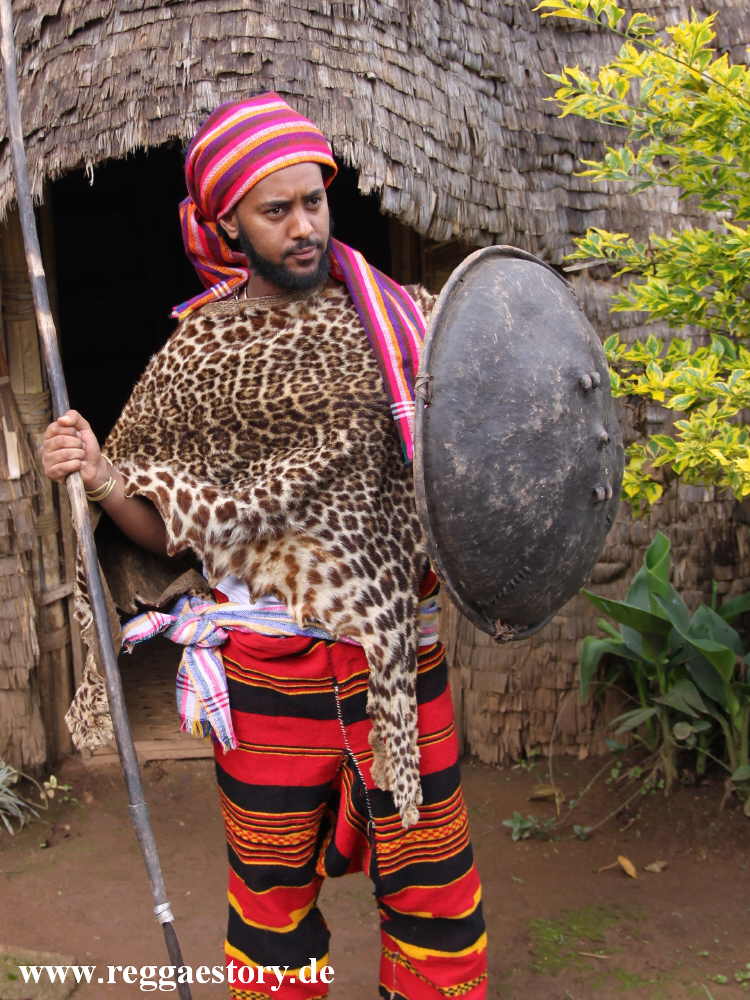
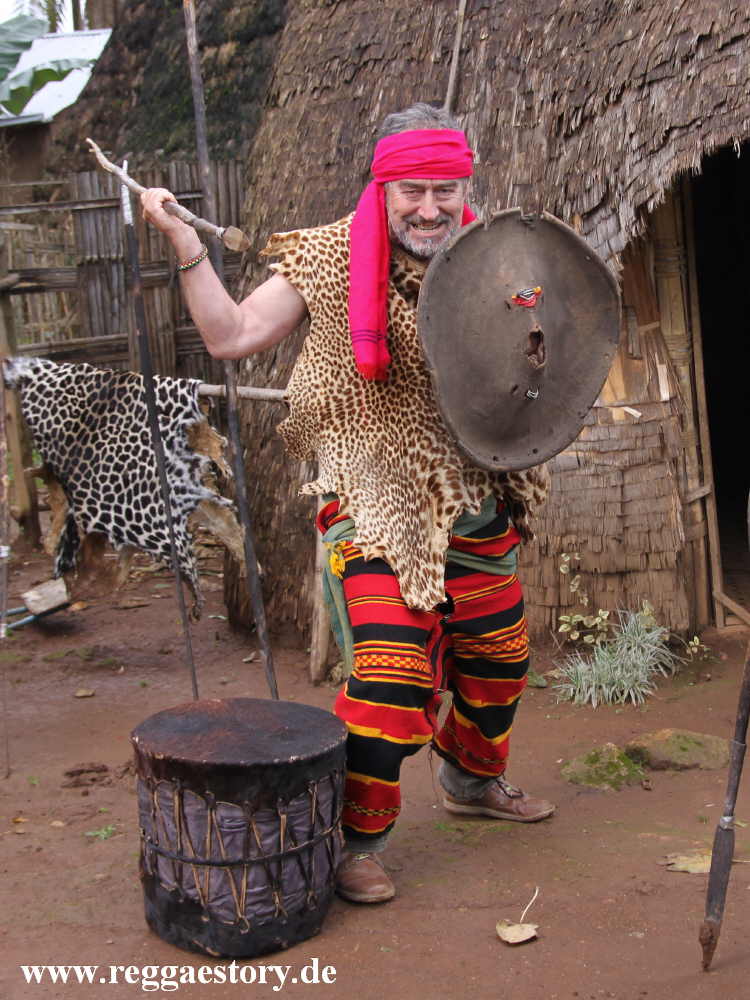 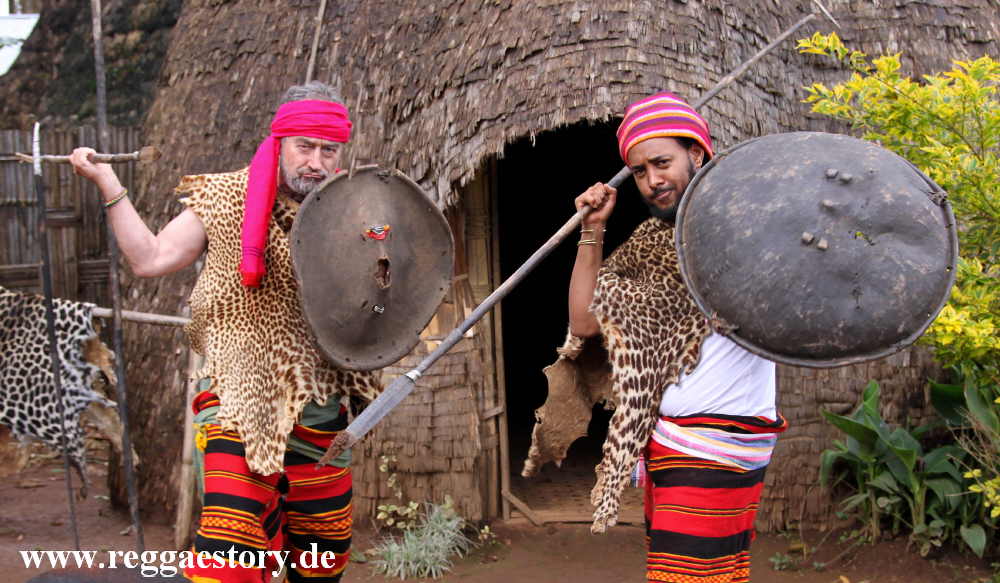 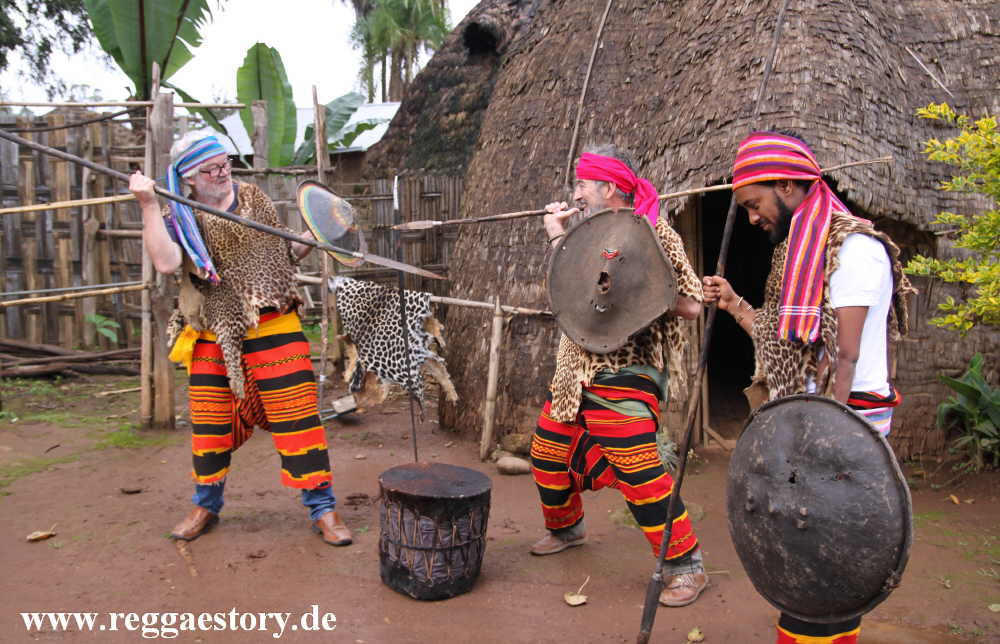 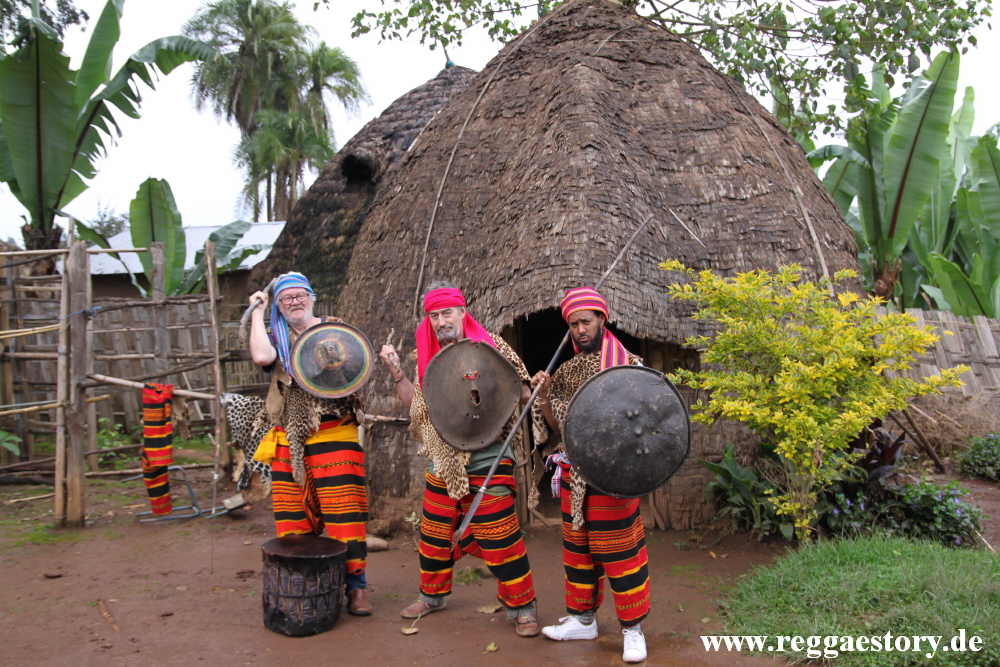 Image 225 - 230: Don't mess with us! ;-) Mastu with whose traditional appearance we pale faces cannot compete in this masquerade. Our shoes don't quite match the warrior disguise either. But still we are all in line with it. While we are engrossed in our slaughter, a few meters further on, the fireplace is lit to cook the four-legged friend that was previously transported to the afterlife. 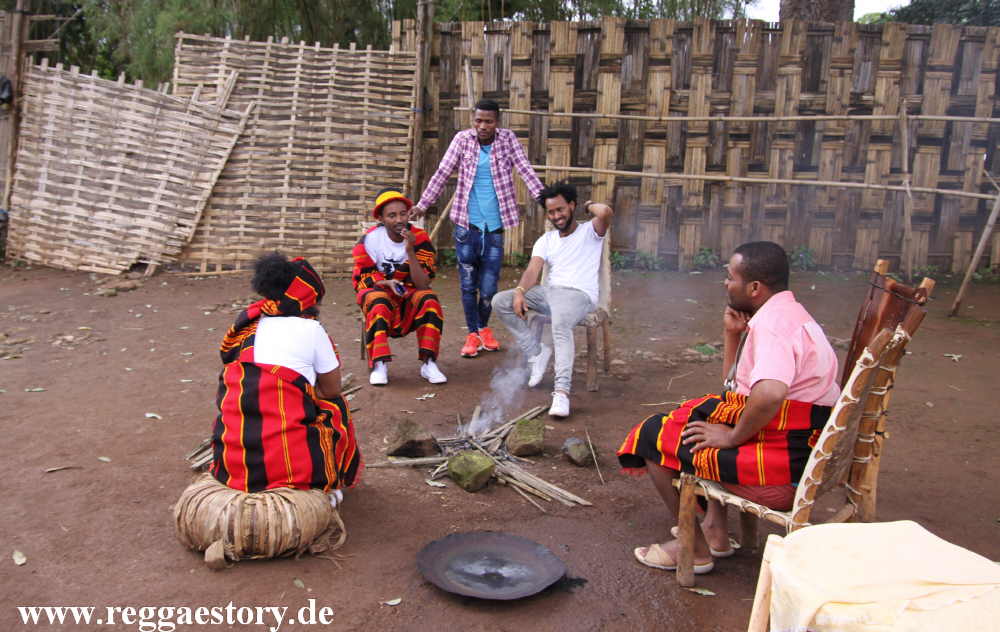 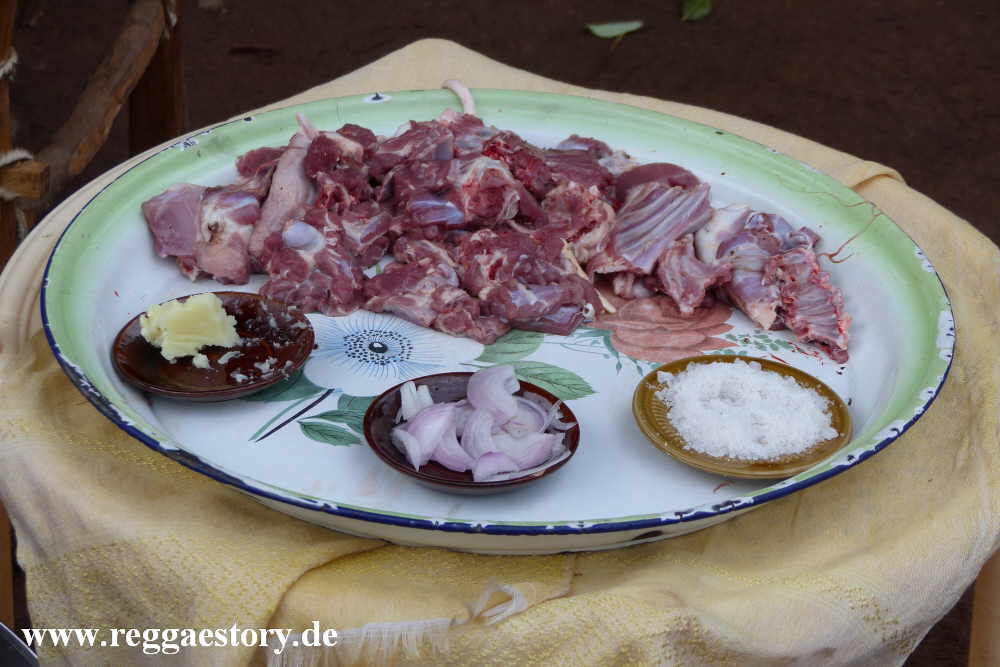 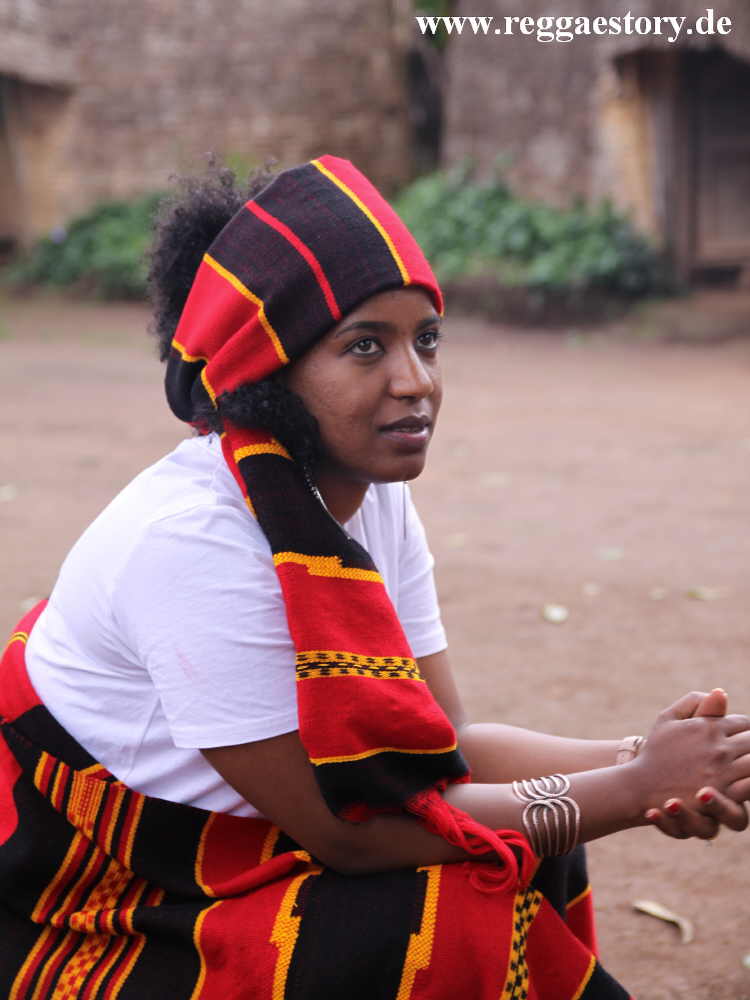
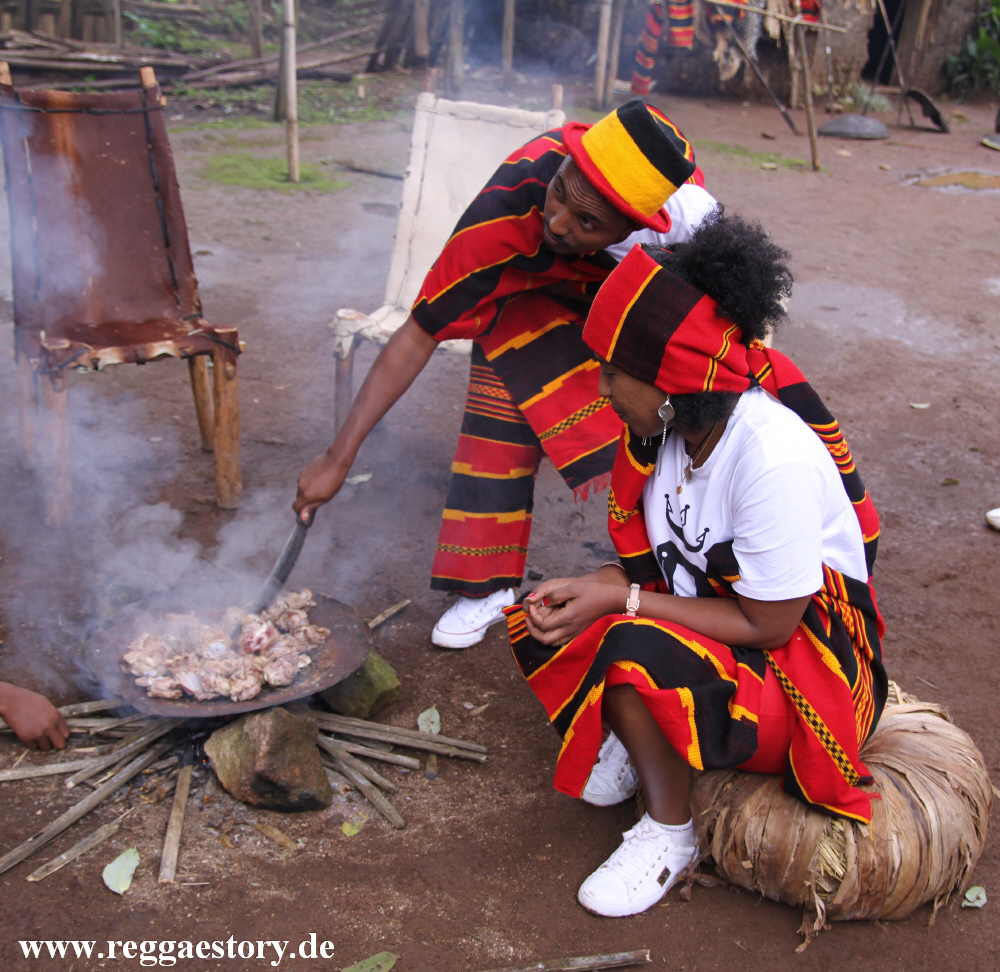 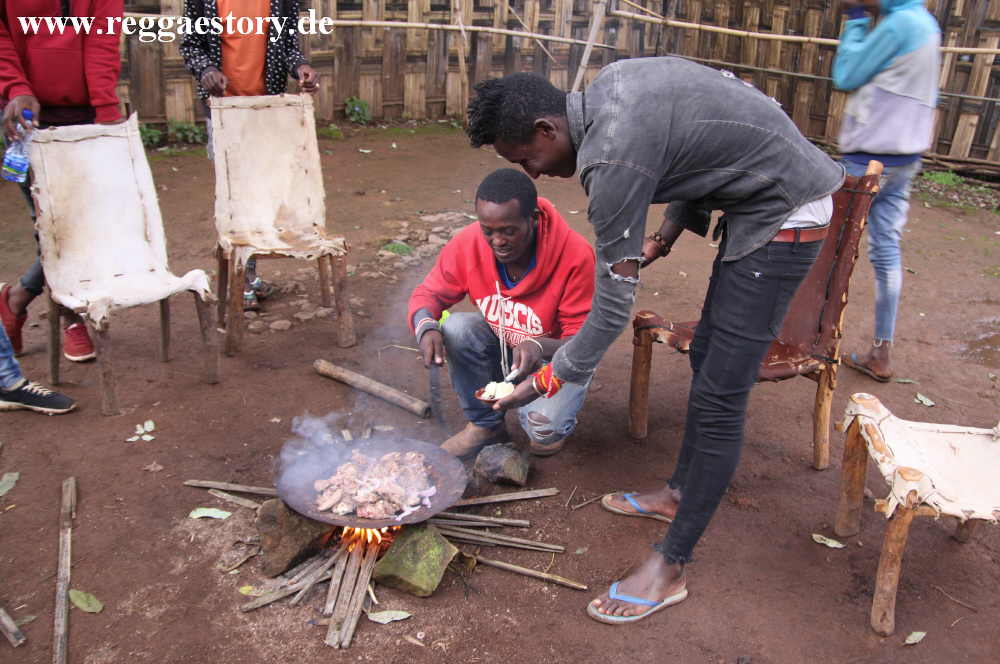 Image 231 - 235: The guest dinner is being prepared. We leave the meat to the other masked tourists from Addis and say goodbye, because we would like to have some daylight when we move into our lodge, because we have to drive back a few more kilometers. Video: Dorze Village 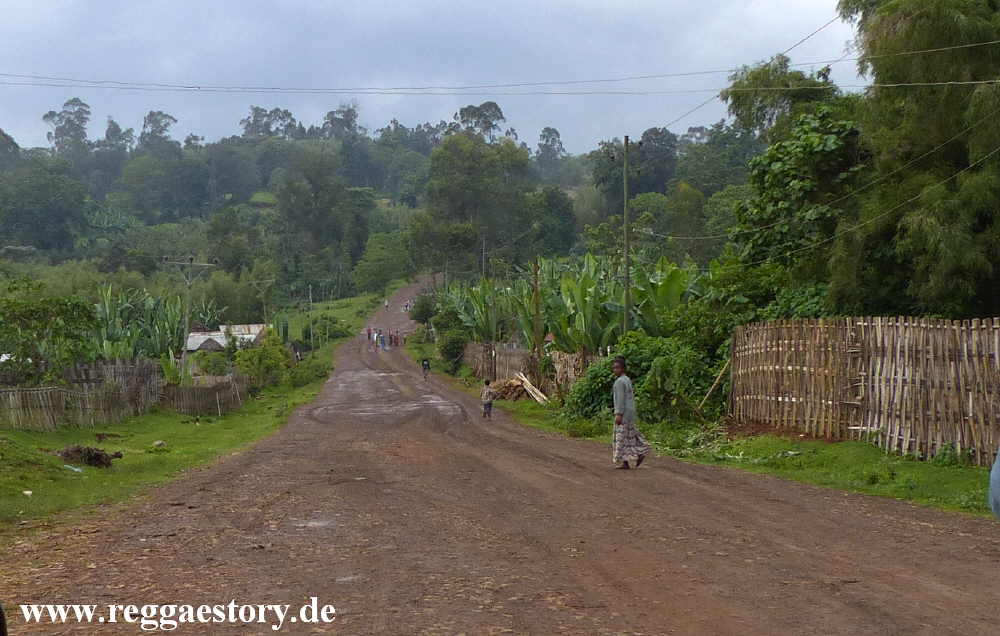 Image 236: Before the Dorze Village - Street to the center of Cencia For our overnight stay we have chosen the Dorze Lodge, which is located on a nearby rock ridge. From there you have a fantastic view over the landscape to the lakes Abaya and Chamo, including the "Bridge of God". In just a few minutes we arrived at the sand runway, which is twice subordinated. This leads up to the lodge, but the last part will be another endurance test for Alex and our minibus. The last 50 meters of the slope that our piste leads up is washed away by the rain and muddy. Alex ponders and examines every square meter to determine his personal slalom course. We want to get out but Alex won't let us. Sure of victory, he starts and torments the bus up the mountain. The wheels spin, the mud splatters, stones rumble against the vehicle floor and we slide and lean uncontrollably to one side or the other. We can already see the headlines in the German press: "German tourists at Arba Minch plunged into the gorge with the minibus." But Alex obviously knows exactly that he can trust himself and his bus and fortunately we arrive safely at the top. 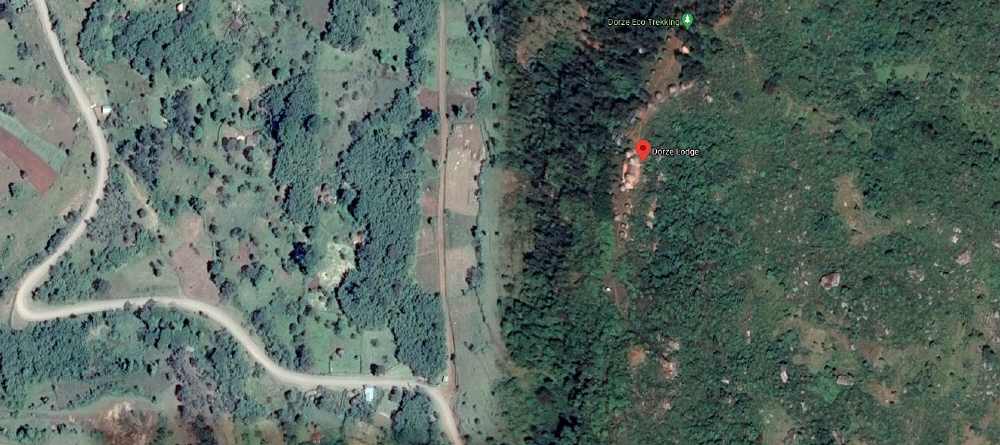 Image 237: Google Map - Dorze Lodge near Arba Minch - Simply click on the image or link and continue exploring the location. The sun has set in the meantime, but we can still let our eyes wander into the distance. We are overwhelmed. We knew it would be beautiful, but no photo or video can reproduce the beauty seen with the eye. We enjoy the view as long as we can and then go to the lodge's restaurant. It has become fresh and warm things are in demand. Unfortunately, the restaurant's fireplace does not exude cozy warmth, just a large black and cold hole. We are the only guests in the lodge, which slows down the commitment of the young and mostly male staff. Because of us three people, apparently no thought is wasted on a fireplace, because after all you have to save what you can save. So today is nothing with the cozy enjoyment of a bottle of wine by the fireplace. In addition, we have to note that electricity is only available up here from 7 a.m. to 10 p.m. It is already too late for photos at this point, but with the following video we have captured and intensified some light. There you get a foretaste of the sunrise the next morning. Video: Dorze Lodge - a compilation of three days until departure We'll see you at this point tomorrow and will then explore the wider area on foot. We visit the Dorsso waterfall and the impressive village market south of Cencia. A visit to one of the many Tej pubs is of course also a must. Copyright: www.reggaestory.de Photos: Marion & Peter Joachim Text and Videos: Peter Joachim English version: Gabriele Brown |
Zurück


