

17.03.2025 - SEYCHELLES - THE REGGAE ARCHIPELAGO
A contribution by Werner Zips and Angelica V. Marte - Based on impressions from 2017
 |
The Seychelles are a collection of 115 granite and coral islands, scattered over a gigantic sea area of 390,000 square kilometers. Contrary to popular belief, the colourful archipelago is not an uninhabited paradise, but a state with almost 100,000 inhabitants and an equally colourful culture. Its inhabitants call themselves Seychellois and their culture "Kreol". Their soundtrack is the unmistakable reggae creole, accompanied by the ubiquitous sound of the sea. If Jamaica is the reggae island, then the Seychelles is the reggae archipelago. Reggae is the music of the people. This holds true for Jamaica as much as for the Seychelles. In Jamaica it may have got Michael Manley into power, back in the glorious seventies of roots music. On the Seychelles it brought a change of power in the general elections of 2016. It’s worth a glimpse back in time. |
 Creole Festival October 2017 Ras Ricky is unstoppable. With his carotid artery protruding, he jumps off the Dancehall float - a small truck with a sound system, selector, and speaker towers on the loading area. Dreadlocks flashing, he runs with his cordless microphone towards the grandstand, accompanied by his all-female dance crew. Bashment stylee made in Seychelles. From the pit towers of the carnival float boom hard core dancehall beats. Red alert for the assembled political celebrities. 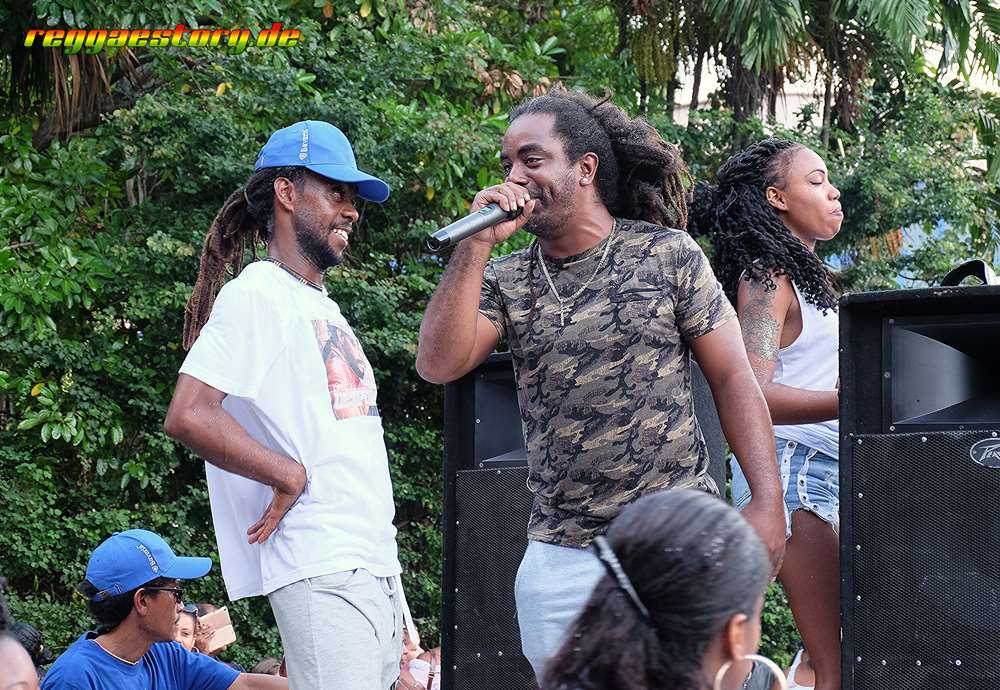 Ras Ricky, Jakim and Juliah Mary-Ane Jeannewal The Vice-President and a good part of government look like sweet sour chop suey. Extremely anxious to put a good face on a bad game - at least for some. With his then fresh album Ghetto Desperado, the reggae artist is man of the hour. Since the parliamentary elections in September 2016, he has also been considered a public hero, at least for the victorious opposition party Linyon Demokratik Seselwa (LDS or Democratic Alliance of Seychelles). His song "Pil Lo Li" was the soundtrack of the elections that brought a fundamental change in the political structure of the Seychelles. The accompanying YouTube video shows how political reggae can be here. Translated, Pil Lo Li means something like "step pon dem" - "get on their toes and chase them from power" - but not by force, but by voting, as Ras Ricky explains to us. Ras Ricky at Creole Festival The power of tunes paved the way for the first step towards a change of political power. The Seychellois Democratic Alliance, as it calls itself in English, ended the almost 40-year autocracy of the socialist unity party, Parti Lepep (People's Party). But the government is appointed by the president, who is elected in his own elections. That is why a good part of the old regime sits in the official gallery. In addition to the members of parliament, the majority of whom belong to the opposition. Ras Ricky's official participation in the Festival Creole is considered a concession to her. In the meantime, it is charged like the reactor units of Fukujima shortly before the core meltdown. No wonder, for years he was like Peter Tosh, with whom not a few compare him. Like his great Jamaican role model, he had to live with constant reprisals, as he tells us the day after his big performance, still visibly exhausted: 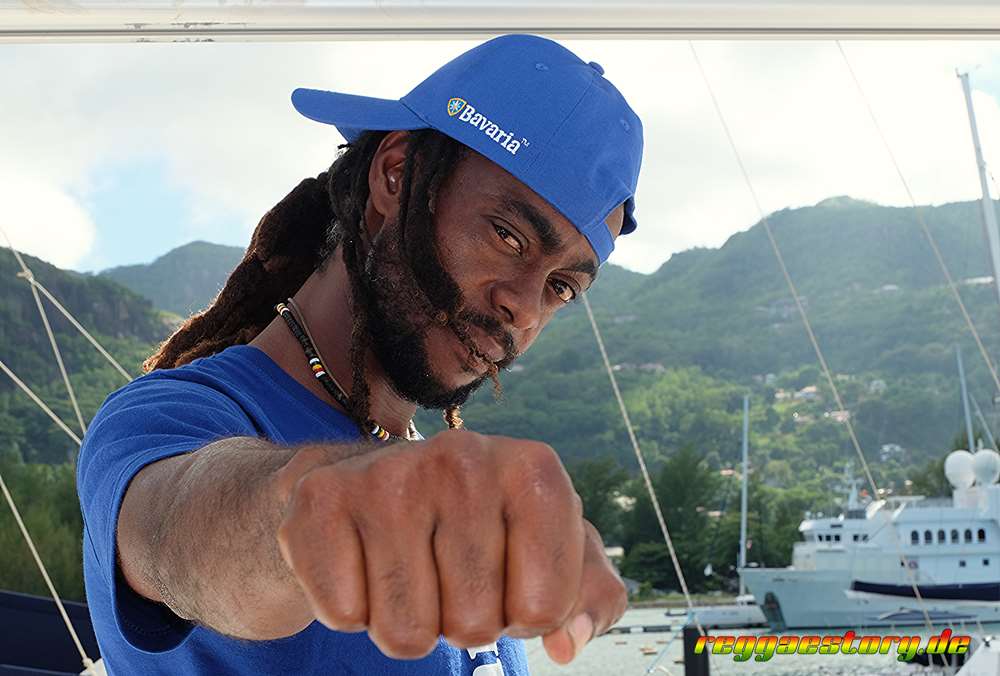 Ras Ricky "They always fought me and didn't let me on any stage. But now one of my revolutionary songs has hit back. And changed the political landscape of the Seychelles. It was a one-party state, as there are many in Africa. Some believe that AK 47, Uzi or something else is needed for change. But we have proven that one song is enough to come to power. "Pil Lo Li" was a stomping, but not a call for violence, but rather a call to take courage to go to a polling booth without fear. Now I sang the lyrics in front of the assembled government, it was like a triumph after a long battle. At that point I knew: 'Yes, I've reached my goal, we won'. And the guys looked pretty good." In the 2020 general elections the Linyon Demokratik Seselwa won the absolute majority of votes with almost 55 percent and nominated the current president Wavel Ramkalawan. Seggae, Dancehall, Reggae Creole Ras Ricky is just one of the whole armada of Seychellois Reggae Soldiers, who have been recording albums for years (in alphabetical order): Ambitious, Champion, I-Blacka, Jahrimba, Jakim, Raskidusie, Raspyek, Philip Toussaint, and Xtra Big, to name just the most famous. 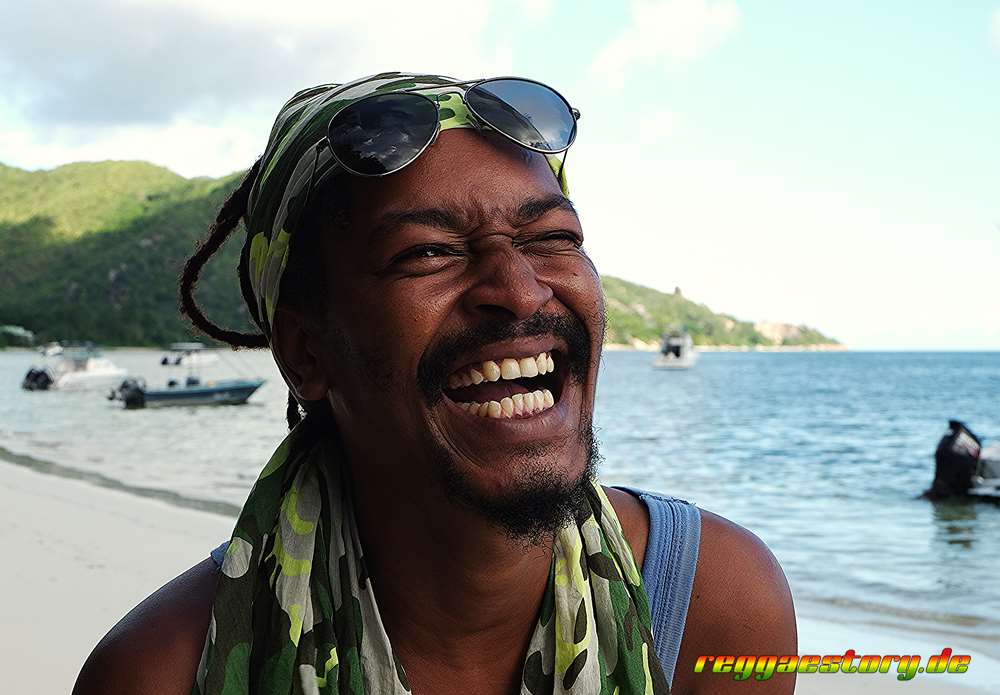 Ambitious Their range is largely limited to the Indian Ocean off the east coast of Africa, namely Mauritius, Reunion, Mayotte, the Comoros, and Madagascar. The biggest star is Philip Toussaint. He has been recording albums every two years for over 25 years. His 10th album Mersi thanks the creator and his massifs for the inspiration and loyalty. The night after Ras Ricky's triumphal march, he performs on the main stage at the Kreol Festival in front of more than 10,000 enthusiastic fans (over 10 percent of the total population). Like no other, he has developed his very own style, which combines roots reggae with traditional Sega music. Seggae is the name of the result and sounds like palm trees, beach, and sea. Feelgood music in the tradition of Alpha Blondy, Lucky Dube, and, who else, Robert Nesta. Philip is an avowed Catholic Dread, a rarity in the reggae universe, but not in the Seychelles with over 70 percent Catholics. 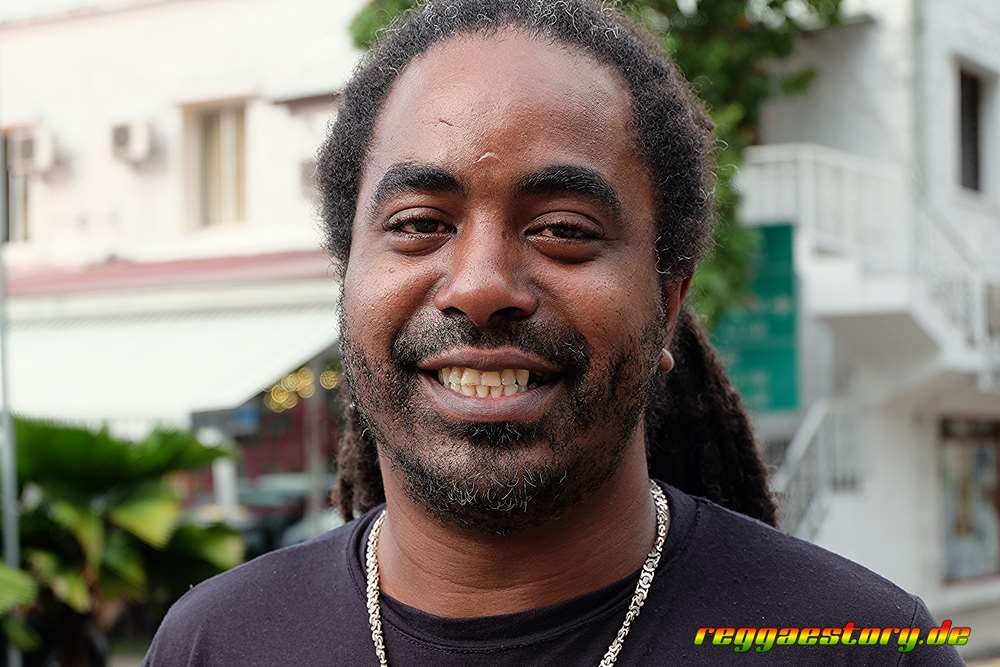 Jakim 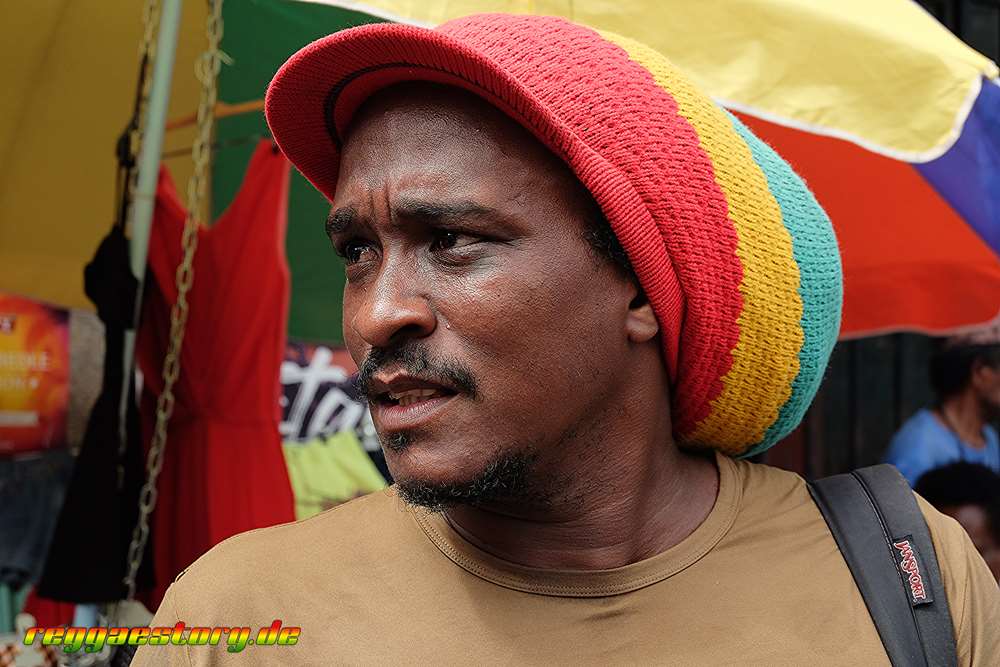 Raspyek This shows the legacy of the French occupation from 1756 to 1811. The Seychelles also "owe" its name to this, which refers to the finance minister of the then French king, Jean Moreau de Séchelles. With the English conquest came the abolition of the slave trade, a few years before the Caribbean. De facto, slavery lasted until 1838, the same time as on Jamaica and other British Caribbean islands. Thus, the Seychelles also emerged from a slave-owning society. Of the approximately 7,500 inhabitants in 1818, about 90 percent were enslaved. Perhaps this is the most important reason for the cultural tsunami that reggae unleashed in the Seychelles in the 1970s. Even today, the colonial legacy can still be felt in many ways, at the time of independence (1976) French and British manners were predominant. Language, religion, legal system, education - everything was based on the former European colonial powers. The confrontation with Jamaican reggae therefore left no stone unturned, as Philip Toussaint describes: 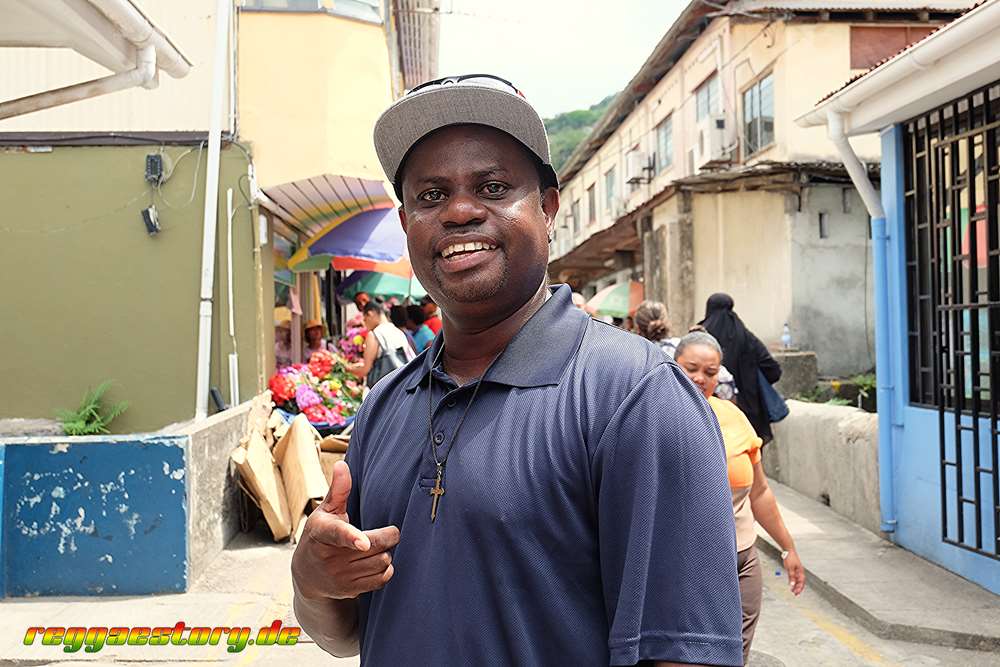 Philip Toussaint "When we first heard Marley songs, all these revolutionary songs, every Seychellois was shocked: 'What kind of message and music is this?' It made like boom!! in Seychelles. I was still very young at the time, but it was immediately clear to me that I wanted to make exactly this kind of music. Actually, I didn't know much about Rastafarian, but the musical messages felt good and right. I felt through the music that Rastas are pure in heart and think positively. You just have to like them, even though I never became a Rasta. Yes, ok, I wear dreadlocks, but that's just a style. I don't like these rules: you have to eat that and you can't eat that. I like Rastas, but I'm a Catholic guy." Paradise Burning The second big star next to Philip Toussaint is already carved from harder wood. Jahrimba sees himself as Dreadlocks Rasta through and through, with a male Bwoy flip side, just like his idol Sizzla. Together with his producer and brethren Xtra Big - "Di Genius Seychellois" behind many dancehall Seggae big tunes - he rocks every venue on the three main islands of Mahé, Praslin and La Digue. 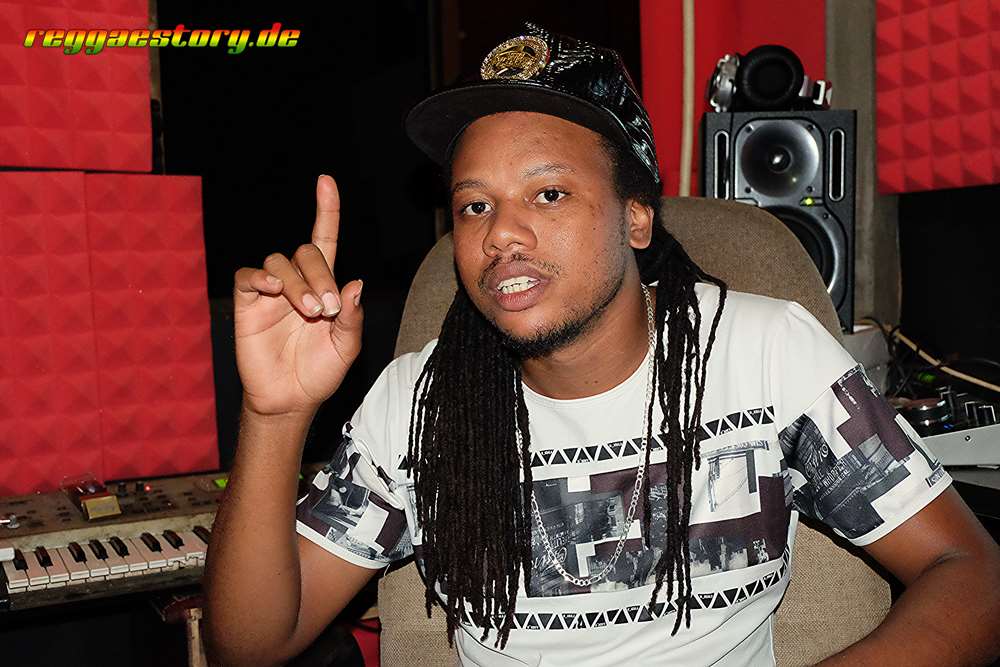 Xtra Big Like Sizzla or Capleton, he doesn't mince his words. Babylon Burning quickly becomes Paradise Burning, as on the hit of the same name on the Mission Impossible riddim. With texts about the unequal distribution of income and hypocrites who are responsible for it, one does not make oneself popular with the rulers in the Seychelles either. Social problems such as poverty, corruption and political nepotism do not fit in with the paradise image that the island state cultivates. Certainly not the spread of hard drugs in front of the closed eyes of those in power. The Seychelles have had a veritable heroin problem for several years. Since the change of power has been initiated, the flow of hard drugs has largely stopped. But this increases the prices and the procurement crime of the addicts. Jahrimba sings about exactly these dark sides that hardly any tourist realizes. Yah moooon, life in Seychelles rough sometimes, especially in places like La Misère, something like Trenchtown in the Seychelles, the birthplace of Jahrimba:  Jahrimba "For us, life here is pretty hard. This land is a bed of roses only for a few who belong to the system. As a reggae artist, I'm certainly not one of them. But I didn't let myself be intimidated by the old regime under which I had to live for 40 years. I always say and sing what I think and see with my own eyes. People used to be afraid to speak their minds. But now we have a good chance of democratic freedoms. If, like me, you grew up in La Misère, you can handle pressure well. The Seychelles may not be like Jamaica, but there are ghettos here too. La Misère is a French word that means poverty. But it is far from the most run-down area on Mahé. That's why our crew is called Souljahz in Creole Ghetto." Like everywhere else in the world, reggae also offers a mirror for the "state of the nation" in the Seychelles. If this is in an imbalance, those responsible for it would like to turn the mirror over, if not smash it right away. But here, too, they could not prevent this music from setting the pace for the cultural heartbeat of the country's population. In any case, this is no different from Jamaica. But in one respect, the Ghetto Souljahz Seychellois want to stand out from the place of origin of their music. With all due respect to the source of inspiration in the Caribbean, they unanimously distance themselves from discord, petty conflicts between ghetto districts and discrimination against women and minorities. Not that sexy body gal tunes are completely alien to artists like Jahrimba, but violence, sexism and homophobia are critically reflected. This is evidenced not only by numerous interviews with artists and other conversations, but also by the willingness to work together, which is visible from afar. There is always competition, where performers compete for their reputation and rank, but the principles of tolerance, togetherness, unity and one love are lived demonstrative practice. This sense of community is evident in the close friendship between the artists, which is reflected in numerous combination tunes. More than half of the songs on Jahrimba's double album Douler Lo Zot last year are collabos with one or more artists. The idea of equality is almost the program here, despite all economic differences. Jahrimba sees this as the most important positive legacy of the old regime: "In Seychelles, it doesn't matter if you're white or black. This is perhaps the only good thing that can be said about the previous government. Racism has never been a problem. We don't have a racist society. I'm really proud of that. Oneness, one world, one planet, one universe, that's the basis of reggae. This corresponds to the Rasta livity as I imagine it. And this is also the most important message of my music, which has taught me life in the Seychelles. We are a totally mixed country. Togetherness is a constant experience. This is not something we have to imagine in theory. We have lived unity for as long as we can remember, at least since independence. That's why it's so natural for me to sing about 'one love, oneness, one aim, one destiny, one world, one people, one blood'. Yah moon, that's it." Women were and are underrepresented in Seggae, Dancehall Sega and Reggae Creole. With the exception of the Queen of Sega, Sandra, only a fewofher own albums have made it. Through Collabos with the well-known male artists, but also with the few women among themselves, artists like Telsy are slowly working their way into the small recording industry of the Indian Ocean. Mon Lekspresyon - the voices of woman On Telsy's latest CD Mon Lekspresyon, the diversity of her expressiveness (Lekspresyon) can be seen in the different genres from R n B to reggae. With the album title, Telsy wants to encourage other musicians. Telsy justifies the few women in the music biz with the lack of local, female role models. "When you have a competitor, it's always good because it pushes you to get better." The singing women correctly understand competition in the Latin sense concurrere as "walking together". Solidarity, sisterhood and shared partnerships are therefore the ideal path to greater success for Telsy: "I invite other artists to work with me and contribute their talent. It's really cool to work with women, not just men." For Telsy, female power means having the confidence to do anything: "What men can achieve, women can also achieve." It's about not feeling alone anymore and, in general, about sharing, shared awareness, visibility. 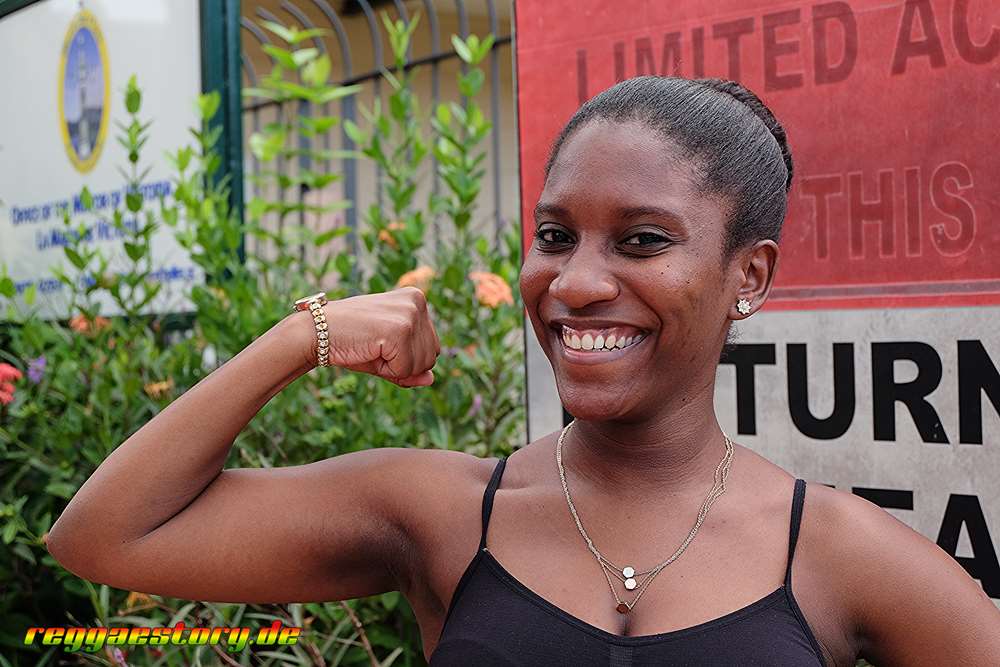 Telsy This is impressively demonstrated by Sandra Esparon, who is the undisputed biggest female star in the Seychelles. This is not only evident at the opening of the festival Kreol with their Seggae tune Nou Identite - our identity - with which they celebrated their 28th anniversary in 2013. Festival Creole song competition. She will perform a total of three times during the two-week festival. Her Massiv spans a good three generations and knows every word of her songs. Like Gregory Isaacs in the old days, all she has to do is strike up the signature melody and then leave her tropical cocktail of reggae, seggae, moutya and dancehall to the enthusiastic auditorium (to sing along). The now 28-year-old singer from Takamaka, the place with the only local Seychelles rum production, is the only female artist to make a living from her music for 13 years – not on too big a footing, but good enough for her demands on life, as she describes it herself. One explanation for this respectable success in the manageable local music market could be the management: her tireless father, the chairman of the Seychelles Music Association, which has set itself the goal of promoting local music and promoting it internationally. Oscillating between the worlds of church choir and the band Dezil, 15-year-old Sandra was discovered by French producer Philippe Besson with the song San ou (La Rivière) and even made it to a small summer hit of Seychelles dreams in France in 2006. Mikhail feat. Sandra Esparon & Beton - Fall Inlove Several awards (French Diva de l'Océan India (2014, 2015), Prix du meilleur chanson d'Airtel Music Award Seychelles 2017), 24 solo concerts, since 2010 four solo albums every two years later her father describes her as an energetic and very disciplined artist who never misses a chance to perform. This is also expressed in their social responsibility: "If you make a profit, you have to give a part of it back to the community." This communal attitude to life characterizes the role of most female artists. Their melodic style sounds different from their male counterparts, which at least live out some facets of dancehall culture more strongly. For the time being, Seychelloise female artists seem to feel more responsible for celebrating life and love. "In Seychelles, I often get booked for weddings, parties and shows," she explains with a smile. If you ask her about her future, her role model Beyoncé and the vision of an international career immediately come up. She has already taken her first steps into the immediate vicinity such as Reunion, Mauritius, and Madagascar. Another highlight was her performance as opener for Etana shortly after the Kreol festival in the capital Victoria. True to the motto of the Seychelles unity in diversity, the joint projects with artistsfrom the reggae universe are most welcome. And there is always more opportunity to do so, as evidenced by the acclaimed shows of Gentleman in April 2017, Beenie Man, and many others. Moutya - the local roots of reggae creole It is no coincidence that the most important female performer is rooted in Sega and only makes occasional excursions into reggae realms. Because the Sega comes from a further development of the original form of expression (lekspresyon) of the enslaved: Moutya. There are contradictory interpretations about the origin of the name, but the African roots of the music are undisputed. It reflects the diverse ethnic origins of the enslaved brought by the first settlers in the 18th century. Moutya became a medium of communication and resistance against slavery. It is a music that was created and cultivated in secret. As in many African and Caribbean societies (for example, the Maroons in Jamaica), women gave it their voices. As the lead singer in call and response singing, they determine the content and mood of the community. The content of the songs can vary from everyday and love stories to lamentations and calls for open resistance. Judette Volère, singer of the Latani Moutya Group and one of the most expressive Moutya singers of the present day, sees the Moutya as the authentic music of the Seychelles: "In the days of slavery, slaves met after work to complain about their suffering on the plantations. This is the beginning of Moutya. Moutya songs are about the difficult fate of the slaves, all their worries and problems. That's what we mean by Moutya: our own voice. That's why Moutya is so important to us. That's our real culture, not Sega, not R and B, not jazz. The Seychelles is the land of Moutya." Moutya The reggae archipelago also pays tribute to this. At the few big live shows of the island state, the Moutya should not be missing in the opening act. Reggae and Moutya are two close relatives, similar to Nyahbinghi and Reggae. Both keep the fire alive. Undeterred by the heat of the flames, the old master Ilris Marie holds his Tambour Moutya over the burning pyre. This is used to tune the goatskin covering. The drum is said to produce staccato sounds. Its sweaty rhythm symbolizes the African heartbeat of the island archipelago. The toothless old master visibly enjoys the moment of attention. Now he is once again the star of his youth: "The Moutya drum has earned me a lot of adoration," he says mischievously the next day on the turquoise blue beach. Anyone who followed the dances the night before can imagine what Ilris is alluding to. At the music festival on Praslin, the second largest Seychelles island after Mahé, Reggae, Sega and the various hybrid forms dominate, but the old traditions from slavery heat up the atmosphere immensely. Ilris accompanies Judette Volère's lead vocals with other drummers and percussionists. For many, the lascivious songs of the Moutya Band are the highlight of the Creole festival. If you block out the sound and only look at the dances, you feel like you've been transported to a Jamaican dancehall. It may be that Jamaican daggering videos were also spread here, but the dances on the beach, off the stage, were probably also media of the dating agency in the past - a kind of traditional parship. It becomes clear that the Seychelles are much more than just a holiday dream in the Indian Ocean. They are an extremely vital island state that is reminiscent of the Caribbean in many aspects. First and foremost, in the ubiquitous Rasta reggae with local Sega dancehall elements. They provide the soundtrack for island life, whose cultural diversity is unique and more than equal to the much-vaunted biological diversity. "Unity in diversity" is not just the official motto of the state in the Seychelles. It is understood by the population as a whole as the basis for peaceful coexistence and economic development. In this way, the archipelago can serve as an example of how a fruitful approach to diversity, a successful inclusion, can be understood not only as a burden or a problem, but as a true asset. The focus is on what we have in common, not on what divides us. 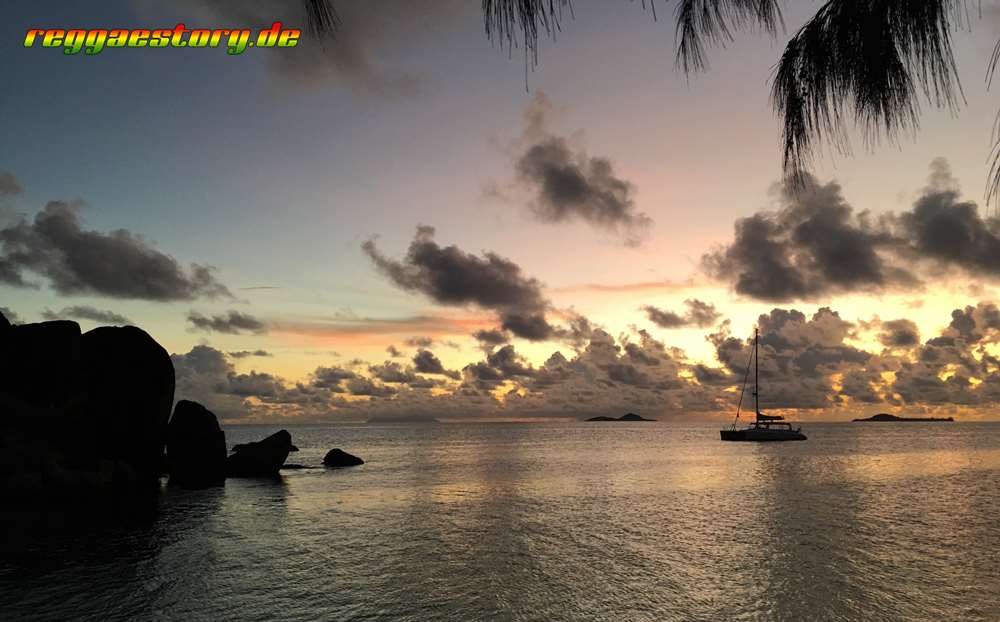 Since there are simpler pensions, at least on some islands, the Seychelles are no longer reserved for millionaires, even if they are still anything but a cheap travel destination. For the preservation of the sensitive nature, however, a degree of exclusivity is probably a prerequisite. This sustainable diversity is rightly regarded as the very basis of existence in the Seychelles. It is no coincidence that many reggae tunes deal with the duty to preserve them. This applies both to the natural environment and to the peaceful coexistence of all religions, skin colours and cultures. Here, regardless of their social background, everyone is proud to offer a true "mosaic of the world's population". In the words of reggae singer I-Blacka: "To be Seychellois is a gift from God, Rastafarian!" © Werner Zips and Angelica V. Marte Also recommended: A film by Werner Zips and Angelika V. Marte: Seychelles - A Sea of Colors (50 minutes - 2017). This film explores the cultural diversity of the Seychelles. The ongoing project explores its counterpart, biological diversity. The title of this film for ARTE and ORF: Seychelles - Archipelago of Emeralds
|