

10.10.2025 - MUTABARUKA
WTH THE WISDOM OF THE ELDER
Werner Zips & Sebastian Schwager
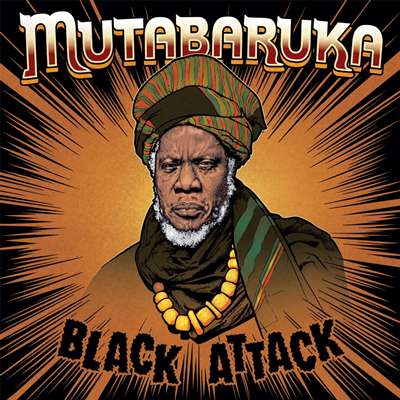 |
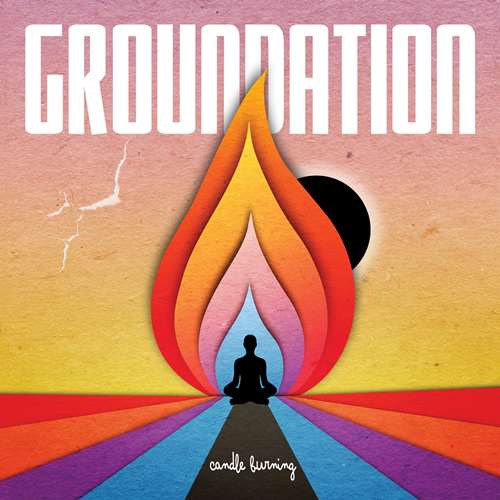
If proof were needed that Muta is still a recording artist to be reckoned with, he delivers it impressively with the Mad Professor album "Black Attack" (Shanachie 2023) released two years ago – after a long break – and as a feature artist in the brilliant song "The Light" on the recently released Groundation album "Candle Burning" (Baco Records 2025). Between album and song, a field of tension opens up that can also be interpreted as the breadth of Mutabaruka's artistic work. |
At its
core is always the fight for justice for Black people and compensation
for injustice suffered. The universalist dimension of the perhaps
(currently) unrealistic, but fundamentally possible idea of a better
humanity – i.e. one that treats itself and all other life
forms on the shared planet more peacefully and with more care
– is revealed in the further arc of tension. Mutabaruka's
introduction to "The Light" puts it in a nutshell:
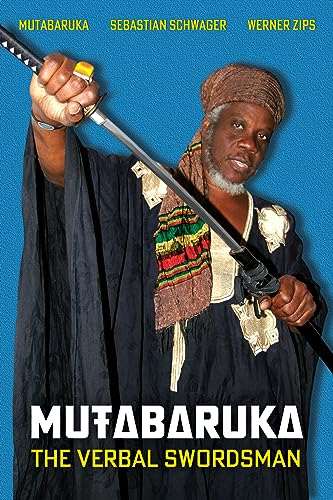
Groundation feat. Mutabaruka - The Light (Album: Candle Burning, Baco Records 05/2025) The Verbal Swordsman Apparently, they also exist in the reggae universe: those mythical katana swords of the great Samurai that get sharper with every defeated opponent. Mutabaruka - "the verbal swordsman" is perhaps their prototype on the Jamaican battle field. Nobody can take dancehall stars like Jahshii by the hand and lecture them on social responsibility in their communities like he can. This is what happened live on stage at Rebel Salute 2023 in Plantation Cove, St. Ann. It's worth watching the YouTube video to understand the title of the article - "With the Wisdom of the Elder". 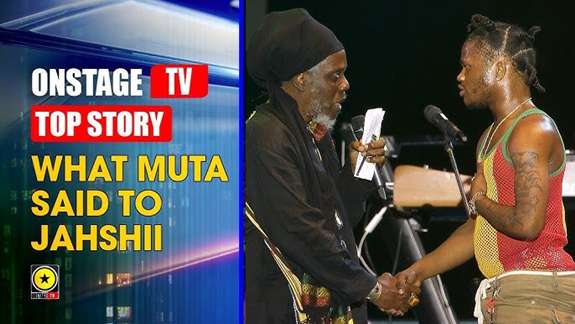 Rebel Salute 2023 - Jamaica - ONSTAGE TV Younger massives may not (yet) have experienced the power of a Mutabaruka performance as a poet for themselves. Until his impressive performance at the Rototom Festival in Benicàssim (Spain) in August 2023, he had made himself scarce on European stages for several years. With the album Black Attack, produced by Mad Professor, he toured Europe again with his band and proved that his Voice of Thunder still works a unique magic. Nomen est omen: it is a Black attack on centuries of violence against people with African roots and their descendants in the diaspora. This attack also includes indigenous and colonized societies in all other parts of the world. The album's ten all-new songs (complemented by four massive Mad Professor dubs) summarize some of his main concerns. 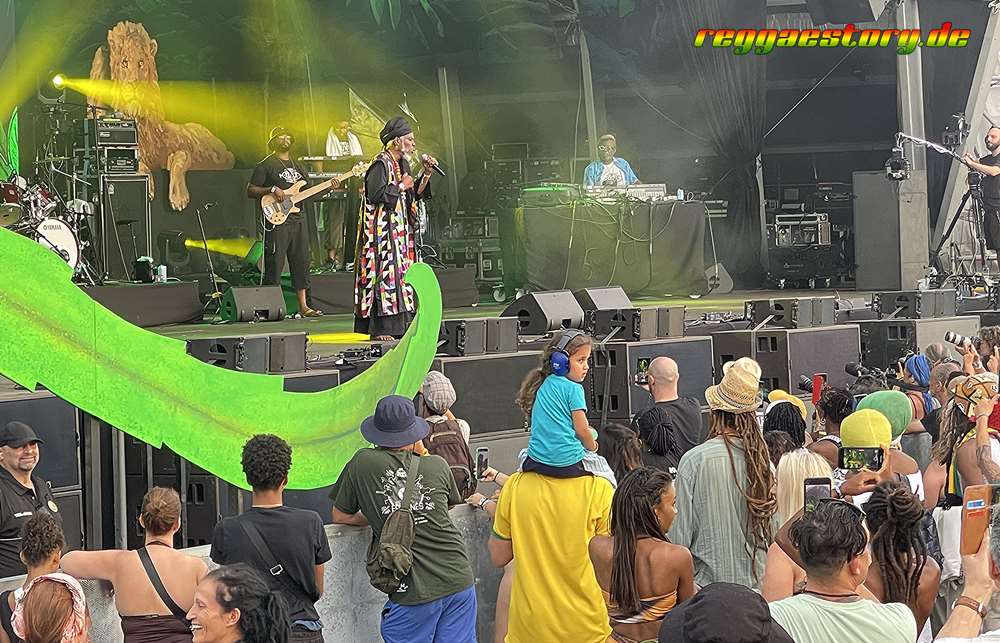 Mutabaruka - Rototom 2023 (Photo: Angelica V. Marte) Their motto could be summed up as “Black Lives Center”. This means relentlessly addressing the historical origins of today's inequality in a comprehensive critique of international relations. And, consequently, to place Black living conditions at the center of global interest. This claim incorporates the demands of Black Lives Matter but goes beyond this movement in the Rasta tradition of anti-colonialism and anti-imperialism. Mutabaruka's now almost 10,000 hours of live radio on Irie FM – an unimaginable number that could well be ripe for the Guinness Book of Records – demand not only the protection of the integrity of Black lives, but also compensation for injustices committed. His agenda does not focus on “atonement”, since the suffering of the enslaved can no longer be reversed, but on physical and legal reparations. But the living conditions of today's generations can be elevated to the central categories of international morality – respect, human dignity, equal rights and justice. 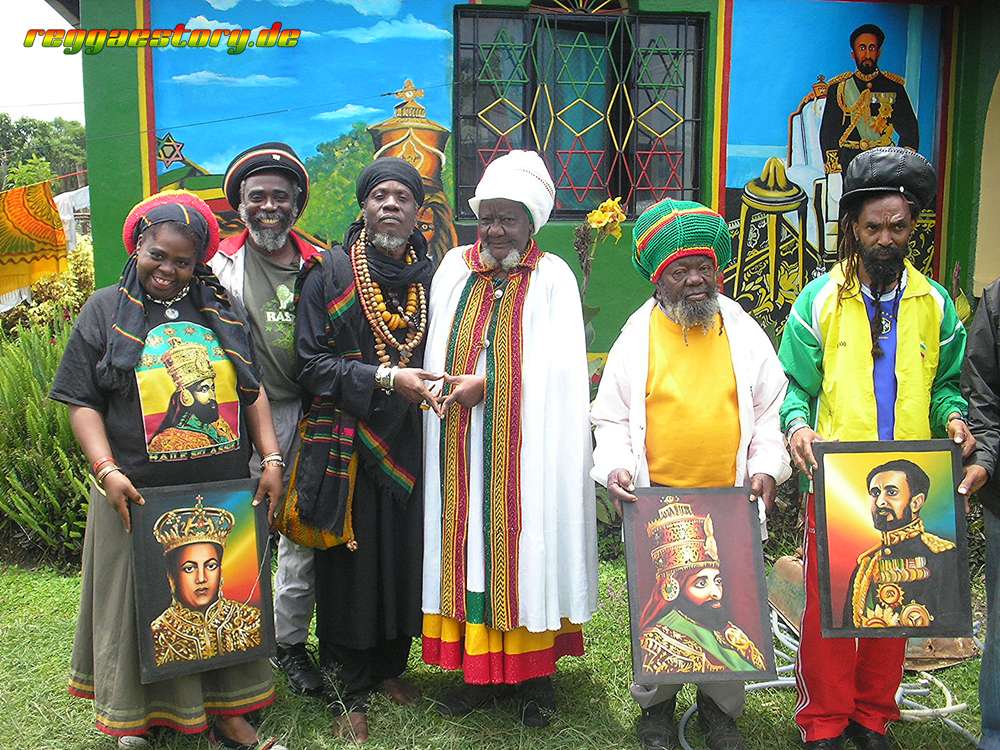 Mutabaruka, Ethiopia, Shashemene @ Nyahbinghi Tebernacle, 2005 (Photo: Mutabaruka private archive) These were already the central motifs of Emperor Haile Selassie I, which raised H.I.M. to the shining light of Rastafari philosophy and, together with Marcus Garvey (and also Malcolm X), made him the compass of Mutabaruka's life's work. Muta is a living icon of the Black Freedom Struggle, far beyond the borders of Jamaica. His words of righteous wrath – to put it in biblical terms – carry just as much weight in Black activist circles in the USA as they do among young Black Consciousness intellectuals in South Africa, who associate today's ANC primarily with corruption and state capture. Remarkably, his unembellished words resonate even in such distant parts of the world as the Seychelles, where a strong Rasta movement determines the music and thus the everyday life and thinking of society – not just the younger generations. All this may be explained by comparable living conditions in many places around the world. But why was Muta, as many call him, such a crowd puller for the global reggae masses during his international career as a reggae artist and so-called dub poet? Our co-authored book with Mutabaruka, "Mutabaruka: The Verbal Swordsman. Perspectives from the Cutting Edge and Steppin Razor" explains it like this: Justice is indivisible. It stands and falls with its universal implementation. There is no justice for some without consideration for all. 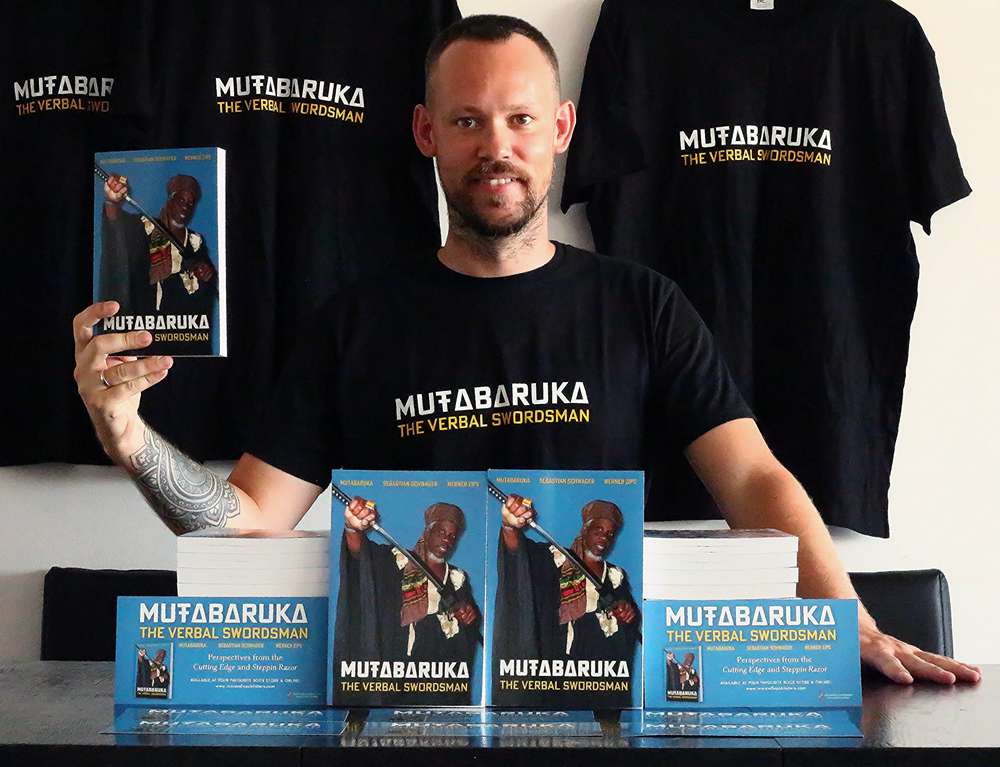
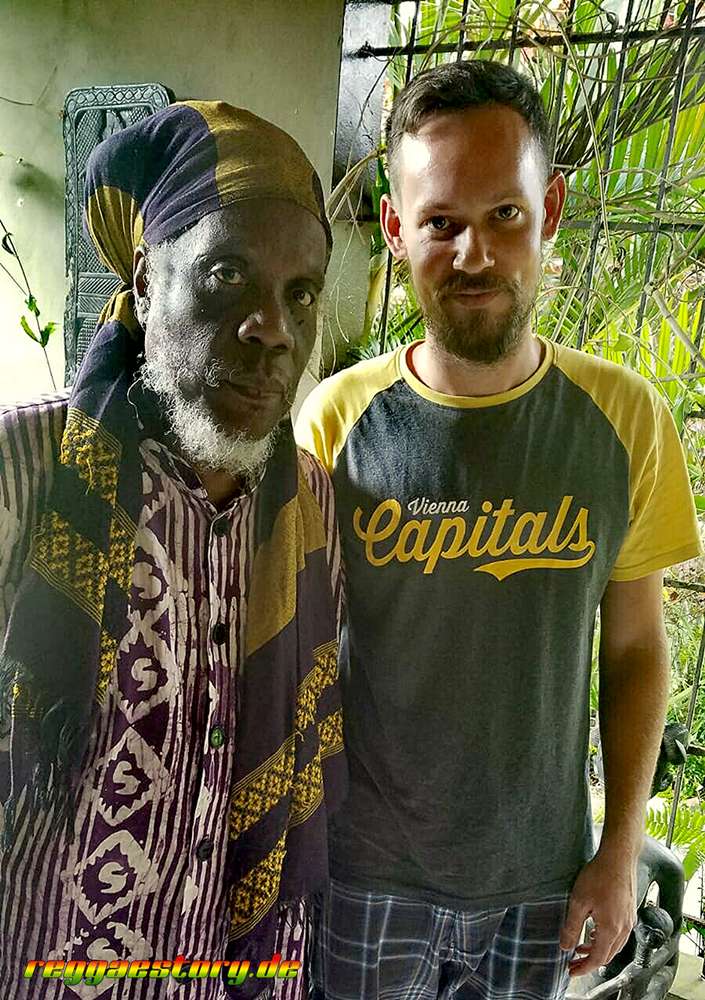 Left: Sebastian Schwager - Book presentation 2023 - Mutabaruka - The Verbal Swordsman Right: Mutabaruka and Sebsatian Schwager - Jamaica 2018 (Photos: Sebastian Schwager) 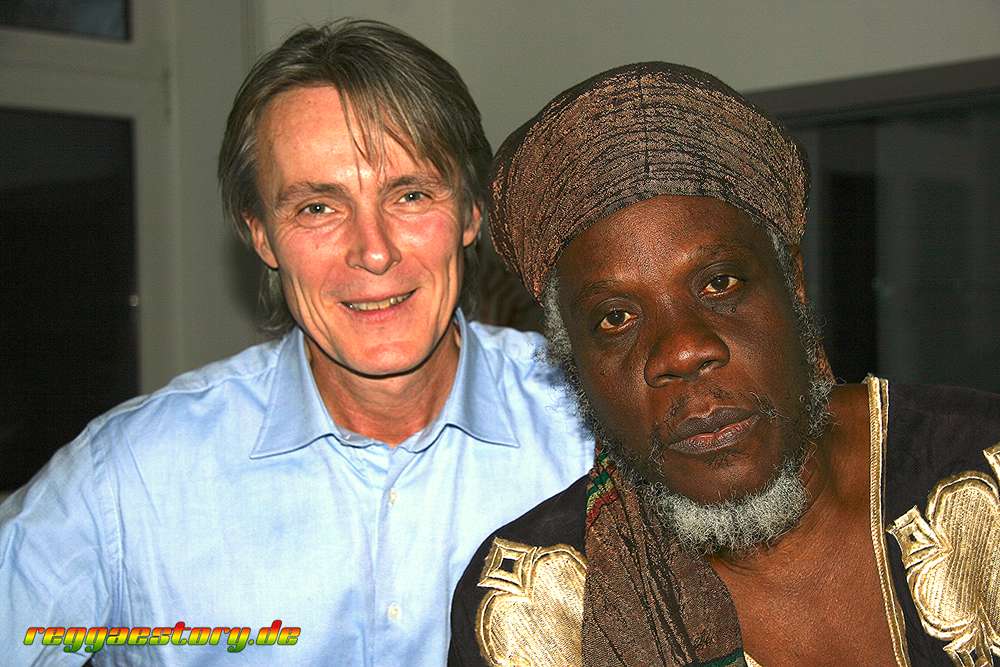 Werner Zips & Mutabaruka - Vienna 2011 (Photo: Manuela Zips-Mairitsch) This is what Haile Selassie I and his tireless commitment to international morality and collective security stands for. And Muta continues this struggle on the global level from his native Jamaica. That is why – we believe – reggae fans in Rome are joining his (and other reggae artists') call for "Fire 'pon Rome", Germans are publishing his poetry books and people around the world are following his radio broadcasts on YouTube. For them, Black Liberation is the logical prerequisite for global freedom (from oppression). Cutting Edge and Steppin Razor His Art of War – the motto of his daily radio show Steppin Razor – only appears to be a Jamaican radio program at first glance. At second glance, Mutabaruka's biting comments are boundless interventions by perhaps the only Rasta public intellectual. No individual or organization should feel exempt from his critical revision of injustice. In this respect, Mutabaruka's Saya (Katana scabbard) contains a double-edged sword. Its owner has it cut against the bottom and top, depending on who draws the furor of his (verbal) art of war. In most cases, these are the powerful who act in a socially irresponsible manner. But again and again his culturally "closests" reggae artists. Almost four decades ago, it was the up-and-coming dancehall DJ Major Mackerel whose mega-hit Pretty Looks Done included the unfortunate lyrics "ugly like Shaka Zulu". The rhetorical slap in the face by Mutarbaruka live on air was more than sloppy. Years later, Major Mackeral excused his faupax with a lack of education and ignorance of African history (see: here). But even self-proclaimed "conscious Rasta artists" such as Fantan Mojah have fallen victim to Muta's public rebukes. Muta described his unspeakable Fire King song (of 2021) and accompanying video as a frivolous objectification of Black women and a degradation of Rastafarian principles, especially of the Bobo Ashanti house, to which Fantan Mojah allegedly belongs. Not many would contradict Muta in this respect, especially since the video seems like a satire on hip hop sexism at first glance and only with persistence does the painful insight arise that Fantan Mojah seems serious about this praise song on his own supreme virility. 
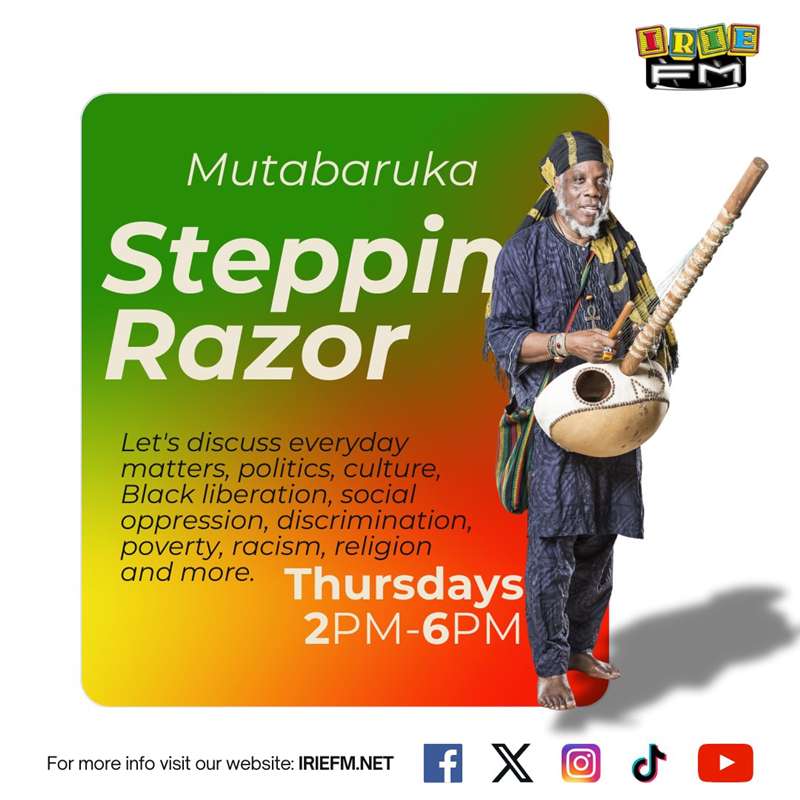 Mutabaruka - Cutting Edge & Steppin Razor @ Irie FM Steppin Razor and Cutting Edge, his signature aftermath program, while often focusing on Jamaica and the Caribbean, tackle every possible problem, crisis and incongruity in every conceivable location globally that strikes Muta's critical thinking and seems worthy of public debate. While in Steppin Razor he tends to deal with socio-political issues, in Cutting Edge he focuses primarily on philosophical, religious and cultural topics. It is not uncommon for broadcasts in both weekly programs to overlap because Muta feels that a topic has not yet been sufficiently covered or a new thought has occurred to him on the drive from Kingston to Ocho Rios (home of Irie FM). Here is a free thinker at work in the best tradition of the word. He is highly revered in Jamaica for his thoughtful deconstructions of international politics, economics and religions. As a radio presenter on Irie FM, he gets more airtime than all the country's politicians put together. He never seems to tire of raising awareness of social problems and is therefore a voice of and for the ("ordinary") people. 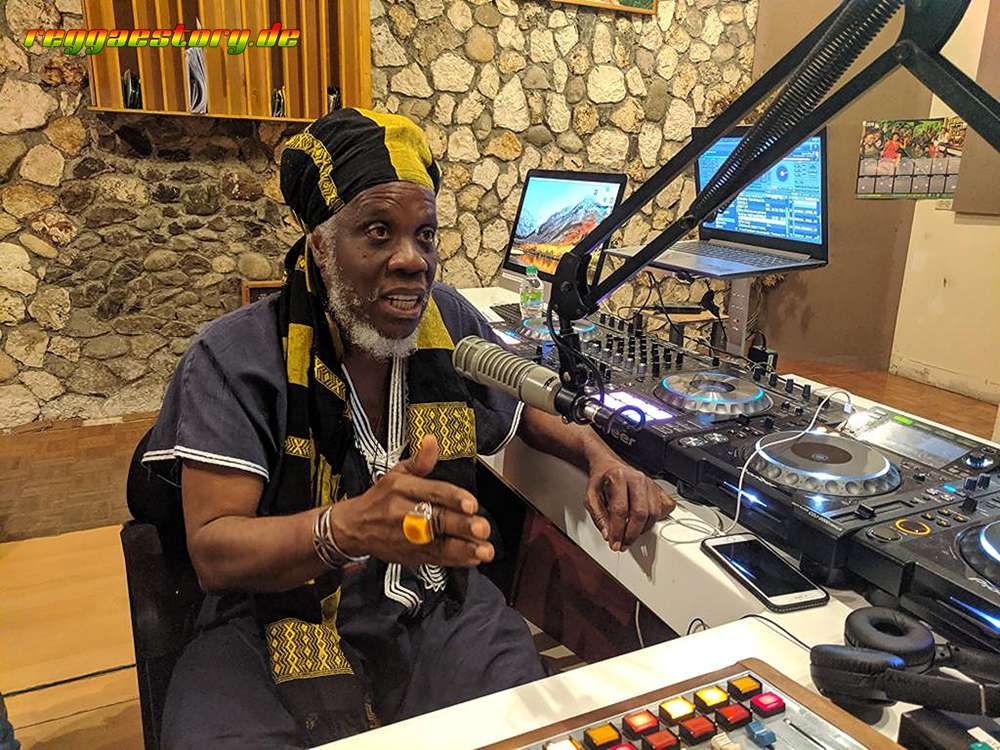 Mutabaruka @ Irie FM, Ocho Rios, Jamaica (Photo: Mutabaruka private archive) What is even more astonishing is that after more than 30 (!!) years – Cutting Edge started in 1992 – Jamaica's public still never gets weary of listening to his views and joining in the discussion. A conversation in Jamaica often starts like this: "Did you hear what Muta said yesterday?" There are certainly many reasons for what can be described as a phenomenon, but at its heart is his unconditional advocacy for justice for people of African descent, after "500 years of enslavement, colonialism, mental slavery and oppression disguised as discovery", as he puts it in one way or another. According to many Jamaicans, Muta developed over time into a moral institution, perhaps "the" moral institution on the Jamrock. At least that's how the Grande Dame of reggae research Carolyn Cooper sees it in the foreword to our book. Even the political elite finally recognized his influence by awarding him the "Order of Distinction (Commander Class)" in 2016. Something that would have been unthinkable in the early stages of his intellectual crusade as a barefoot revolutionary poet. 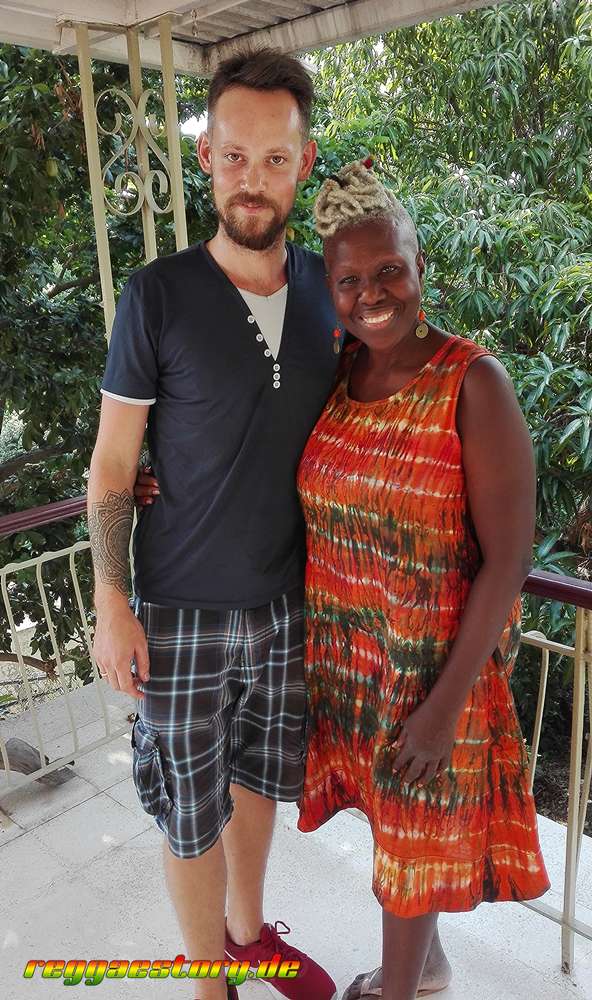
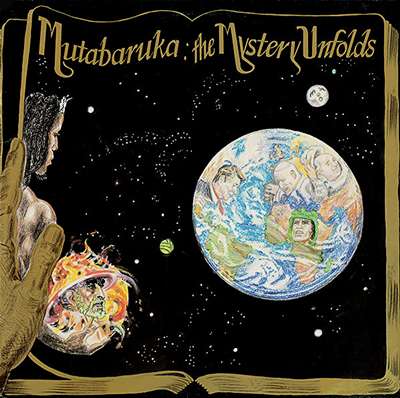
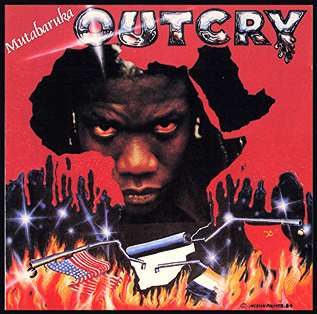
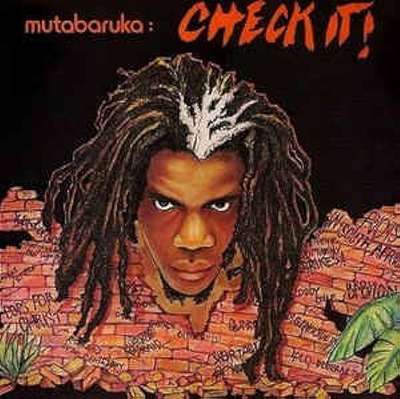
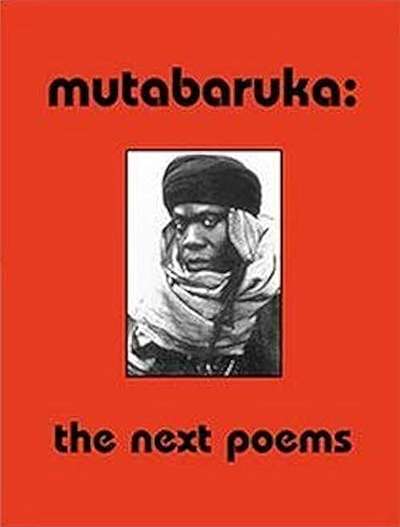
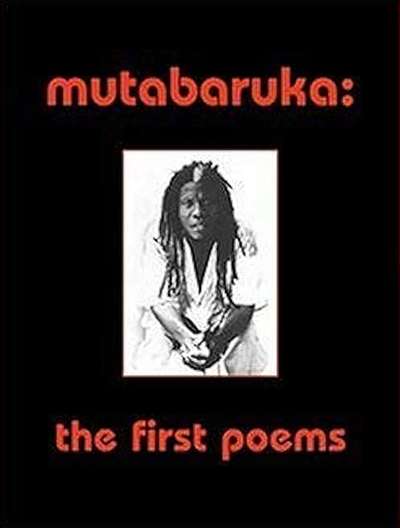
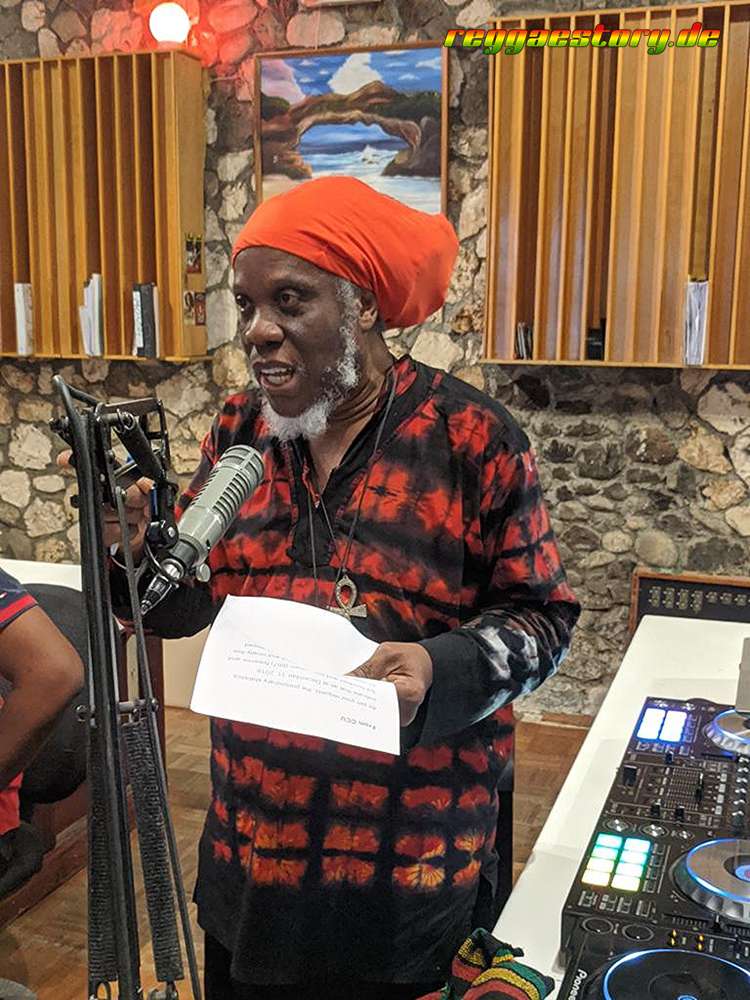 Left: Sebastian Schwager and Carolyn Cooper, Kingston, Jamaica 2018 Right: Mutabaruka @ Irie FM (Photos: Sebastian Schwager & Mutabaruka private archive) Biographical sketch Mutabaruka was born Allan Roy Hope on December 26, 1952, and rose to fame in the early 1980s when he successfully launched a recording career and toured extensively around the world. Alongside other pioneers such as Linton Kwesi Johnson, Oku Onuora and Michael Smith, he was one of the artists who shaped an influential sub-genre of reggae known as "dub poetry", although he himself prefers to refer to his art form simply as poetry. Muta is not only a poet and performing artist, but also an actor, selector, producer, philosopher, "development thinker", activist, lecturer and, last not least, a social commentator for more than three decades. With almost 10,000 hours live on air, he has been instrumental in raising public awareness outside the Rastafari and reggae community, especially in Jamaica. As a respected guest speaker, he regularly gives lectures at colleges and universities worldwide, e.g. at the University of the West Indies in Mona/Jamaica, at Stanford University in California, USA, or the University of Vienna (Alma Mater of his two co-authors). With his incomparable charm, wit, rebelliousness – “I was born a rebel and always will be a rebel" – and reflectiveness, he succeeds week after week in expressing his critical thoughts in such an understandable and simple way that he manages to reach the entire (Jamaican) nation. As his programs have a talk show nature, Muta takes ample time to present his views on all sorts of relevant discourses, from crime issues and corrupt politicians in Jamaica, to global Chinese, Russian and American influences in Africa, to notions of Rastafari empowerment. 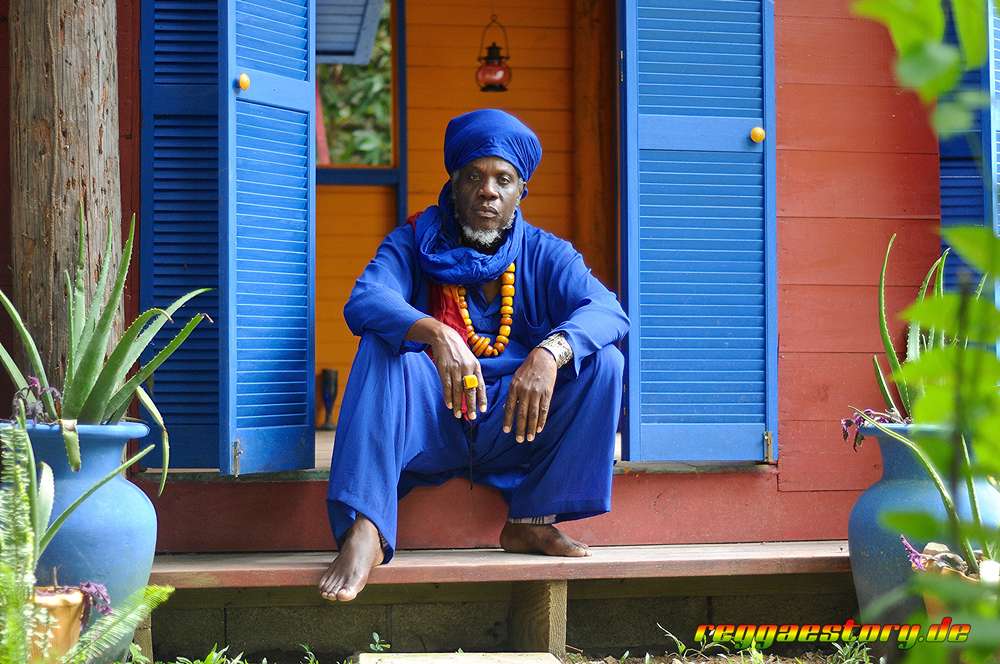 Mutabaruka, St. Andrew, Jamaica 2011 (Photo: Sabriya Simon) As a people's philosopher and Pan-Africanist, he brings the sometimes quite abstract concepts of "Africa-centrism" (known as "Afrocentrism" in the USA) and the Black Consciousness movement to the "people". His career as a poet, which opened the doors to radio and television for him – Muta also hosted his own TV show "Simply Muta" on the Jamaican channel CVM for a year – began with the influence of radical Black poets in the USA, above all The Last Poets, who released their superb reggae/dub style album "Understand What Black Is“ in 2018: "The Last Poets particularly impressed me! And all those Black Power poets who said that 'the revolution won't be televised'. These poets were my initial spark." Muta refers to Gil Scott-Heron's poem The Revolution Will Not Be Televised (1974), the title of which was a popular slogan for the Black Power movement in the 1960s. Another particularly important and lasting inspiration was Jean-Baptiste Mutabaruka, a poet from Rwanda, whom he encountered through an anthology of African poems entitled Writing Today in Africa by Mphahlele (1967). When he read Jean- Baptiste Mutabaruka's poem Song of the Drum in the anthology, it reminded him of his own poem Drum Song. The overlaps surprised him so much that he eventually adopted the Rwandan poet's surname and published his poems under this new name from then on. 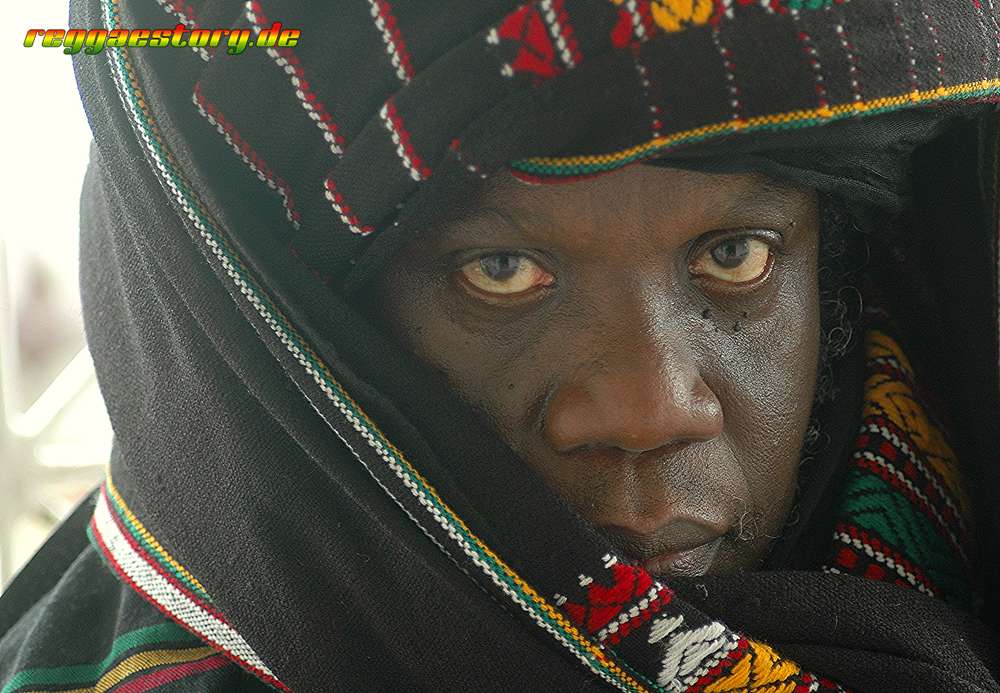 Mutabaruka, St. Andrew, Jamaica 2007 (Photo: Mutabaruka private archive) With the poetry collection Outcry (1973) – more than a decade later providing the title of his classic album of the dub poetry genre – his success story as a poet began, which quickly gathered pace with the release of his first album Check It! (1983). He himself describes Nyahbinghi, as a non-doctrinal but all the more radical orientation within Rastafari and the ideals of Ital Livity, as his most important influences, only to mention other spiritual worlds in the same breath: Tibetan fairy tales are just as much a part of this as his engagement with the teachings of Chinese philosophers such as Laozi ("Master Lao") and Confucius or his reading of Japanese literature and central texts of Buddhism. 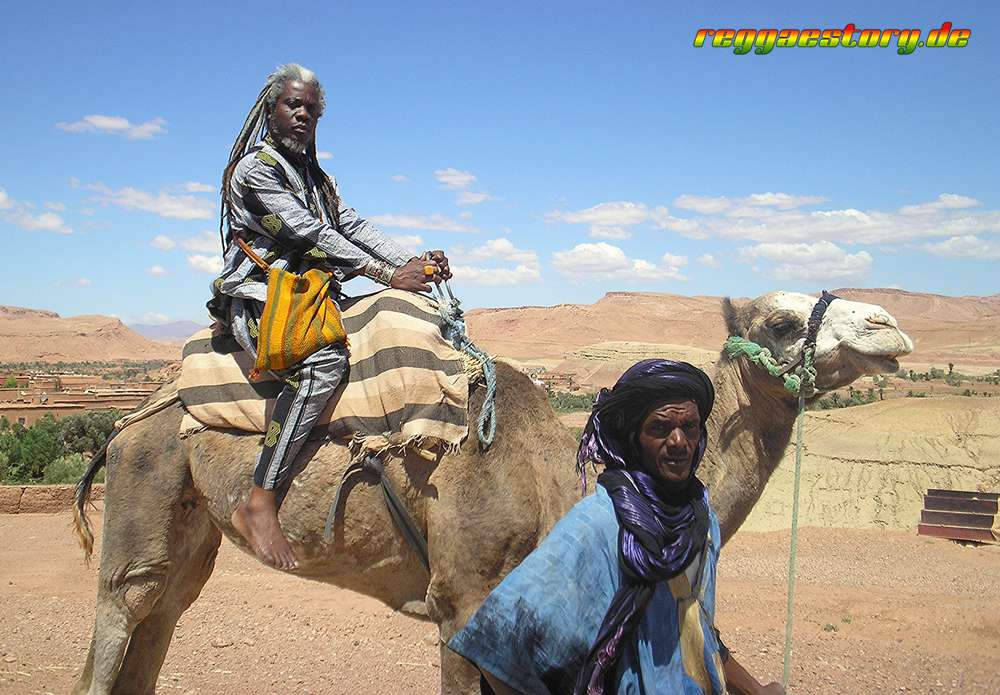 Mutabaruka in the Atlas Mountains, Morocco mid 2010s (Photo: Mutabaruka private archive) He rarely refers to these traditions of thought directly in his radio broadcasts or texts. Muta does not want to overwhelm or confuse his audience. However, anyone who knows how to read between the lines will be able to recognize the multifaceted foundation of his unorthodox world view. You can fill many reggae albums with the set pieces of the Rasta Imperative, but you can't make four or more hours of radio a week for over 30 years. Mutabaruka – the Talk Show Host His cosmopolitanism is particularly reflected in his interest in every conceivable style of music, from Algerian Rai, South African Kwaito, West African Desert Blues from the Sahel to classical and contemporary Indian music. As Deejay and selector of his still active Blakk Muzik sound system, he has earned a reputation for playing music that virtually nobody in Jamaica even knew about, let alone heard. He sees this as the motive for his involvement with Irie FM in 1992: "About two years after Irie FM started, one of the program managers came to me with an offer to create my own show to play reggae from around the world. I accepted immediately. But unfortunately, or fortunately, I couldn't just play music for four hours. I had to say something! That gave me the space to bring my Rasta thinking and my Black Power positions to the people. Marcus Garvey inspired me, so it had to be part of the program. Rasta and Black Power had very little space on Jamaican radio and television back then. Some loved my announcements, others hated them. So, I became the man that many love to hate." 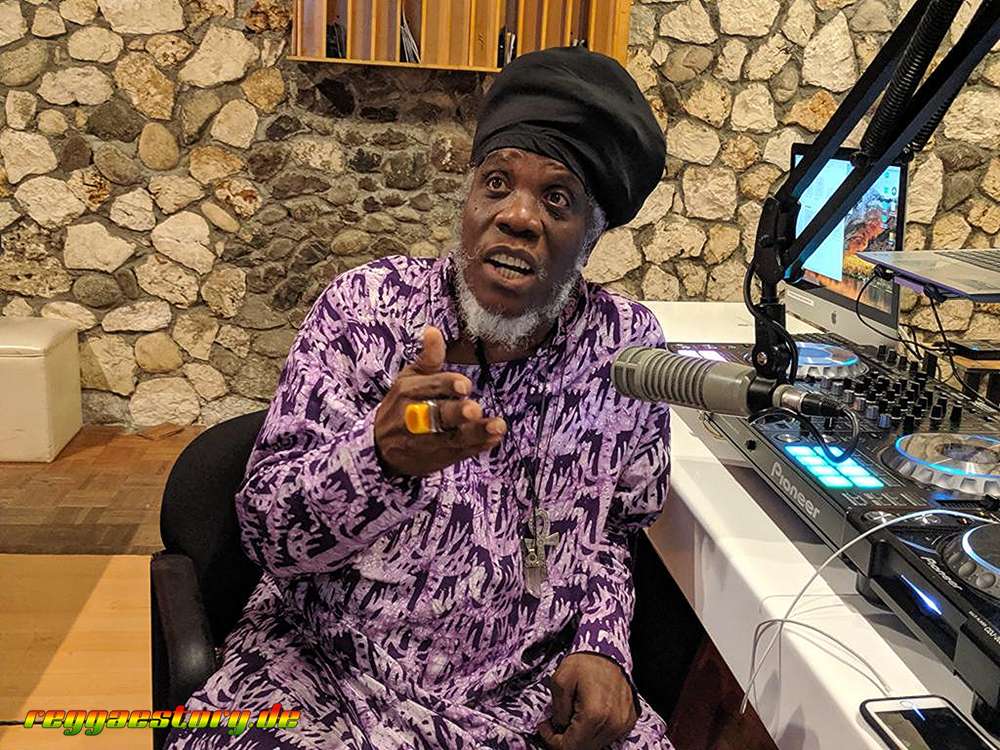 Mutabaruka @ Irie FM, Ocho Rios, Jamaica (Photos: Mutabaruka private archive) Muta quickly realized that nothing works better than controversy. Triggering disputes became his specialty in the art of verbal warfare. Looking back to the early days of Cutting Edge, he remembers stories of listeners reporting that they were even beaten by their parents for listening to his show. “Long live the argument!” That could pass for his unofficial motto. Cutting Edge was so successful that he was offered a second weekly program in 2013. Its title (Steppin Razor – The Art of War) pays tribute to Peter Tosh. Since then, he has hosted two shows: Cutting Edge on Wednesday nights and Steppin Razor on Thursday afternoons. Over the years, Mutabaruka has become an institution in the Jamaican media and entertainment scene, whether he likes it or not. The live stream on the Irie FM website gives his battle rhetoric a transnational dimension that attracts many international listeners. Here, too, approval and excitement are in balance, especially when he once again questions the seriousness of German and Italian Rastas, for instance. The principle is always the same: who feels it, knows it. In this context, this refers to criticism. 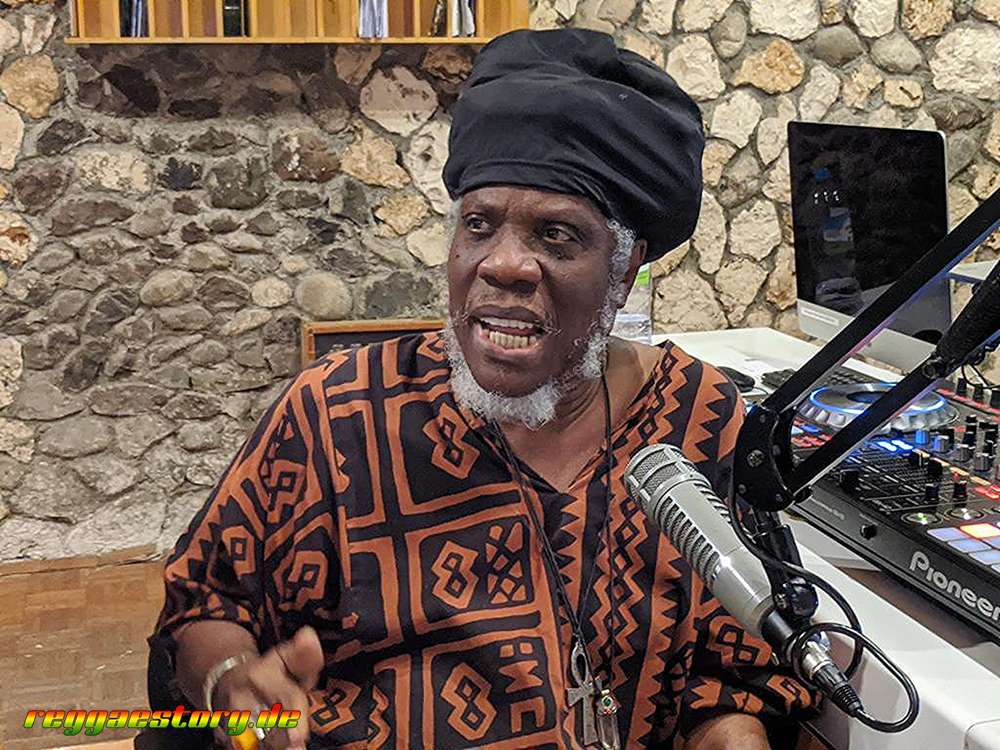 Mutabaruka @ Irie FM, Ocho Rios, Jamaica (Photos: Mutabaruka private archive) Often, or almost always, these challenging discourses arise from a whim of the moment, or rather a vibe. They also develop during an exchange with call-in listeners. Both programs have a call-in component. His verbal reflections are not prepared or carefully considered text constructions, as he himself emphasizes: "Many people believe that I have a script in front of me while I'm making the program. I don't have a script. I just say things!" Some may ask how the Art of War of the Chinese military strategist Sun Tzu from the 5th century BC is compatible with the Rasta principle of Peace and Love. He answers this himself: "The message in The Art of War is very revealing. It's a philosophy of how to go to war, how to defeat the enemy sometimes without firing bullets. A lot of people ask why I don't call it 'The Art of Peace'. Of course, you could say that too, but I'm referring to this Chinese philosophy of an art of war that leads to peace." 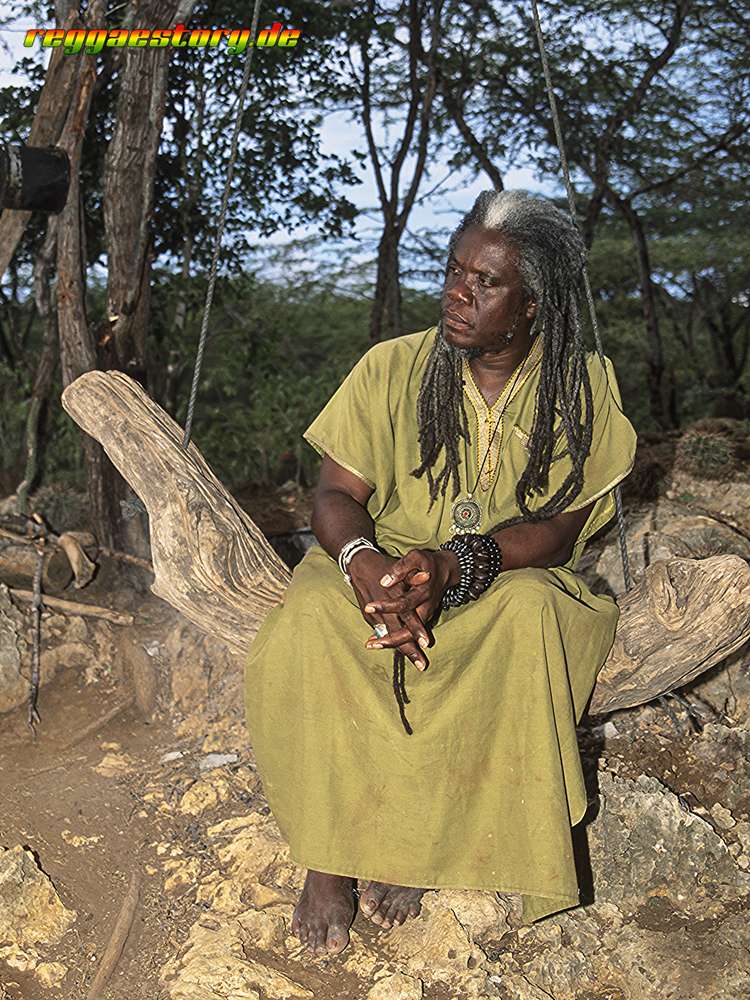
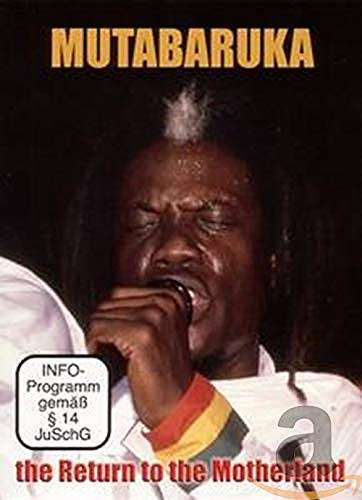
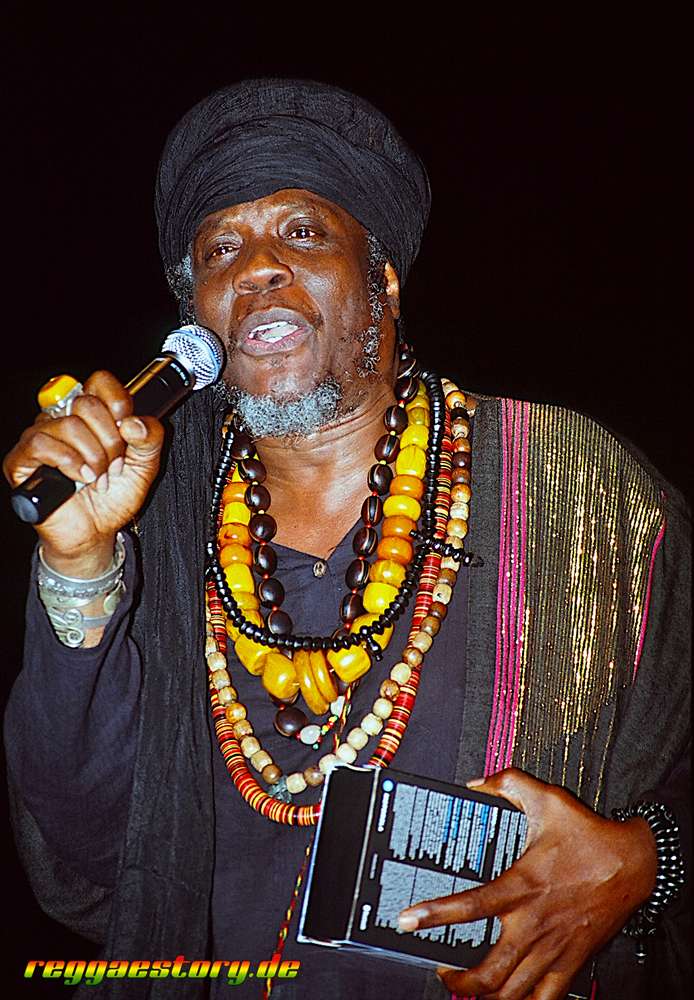 Left: Mutabaruka, Treasure Beach, Jamaica 2003 (Photo: Werner Zips) Right: Mutabaruka as MC of Eastfest, Jamaica 2008 (Photo: Werner Zips) His opponents are usually the powerful, whom hardly anyone else attacks; rarely other reggae artists are targeted, if they published something considered as nonsense according to Muta’s conceptions of Black consciousness, or occasionally (European) Rastas who reduce their philosophy to ganja, reggae and the Bible and want to explain to him what Rastafari is and should be. He simply and firmly asserts his sovereignty of interpretation. As always with Muta: don't take everything personally. His Black Attack is directed against the system (of oppression and inequality): "De system, de system is a fraud, mi say de system, de system is a graveyard" (from the aforementioned album classic Check It!). True to Sun Tzu's principle of "attack your opponents when they are unprepared, appear where you are not expected", Muta uses his weekly broadcasts for sharp words and biting irony against members of the economic, political and religious elite. Ruthless poetry The basis of his meteoric rise as a talk show host on Irie FM was his worldwide fame as a razor-sharp poet and reggae artist. His revolutionary poems have taken him practically all over the world. But no trip was ever as important to him as his return to the homeland of his ancestors: to Africa and specifically to Ghana and its 1997 Panafest, a cultural festival that pursues the Pan-African idea in the spirit of Marcus Garvey and aims to reunite the separated African family. These three weeks of Panafest were his personal re-encounter with his African identity stolen through the enslavement of his ancestors; in the very place where the abduction across the Atlantic began 500 years ago. In his own words: "This experience was priceless. To see that the poems from all those years finally led me back to the source. So here I was with my poems, at the end of a path. That was the fulfillment. To be able to recite all my poems in the place they talk about. Tears came to my eyes ... I actually cried. Me cry man! … Believe you me, nobody in my life could ever tell me that: Mutabaruka you will write some poems and these poems that you will write are going to take you straight to the place that these poems were written about and for. Nobody could tell me that. So, yah man, that was something else.” 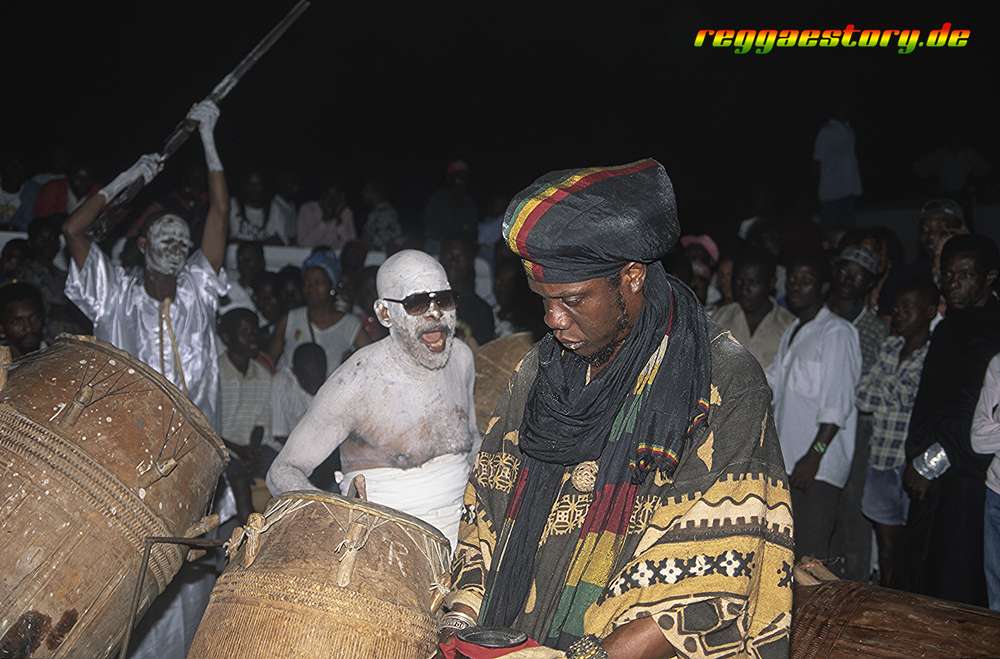 Mutabaruka with Ghanaba at Panafest, Cape Coast Castle, Ghana 1997 (Photo: Werner Zips) The now historic Panafest in 1997 brought together large delegations from across the African Diaspora to the places of enslavement. This reunion on African soil refuted the talk of the "door of no return", which led from the slave castles directly to the slave ships. For the first time, their descendants walked through the “Door of No Return” in the opposite direction. Afterwards, people from Surinam, Brazil, the USA, Jamaica and other places of forced exile visited the dungeons where their ancestors were often kept chained together for weeks. On the evening of the symbolic reunion in the courtyard of the infamous Cape Coast slave castle, they are greeted by the eloquence – or rather “Words, Sounds, and Power” of Mutabaruka. Many have tears in their eyes, sometimes out of sadness, mostly out of boundless anger. The stirring speech and the poems performed a cappella by the African poet from Jamaica penetrate deep into the wounds of the past, as if the enemies were to be drowned in their own blood. 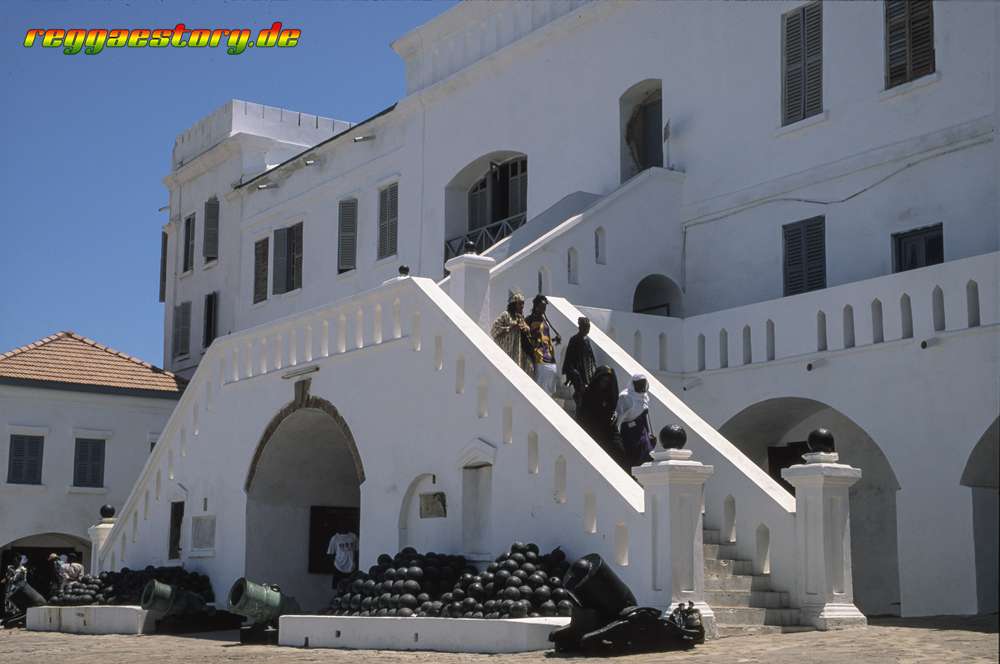 Mutabaruka with family, Cape Coast Castle, Ghana 1997 (Photo: Werner Zips) At this moment, no distracting reggae beat diluted the poignancy of his poems about enslavement in all its aspects. Muta was not here as a performer or reggae artist, but as a kind of living memorial to the unparallelled crime against humanity that is slavery. He then embarked on the painful journey into collective history himself, as he recalls it in his own words: "Going into the slave dungeons after that experience, too, was almost unbelievable. I heard people saying that they heard ghosts and different voices. I never heard anything like that. I never heard anyone, just sat quietly by myself. I tried to experience it, I tried to figure it out, because walking on this ground, you are not actually walking on simple ground. You walk upon flesh, blood, shit, piss, all of these things you are walking upon. Because this is the dungeon, this is where the slaves used to be. This is a place which was possibly washed out once in a year. So all of these fluids would cake up upon the ground. Almost like concrete. And you sit inside there, no light, one window, one door. It really grabbed me that all of these poems were really and truly written to make this experience. It is almost like I cannot bother to write more poems upon the same subject, because that was the sealing up of years of writing about slavery, of years of writing about that aspect of African history. And to relive it inside there, in the real place, is really something else. That experience in my career as a poet was THE experience, THE moment. If I would never do any performance after that, I would feel no way. I don’t see anything else that could heighten that experience. Nothing else!." Video: Mutabaruka - Poet Of Justice Black Attack(s) No one has attacked historical injustice and the status quo based on it more poignantly than Mutabaruka. But the primary goal of his Black Attacks is also directed towards the future: The empowerment of those who have voices of their own but are rarely if ever heard. Today, there is an ubiquitous and sometimes inflationary buzzword for this: Empowerment. His radio broadcasts over the last few decades are mighty amplifiers of these unheard voices. Just like his earlier albums. And certainly, also his landmark latest album Black Attack with Mad Professor. The performance with Mad Professor and the Robotiks at the Rototom Sunsplash 2023 and his one-hour reasoning as part of the Reggae University organized by Riddim Magazine year after year have proven that this voice of thunder has lost none of its power even in its 70s. Especially for future generations of reggae heads, his charisma allows a look back into the history of the origins of radical, or in another word, "roots" reggae. 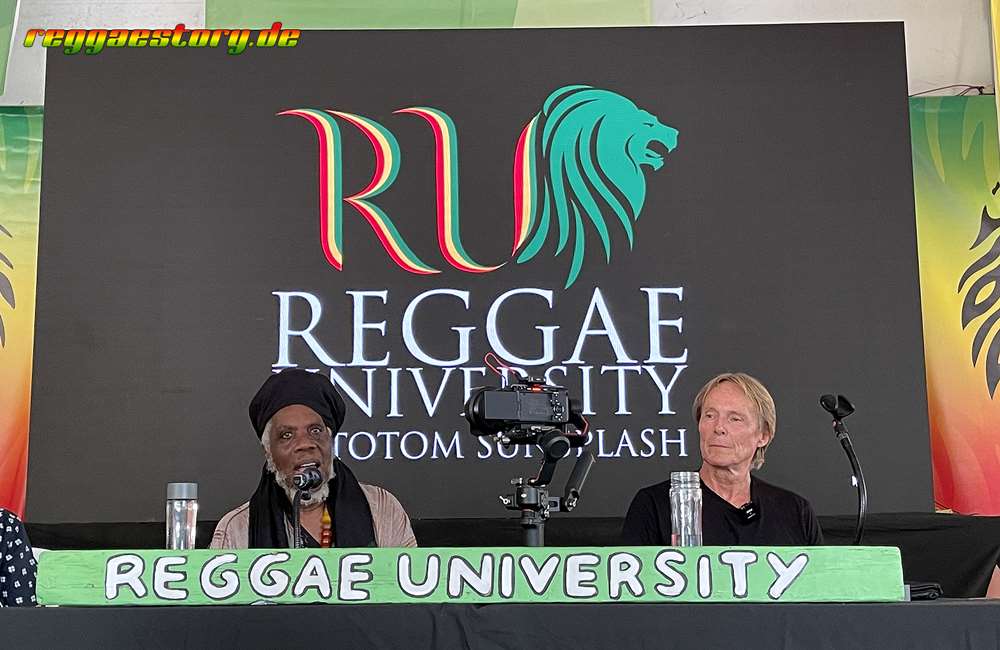 Rototom Sunsplash 2023 - Mutabaruka & Werner Zips @ Reggae University (Photo: Angelica V. Marte) However, Mutabaruka uses two legs to walk. The medium of reggae is only one of them, the other is public relations work in the so-called mainstream media of radio and television. This is not least how he wants to reach the powerful, who, in his own words, should not miss the chance to learn from his wisdom of age: "I say it's time for those at the levers of power to listen to me! Because even if it sounds like I'm always being aggressive, ultimately, I'm just spreading ideas. If they would listen to these ideas, it could help them to govern better!" However, the tune "The Light" (with the US roots reggae band Groundation) quoted at the beginning addresses no particular audience but all of humanity. On their website, Groundation describe this song as the centerpiece of their new album "Candle Burning". It is meant to reveal the obvious truth of human existence: "The centerpiece of Candle Burning – our new single "The Light" featuring the powerful, prophetic voice of Jamaica's own Mutabaruka – is now LIVE. A deep one-drop meditation on the duality of existence: The eternal light that surrounds us all and the individual flame, bright but brief. Let the words move you. Let the riddim hold you. Let The Light reveal what's hidden in plain sight" (https://groundation.com/post/the-light-out-now). In this tune Muta poses the question, what we are going to do with this light. Anything hidden in plain sight requires a degree of self-awareness. Nevertheless, or perhaps precisely because of this, it is worth meditating on the solution, perhaps with a little help of Mutabaruka's wisdom (of the elder): „So the question is not, does the light exist But the question really is What are we going to do with it? You see, some will come to absorb And some reflect the light, but we the elders wonder Will there be enough wisdom to keep it burning bright?“ (Groundation feat. Mutabaruka, The Light, album: Candle Burning, Baco Records 2025) Sources Together with Mutabaruka, Sebastian Schwager and Werner Zips have published the book "Mutabaruka: The Verbal Swordsman. Perspectives from the Cutting Edge and Steppin Razor". It deals with his public work, particularly in the Jamaican "mass medium" Irie FM (radio of the massives). The Verbal Swordsman was published in 2023 by Ian Randle Publishers (Kingston and Miami). Mutabaruka has participated in several conferences organized by Werner Zips as a keynote speaker. His contributions were published in the anthology "Rastafari - A Universal Philosophy in the Third Millennium" (Ian Randle Publishers, Kingston and Miami, 2006). German version: Promedia Verlag (2010). A contribution by Mutabaruka on the subject of "Maroons and Pan-Africanism" can be found in Werner Zips’ book “Nanny's Asafo Warriors. The Jamaican Maroons' African Experience” (Ian Randle Publishers, 2011). Sebastian Schwager has published parts of the filmed interview with Mutabaruka, which was conducted in Jamaica in 2018 and served as a main source for the joint book, on his YouTube channel. Werner Zips has also made a film in cooperation with Mutabaruka about his historical appearances at the Panafest on Ghana, especially in the slave fort of Cape Coast. The film was broadcast on public TV and released as a DVD with an extensively illustrated booklet: “Mutabaruka: The Return to the Motherland”, with 16 pages booklet and liner notes (45 min.) on DVD (Hoanzl), Vienna 2011.The DVD includes as a bonus the movie "From the Cutting Edge - Mutabaruka on Mutabaruka", (90 Min) on DVD (Hoanzl). Vienna 2011. 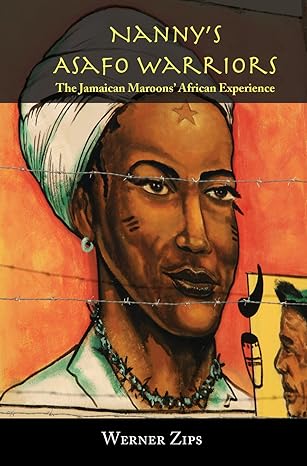
All publications are available on the Anaves Music website of Sebastian Schwager. Copyright: www.reggaestory.de Text: Werner Zips & Sebastian Schwager Photos: See image descriptions |